Cable Protection Hoses: Mechanical, Thermal, and Chemical Protection
Electrical systems have become indispensable in modern life. The coffee machine, the car, or the computer. Cables are found everywhere for the transmission of data or electrical power. To ensure the reliable operation of all these devices, it is important to protect these cables – with the help of cable protection hoses, heat shrink hoses, protective and insulating hoses for cables.
What is the Purpose of the Cable Protection Hose?
First, it is important to discuss what the protection is intended to guard against in order to take the appropriate measures. Essentially, cables, which are usually flexible, are at risk of mechanical wear due to friction, bending, and crushing. In many applications, such as vehicle construction, high thermal stresses occur. It is also important to protect the valuable wiring from these stresses to ensure its long-term function. The third factor to consider is the danger posed by chemical media. Corrosion or damage caused by acids or solvents pose a real threat to all materials and must always be considered when designing devices and systems. RCT Reichelt Chemietechnik, as a specialist in hoses, offers suitable cable protection hoses for all these applications.
Corrugated Pipes as Cable Protection Hoses
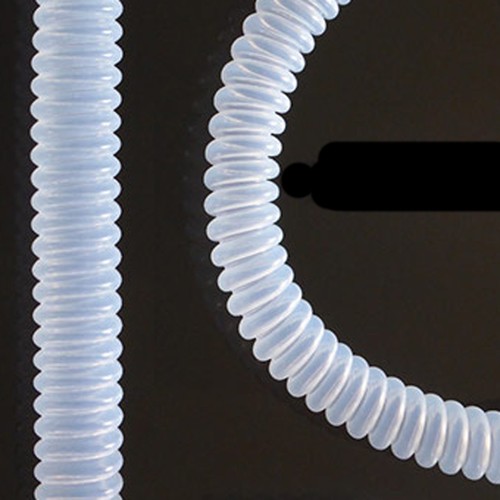
Corrugated pipes are the standard for mechanical cable protection. Due to their construction, they are particularly flexible and can be installed in tight bends. Their cross-section makes them significantly more resistant to impacts, shocks, and crushing than cable protection hoses with a simple cross-section. Corrugated tubes for cable protection are made from various plastics:
- Fluorethylene Propylene (FEP)
- Low-Density Polyethylene (LDPE)
- Modified Fluoroalkoxy (MFA)
- Polyamide 6 (PA 6)
- Perfluoroalkoxy (PFA)
- Polypropylene (PP)
- Polytetrafluoroethylene (PTFE)
- Polyvinyl Chloride (PVC)
- Polyvinylidene Fluoride (PVDF)
Corrugated Tubes for Nearly All Applications
Made of LDPE, the black or natural-colored LDPE corrugated tube, with a density of only 0.92 to 0.94 g/cm³ (according to DIN 53479), is a lightweight. It is characterized by high bend and abrasion resistance, impact resistance (tested without breaking according to DIN 53453), and chemical resistance to many substances such as acids, alkalis, and saline solutions. When it comes to electrical power, this cable protection tube is also convincing. The leakage current resistance is KA3b (according to DIN 53480) and the dielectric strength is 75 to 90 kV/mm (according to DIN 53481).
Also a lightweight is the Polyamide 6 corrugated tube with 1.12 to 1.15 g/cm³. Even at high temperatures, PA 6 material shows high shape retention as a cable protection tube. This corrugated tube is approved for temperature ranges from -40 °C to +120 °C. It has been tested for notch impact strength (DIN 53453) and impact strength (DIN 53453) without breaking, thus proving its mechanical suitability for cable protection.
MFA corrugated tubes show themselves to be temperature-stable, flame-retardant, and highly resistant cable protection tubes. With a temperature range from -200 °C to +240 °C and fire class UL 94 V-0, FMSS 302 Type A, they offer a very wide application range for thermal stresses. Available in nine different inner diameters.
Corrugated Tubes for Special Applications
For explosion-hazardous areas, conductive hoses (antistatic hoses) are required. The PTFE anti-static corrugated tube is suitable for this purpose. The resistance of <10⁶ Ohm/m is achieved by adding 25% carbon powder (based on total weight). PTFE is physiologically harmless, which is why this corrugated tube is preferred over other cable protection hoses in sensitive applications.
Ideal for applications in biotechnology, environmental analysis, and semiconductor technology is the PVDF corrugated pipe. Temperature stability and flame resistance, in addition to chemical resistance, are its central properties. PVDF impresses with the highest chemical resistance to almost all aggressive media, such as halogens, ozone, strong acids and alkalis, solvents, and aromatic hydrocarbons. The PVDF material is thermally stable between +60 °C and +150 °C, and its sterilizability at +121 °C makes this cable protection tube particularly suitable for biomedical applications.
Made of FEP, the smooth-ended corrugated tube is a temperature-resistant (-260 °C to +200 °C) and flexible cable protection tube used in machine and apparatus construction. This corrugated tube can also withstand overpressure and vacuum (vacuum resistance is 99%). The FEP corrugated tube meets the requirements of the FDA Directive 21 CFR 17.1550 (free from extractable components and physiologically harmless).
Robust Corrugated Tubes Made of PVC, PP, and PFA
PVC is flame-retardant, flexible, and mechanically durable. The high flexibility is reflected in the E-modulus value, which is between 1800 and 3500 N/mm² (according to DIN 53457). PVC-U corrugated tubes should only be used in temperature ranges between 0 and +60 °C. PVC is not resistant to aromatic and halogenated solvents as well as strong acids and alkalis. However, it shines with its relatively low price. All in all, a solid corrugated tube for protecting cables in not too harsh environments.
PP corrugated tubes are characterized by mechanical durability and good chemical resistance. The cable protection hoses made of polypropylene are available in numerous nominal sizes and are thermally resistant from -40 °C to +100 °C. Material fatigue can occur outside this range.
PFA is particularly suitable for the production of corrugated tubes due to its very high flexibility (E-modulus 200 to 800 N/mm²). This combines an already flexible material with a corrugated design. Therefore, Reichelt Chemietechnik offers three variants: The PFA corrugated tube is the basic variant. With a tensile strength of 15 to 32 N/mm² and an elongation at break of 200 – 400%, it is one of the most flexible corrugated tube models in the range. In addition to its mechanical properties, PFA also convinces with its thermal properties and chemical resistance. This cable protection tube is suitable for a temperature range from -200 °C to +250 °C. A variant with smooth ends was developed specifically for applications where a cylindrical pipe connection is required. Virtually identical in properties to the PFA corrugated tube, the cylindrical end pieces allow for easy connection with THOMAFLUID® pipe connectors. The third variant of this hose is designed for explosion-hazardous areas.
Shrink Tubes as Cable Protection Hoses for Exact Fit Protection
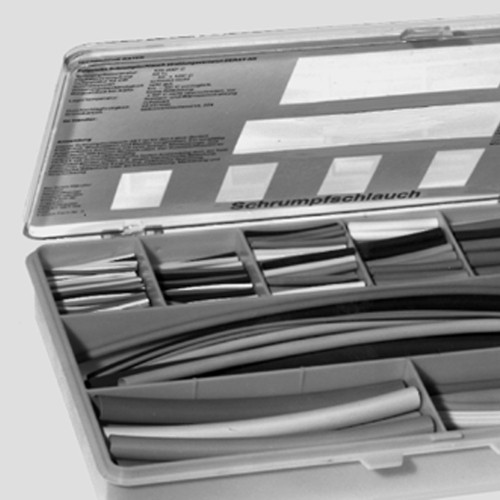
Heat shrink tubes are characterized by shrinking when exposed to heat, as the name implies, and thus fitting exactly to any structure. This protects cables and connections from mechanical damage, chemically aggressive media, and also provides electrical insulation. The following materials are used to make shrink tubes, which are used as cable protection hoses:
Polyolefin and PTFE Shrink Tubes, Versatile and Widely Used
The material class of polyolefins, including polyethylene and polypropylene, is probably the most common material for shrink tubes. Like other shrink tubes, those made from polyolefin are sold both as bulk material and in sets. RCT offers different types: shrink ratios of 2:1 and 3:1 are available. All share the shrink temperature of approx. +90 °C and the temperature range of approx. -55 °C to +110 °C.
Color-coded variants are also available (blue, yellow, red, green/yellow, black, and white). The two sets each offer a comprehensive range of cuts of the polyolefin shrink tube variants in different nominal sizes. They differ in the number of cuts included. The shrink tube set "1000" includes four different cuts in the most common sizes, while "2000" includes fourteen different cuts.
Shrink tubes made of PTFE are available in shrink ratios of 2:1 and 4:1. They provide ideal corrosion protection for all types of electrical components. Due to their excellent chemical and thermal properties, PTFE is suitable for demanding applications. The shrink temperature is between +330 °C and +350 °C and can then be used without issue between -65 °C and +260 °C. These cable protection tubes are also made according to the production standard MIL-I-23053/12 A, Class 5. Naturally, this type of shrink tube is also available as a set. It includes two lengths of 0.5 m each in nominal sizes of 2.0 mm, 3.2 mm, 6.4 mm, 9.5 mm, and 12.7 mm with a wall thickness of approx. 0.8 mm before shrinking.
Shrink Tubes Made of FEP and PVDF
Fluorethylenpropylen shrinks between +204 °C and +216 °C. The FEP shrinkable tubing offered by RCT has a shrink ratio of 1.3:1. After shrinking, the cable protection tube can be thermally stable between +40 °C and +216 °C. The shrink tube is transparent for optical inspection of the protected area. With eleven different diameters (0.79 to 25.4 mm before shrinking), this product is found in many applications.
The shrink tubes made of PVDF shrink at +175 °C. Like the FEP model, the color is transparent to allow optical inspection of the protected cables, solder joints, or crimp connections. PVDF tubes shrink with a ratio of 2:1, making it easier to slide the shrink tube onto cables and lines to be protected. In fire tests, PVDF is self-extinguishing. This shrink tube is available as bulk material, in 120 cm lengths, and in sets with two lengths of 0.6 m each in sizes 1.2 mm, 1.6 mm, 2.4 mm, 4.8 mm, 6.4 mm, and 9.5 mm with a wall thickness of approx. 0.13 mm before shrinking.
Heat Insulation Hoses
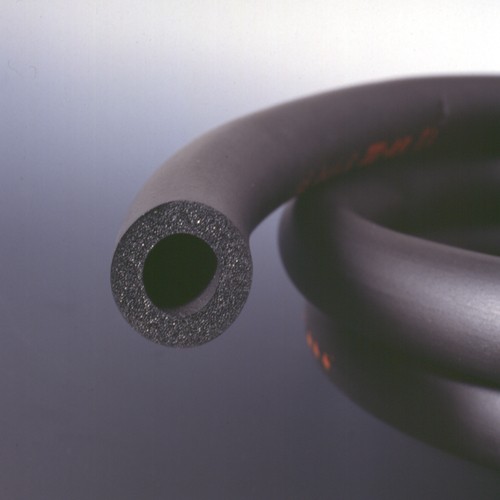
Heat insulation hoses are those cable protection hoses that are intended to protect against heat or cold loss, i.e., they act as thermal insulators. For this purpose, foamed materials are particularly well suited, as they achieve low thermal conductivity due to the high proportion of enclosed gases in the material. Reichelt offers two products for this application. The polyurethane (PUR) insulation hose made of PUR is extremely flexible and prevents condensation formation and the resulting corrosion risk due to its closed structure. The thermal conductivity at +50 °C is very low at 0.039 W/m*K, making it well suited for thermal insulation. The fire behavior was rated as non-flammable (Class B1) according to DIN 4102. The PUR tubing is available in eleven inner diameters between 8.5 and 38 mm and fourteen different wall thicknesses from 7 to 19.5 mm.
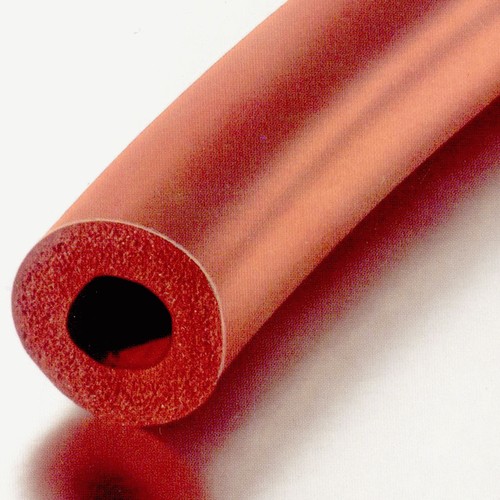
The red-brown silicone insulating tubing has comparable properties. Its thermal conductivity is 0.07 W/m*K (according to VDE 0304). The protective hose consists of a finely porous hose wall and a closed skin, both inside and outside. The bulk material of this cable protection hose is available in nine different diameters (inner Ø: 8 to 30 mm). The specified temperature range is from -50 to +200 °C.
Textile Hoses: Cable Protection Hoses with Braided Sleeving
Braided hoses are defined by their construction from a braided material and offer a good way to protect cables. Occasionally, they are also referred to as textile hoses. RCT offers cable protection hoses with braiding made from the following materials:
- Glass fabric
- Glass yarn
- Low-Density Polyethylene (LDPE)
- Polyester
Uncoated Braided Hoses
Pure braided hoses protect cables, hoses, and lines from mechanical and thermal influences. Reichelt offers specialized hoses in three variants: The polyester braided protective hose, the glass yarn heat protection hose, and the LDPE net hose for surface protection.
Polyester Braided Protective Hoses
The polyester braided protective hose is a long fabric strip that automatically wraps around the element to be protected. This can be cables and cable bundles with already existing connectors or plugs. Due to its special construction, it is not necessary to remove these connectors and plugs to apply the protective hose. Another positive feature is the good resistance of this cable protection hose. It is resistant to brake fluid, fuels, motor oil, windshield washer fluid, as well as mold, fungi, and decay. The polyester material has been tested as halogen-free according to RoHS regulations and can be used between -50 and +150 °C.
Heat Protection Hoses Made of Glass Yarn
As the name suggests, the glass yarn heat protection hose is ideally suited to protect cables, hoses, and lines from high temperatures. With a ceramic coating on the glass yarn, it can be used between -30 and +450 °C. Another application is touch protection. In this case, it shields a hot element from unintended contact, thus preventing burns. The heat protection hose is available in four versions with inner diameters of 16 mm, 25 mm, 32 mm, and 45 mm. Due to the fabric, it stretches by about 25% of the inner diameter, making this cable protection hose very flexible in use.
Net Tubing Made of LDPE
Net tubing made of LDPE are used to protect sensitive components and precision machined parts such as spindles, rollers, shafts, tools, glass, ceramic, and wood parts. The net hose is flexible and conforms to the shape, so even detached parts are completely enclosed. Especially when packing and shipping sensitive parts, the strength of the net hose shows. Despite secure packaging, the parts remain visible through the net hose. The colored design of the net hose makes it easy to distinguish the packaged goods. Reichelt Chemietechnik offers this cable protection hose in eight different colors. Three versions are generally available:
- Standard version
- Version with thicker threads
- Version with wider mesh
Braided Hoses with Coating
Cable protection hoses with a plastic coating are primarily used for one purpose: electrical insulation of conductive components. The glass yarn hose with silicone coating has been designed as a flexible safety insulation hose. It is classified in insulation class H (according to VDE) and has a dielectric strength of 2.5 kV. The specified temperature range is from -30 to +180 °C. In fire tests, this braided hose was classified as self-extinguishing within 60 seconds (IEC 684 Part 2, Section 26, Method A vertical, UL 1441 horizontal) and complies with the fire class IEC 684-3 Sheet 403-405, UL 1441, rated +155 °C, 600 V. The dielectric strength is (according to DIN 40620) 5.0 kV.
Glass Fabric Hoses with Coatings
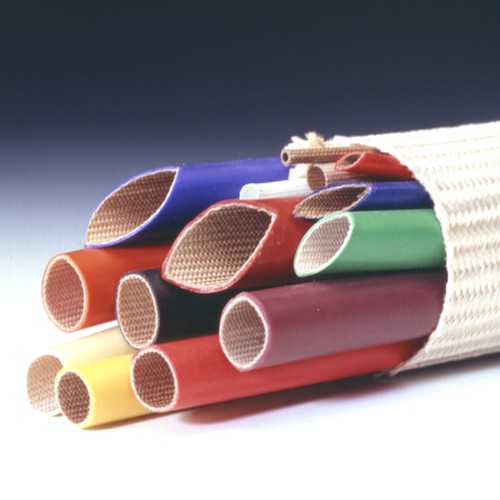
For insulation of lines, cables, and connections in motor, transformer, and machine construction, the glass fabric hose with acrylic resin coating is used. This cable protection hose is often considered the standard protective hose for insulation. It is characterized by its remarkable dielectric strength of an average of 9.0 kV (IEC 684); min. 6.0 kV (IEC 684), 8.0 kV (UL 1441). It is self-extinguishing within 60 seconds (IEC 684 Part 2, Section 26, Method A vertical, UL 1441 horizontal) and meets the fire class IEC 684-3 Sheet 403-405, UL 1441, rated +155 °C, 600 V.
The glass fabric hose with silicone coating differs mainly in its wider temperature range (-70 to +235 °C). Additionally, this cable protection hose is significantly more flexible than the version with acrylic resin. It can easily adapt to various shapes. It must simply be pulled over and can then stretch up to twice its inner diameter. Therefore, a hose with an inner diameter of 6 mm can have an application range from 6 to a maximum of 12 mm. The dielectric strength at room temperature is 9.0 kV. After 7 days of thermal aging at +265 °C, the value remains at 7.0 kV. This value can also be maintained with longer thermal load, e.g., over 60 days. The hose material is self-extinguishing within 60 seconds (IEC 60684 Part 2, Section 26, Method B, Vertical without mandrel, UL 1441) and meets the fire class UL 1441, rated +200 °C, 600 V, VW-1 or FT-1.
Cable Protection Hoses Made of Solid Material
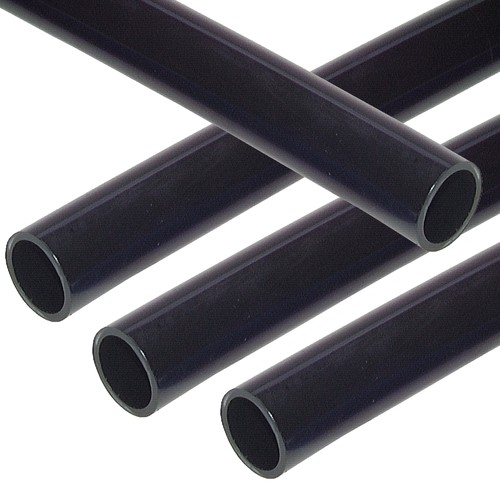
Solid material hoses such as tubes and pipes made of rigid plastic also serve as cable protection hoses. Although any hose could theoretically be used as a "protective sleeve," here the focus is on specialized hoses. Two of these should be introduced. The PVC electrical insulation hose is a thin-walled and flexible but still very stable (Shore hardness A 92°) cable protection hose, which is used in the electrical industry, telecommunications industry, automotive industry, and equipment construction. This is thanks to its excellent electrical properties. The specific electrical resistance is 1012 Ohm*cm, and the dielectric strength is 30 kV/mm. The PVC electrical insulation hose is classified according to VDE 0530 as insulation material class Y.
Designed for explosion-hazardous areas according to Directive 94/9/EC (ATEX) due to its very low surface resistance of <106 Ohm is the electrically conductive PUR chemical and pneumatic hose. Conductivity and very high stability are the core competencies here. This is reflected in the Shore hardness of A 98° as well as in its UV resistance.
Cable Protection Hose for Outdoor Use
For outdoor use, UV-resistant and weather-resistant materials are particularly suitable. PVDF corrugated tubes provide optimal protection with their high chemical resistance and temperature stability from -60°C to +150°C. PA6 corrugated tubes are also a good choice with their high mechanical durability and temperature range from -40°C to +120°C. Polyester braided protective hoses also perform well outdoors due to their resistance to environmental influences such as moisture, mold, and UV radiation at temperatures from -50°C to +150°C.
Cable Protection Hoses for Automotive Use
In the automotive sector, particularly robust and temperature-resistant hoses are required. PVC electrical insulation hoses are widely used in the automotive industry. Polyester braided protective hoses are particularly suitable due to their resistance to brake fluid, fuels, motor oil, and windshield washer fluid. For the engine compartment with high temperatures, glass yarn heat protection hoses are recommended, which can withstand temperatures up to +450°C and also serve as touch protection.
Cable Protection Hose for Underground Installation
For underground installation, PVC-U corrugated tubes are particularly suitable as they are free from plasticizers and thus do not become brittle due to soil moisture. PP corrugated tubes offer additional security with their high dielectric strength of 70-90 kV/mm for underground installation. Both materials are resistant to soil acids and provide long-term protection against moisture and mechanical stress.
Cable Protection Hoses Available at rct-online.de/en
In the range of Reichelt Chemietechnik, you will not only find cable protection hoses for your application but also suitable accessories, such as cocks, taps, and valves, as well as many other products for fluid technology. You can conveniently order cable protection hoses and other customized products for your application in our online shop – with no minimum order quantity. Benefit from high-quality and readily available products at competitive prices. If you are unsure about your selection or have any questions, feel free to contact us, either by phone or email. You can also find more chemical-technical information about the materials offered in our glossary. Our resistance list will help you easily determine the ideal material that solves your problem. We look forward to your order!
Close window
Cable Protection Hoses: Mechanical, Thermal, and Chemical Protection
Electrical systems have become indispensable in modern life. The coffee machine, the car, or the computer. Cables are found everywhere for the transmission of data or electrical power. To ensure the reliable operation of all these devices, it is important to protect these cables – with the help of cable protection hoses, heat shrink hoses, protective and insulating hoses for cables.
What is the Purpose of the Cable Protection Hose?
First, it is important to discuss what the protection is intended to guard against in order to take the appropriate measures. Essentially, cables, which are usually flexible, are at risk of mechanical wear due to friction, bending, and crushing. In many applications, such as vehicle construction, high thermal stresses occur. It is also important to protect the valuable wiring from these stresses to ensure its long-term function. The third factor to consider is the danger posed by chemical media. Corrosion or damage caused by acids or solvents pose a real threat to all materials and must always be considered when designing devices and systems. RCT Reichelt Chemietechnik, as a specialist in hoses, offers suitable cable protection hoses for all these applications.
Corrugated Pipes as Cable Protection Hoses
Corrugated pipes are the standard for mechanical cable protection. Due to their construction, they are particularly flexible and can be installed in tight bends. Their cross-section makes them significantly more resistant to impacts, shocks, and crushing than cable protection hoses with a simple cross-section. Corrugated tubes for cable protection are made from various plastics:
- Fluorethylene Propylene (FEP)
- Low-Density Polyethylene (LDPE)
- Modified Fluoroalkoxy (MFA)
- Polyamide 6 (PA 6)
- Perfluoroalkoxy (PFA)
- Polypropylene (PP)
- Polytetrafluoroethylene (PTFE)
- Polyvinyl Chloride (PVC)
- Polyvinylidene Fluoride (PVDF)
Corrugated Tubes for Nearly All Applications
Made of LDPE, the black or natural-colored LDPE corrugated tube, with a density of only 0.92 to 0.94 g/cm³ (according to DIN 53479), is a lightweight. It is characterized by high bend and abrasion resistance, impact resistance (tested without breaking according to DIN 53453), and chemical resistance to many substances such as acids, alkalis, and saline solutions. When it comes to electrical power, this cable protection tube is also convincing. The leakage current resistance is KA3b (according to DIN 53480) and the dielectric strength is 75 to 90 kV/mm (according to DIN 53481).
Also a lightweight is the Polyamide 6 corrugated tube with 1.12 to 1.15 g/cm³. Even at high temperatures, PA 6 material shows high shape retention as a cable protection tube. This corrugated tube is approved for temperature ranges from -40 °C to +120 °C. It has been tested for notch impact strength (DIN 53453) and impact strength (DIN 53453) without breaking, thus proving its mechanical suitability for cable protection.
MFA corrugated tubes show themselves to be temperature-stable, flame-retardant, and highly resistant cable protection tubes. With a temperature range from -200 °C to +240 °C and fire class UL 94 V-0, FMSS 302 Type A, they offer a very wide application range for thermal stresses. Available in nine different inner diameters.
Corrugated Tubes for Special Applications
For explosion-hazardous areas, conductive hoses (antistatic hoses) are required. The PTFE anti-static corrugated tube is suitable for this purpose. The resistance of <10⁶ Ohm/m is achieved by adding 25% carbon powder (based on total weight). PTFE is physiologically harmless, which is why this corrugated tube is preferred over other cable protection hoses in sensitive applications.
Ideal for applications in biotechnology, environmental analysis, and semiconductor technology is the PVDF corrugated pipe. Temperature stability and flame resistance, in addition to chemical resistance, are its central properties. PVDF impresses with the highest chemical resistance to almost all aggressive media, such as halogens, ozone, strong acids and alkalis, solvents, and aromatic hydrocarbons. The PVDF material is thermally stable between +60 °C and +150 °C, and its sterilizability at +121 °C makes this cable protection tube particularly suitable for biomedical applications.
Made of FEP, the smooth-ended corrugated tube is a temperature-resistant (-260 °C to +200 °C) and flexible cable protection tube used in machine and apparatus construction. This corrugated tube can also withstand overpressure and vacuum (vacuum resistance is 99%). The FEP corrugated tube meets the requirements of the FDA Directive 21 CFR 17.1550 (free from extractable components and physiologically harmless).
Robust Corrugated Tubes Made of PVC, PP, and PFA
PVC is flame-retardant, flexible, and mechanically durable. The high flexibility is reflected in the E-modulus value, which is between 1800 and 3500 N/mm² (according to DIN 53457). PVC-U corrugated tubes should only be used in temperature ranges between 0 and +60 °C. PVC is not resistant to aromatic and halogenated solvents as well as strong acids and alkalis. However, it shines with its relatively low price. All in all, a solid corrugated tube for protecting cables in not too harsh environments.
PP corrugated tubes are characterized by mechanical durability and good chemical resistance. The cable protection hoses made of polypropylene are available in numerous nominal sizes and are thermally resistant from -40 °C to +100 °C. Material fatigue can occur outside this range.
PFA is particularly suitable for the production of corrugated tubes due to its very high flexibility (E-modulus 200 to 800 N/mm²). This combines an already flexible material with a corrugated design. Therefore, Reichelt Chemietechnik offers three variants: The PFA corrugated tube is the basic variant. With a tensile strength of 15 to 32 N/mm² and an elongation at break of 200 – 400%, it is one of the most flexible corrugated tube models in the range. In addition to its mechanical properties, PFA also convinces with its thermal properties and chemical resistance. This cable protection tube is suitable for a temperature range from -200 °C to +250 °C. A variant with smooth ends was developed specifically for applications where a cylindrical pipe connection is required. Virtually identical in properties to the PFA corrugated tube, the cylindrical end pieces allow for easy connection with THOMAFLUID® pipe connectors. The third variant of this hose is designed for explosion-hazardous areas.
Shrink Tubes as Cable Protection Hoses for Exact Fit Protection
Heat shrink tubes are characterized by shrinking when exposed to heat, as the name implies, and thus fitting exactly to any structure. This protects cables and connections from mechanical damage, chemically aggressive media, and also provides electrical insulation. The following materials are used to make shrink tubes, which are used as cable protection hoses:
Polyolefin and PTFE Shrink Tubes, Versatile and Widely Used
The material class of polyolefins, including polyethylene and polypropylene, is probably the most common material for shrink tubes. Like other shrink tubes, those made from polyolefin are sold both as bulk material and in sets. RCT offers different types: shrink ratios of 2:1 and 3:1 are available. All share the shrink temperature of approx. +90 °C and the temperature range of approx. -55 °C to +110 °C.
Color-coded variants are also available (blue, yellow, red, green/yellow, black, and white). The two sets each offer a comprehensive range of cuts of the polyolefin shrink tube variants in different nominal sizes. They differ in the number of cuts included. The shrink tube set "1000" includes four different cuts in the most common sizes, while "2000" includes fourteen different cuts.
Shrink tubes made of PTFE are available in shrink ratios of 2:1 and 4:1. They provide ideal corrosion protection for all types of electrical components. Due to their excellent chemical and thermal properties, PTFE is suitable for demanding applications. The shrink temperature is between +330 °C and +350 °C and can then be used without issue between -65 °C and +260 °C. These cable protection tubes are also made according to the production standard MIL-I-23053/12 A, Class 5. Naturally, this type of shrink tube is also available as a set. It includes two lengths of 0.5 m each in nominal sizes of 2.0 mm, 3.2 mm, 6.4 mm, 9.5 mm, and 12.7 mm with a wall thickness of approx. 0.8 mm before shrinking.
Shrink Tubes Made of FEP and PVDF
Fluorethylenpropylen shrinks between +204 °C and +216 °C. The FEP shrinkable tubing offered by RCT has a shrink ratio of 1.3:1. After shrinking, the cable protection tube can be thermally stable between +40 °C and +216 °C. The shrink tube is transparent for optical inspection of the protected area. With eleven different diameters (0.79 to 25.4 mm before shrinking), this product is found in many applications.
The shrink tubes made of PVDF shrink at +175 °C. Like the FEP model, the color is transparent to allow optical inspection of the protected cables, solder joints, or crimp connections. PVDF tubes shrink with a ratio of 2:1, making it easier to slide the shrink tube onto cables and lines to be protected. In fire tests, PVDF is self-extinguishing. This shrink tube is available as bulk material, in 120 cm lengths, and in sets with two lengths of 0.6 m each in sizes 1.2 mm, 1.6 mm, 2.4 mm, 4.8 mm, 6.4 mm, and 9.5 mm with a wall thickness of approx. 0.13 mm before shrinking.
Heat Insulation Hoses
Heat insulation hoses are those cable protection hoses that are intended to protect against heat or cold loss, i.e., they act as thermal insulators. For this purpose, foamed materials are particularly well suited, as they achieve low thermal conductivity due to the high proportion of enclosed gases in the material. Reichelt offers two products for this application. The polyurethane (PUR) insulation hose made of PUR is extremely flexible and prevents condensation formation and the resulting corrosion risk due to its closed structure. The thermal conductivity at +50 °C is very low at 0.039 W/m*K, making it well suited for thermal insulation. The fire behavior was rated as non-flammable (Class B1) according to DIN 4102. The PUR tubing is available in eleven inner diameters between 8.5 and 38 mm and fourteen different wall thicknesses from 7 to 19.5 mm.
The red-brown silicone insulating tubing has comparable properties. Its thermal conductivity is 0.07 W/m*K (according to VDE 0304). The protective hose consists of a finely porous hose wall and a closed skin, both inside and outside. The bulk material of this cable protection hose is available in nine different diameters (inner Ø: 8 to 30 mm). The specified temperature range is from -50 to +200 °C.
Textile Hoses: Cable Protection Hoses with Braided Sleeving
Braided hoses are defined by their construction from a braided material and offer a good way to protect cables. Occasionally, they are also referred to as textile hoses. RCT offers cable protection hoses with braiding made from the following materials:
- Glass fabric
- Glass yarn
- Low-Density Polyethylene (LDPE)
- Polyester
Uncoated Braided Hoses
Pure braided hoses protect cables, hoses, and lines from mechanical and thermal influences. Reichelt offers specialized hoses in three variants: The polyester braided protective hose, the glass yarn heat protection hose, and the LDPE net hose for surface protection.
Polyester Braided Protective Hoses
The polyester braided protective hose is a long fabric strip that automatically wraps around the element to be protected. This can be cables and cable bundles with already existing connectors or plugs. Due to its special construction, it is not necessary to remove these connectors and plugs to apply the protective hose. Another positive feature is the good resistance of this cable protection hose. It is resistant to brake fluid, fuels, motor oil, windshield washer fluid, as well as mold, fungi, and decay. The polyester material has been tested as halogen-free according to RoHS regulations and can be used between -50 and +150 °C.
Heat Protection Hoses Made of Glass Yarn
As the name suggests, the glass yarn heat protection hose is ideally suited to protect cables, hoses, and lines from high temperatures. With a ceramic coating on the glass yarn, it can be used between -30 and +450 °C. Another application is touch protection. In this case, it shields a hot element from unintended contact, thus preventing burns. The heat protection hose is available in four versions with inner diameters of 16 mm, 25 mm, 32 mm, and 45 mm. Due to the fabric, it stretches by about 25% of the inner diameter, making this cable protection hose very flexible in use.
Net Tubing Made of LDPE
Net tubing made of LDPE are used to protect sensitive components and precision machined parts such as spindles, rollers, shafts, tools, glass, ceramic, and wood parts. The net hose is flexible and conforms to the shape, so even detached parts are completely enclosed. Especially when packing and shipping sensitive parts, the strength of the net hose shows. Despite secure packaging, the parts remain visible through the net hose. The colored design of the net hose makes it easy to distinguish the packaged goods. Reichelt Chemietechnik offers this cable protection hose in eight different colors. Three versions are generally available:
- Standard version
- Version with thicker threads
- Version with wider mesh
Braided Hoses with Coating
Cable protection hoses with a plastic coating are primarily used for one purpose: electrical insulation of conductive components. The glass yarn hose with silicone coating has been designed as a flexible safety insulation hose. It is classified in insulation class H (according to VDE) and has a dielectric strength of 2.5 kV. The specified temperature range is from -30 to +180 °C. In fire tests, this braided hose was classified as self-extinguishing within 60 seconds (IEC 684 Part 2, Section 26, Method A vertical, UL 1441 horizontal) and complies with the fire class IEC 684-3 Sheet 403-405, UL 1441, rated +155 °C, 600 V. The dielectric strength is (according to DIN 40620) 5.0 kV.
Glass Fabric Hoses with Coatings
For insulation of lines, cables, and connections in motor, transformer, and machine construction, the glass fabric hose with acrylic resin coating is used. This cable protection hose is often considered the standard protective hose for insulation. It is characterized by its remarkable dielectric strength of an average of 9.0 kV (IEC 684); min. 6.0 kV (IEC 684), 8.0 kV (UL 1441). It is self-extinguishing within 60 seconds (IEC 684 Part 2, Section 26, Method A vertical, UL 1441 horizontal) and meets the fire class IEC 684-3 Sheet 403-405, UL 1441, rated +155 °C, 600 V.
The glass fabric hose with silicone coating differs mainly in its wider temperature range (-70 to +235 °C). Additionally, this cable protection hose is significantly more flexible than the version with acrylic resin. It can easily adapt to various shapes. It must simply be pulled over and can then stretch up to twice its inner diameter. Therefore, a hose with an inner diameter of 6 mm can have an application range from 6 to a maximum of 12 mm. The dielectric strength at room temperature is 9.0 kV. After 7 days of thermal aging at +265 °C, the value remains at 7.0 kV. This value can also be maintained with longer thermal load, e.g., over 60 days. The hose material is self-extinguishing within 60 seconds (IEC 60684 Part 2, Section 26, Method B, Vertical without mandrel, UL 1441) and meets the fire class UL 1441, rated +200 °C, 600 V, VW-1 or FT-1.
Cable Protection Hoses Made of Solid Material
Solid material hoses such as tubes and pipes made of rigid plastic also serve as cable protection hoses. Although any hose could theoretically be used as a "protective sleeve," here the focus is on specialized hoses. Two of these should be introduced. The PVC electrical insulation hose is a thin-walled and flexible but still very stable (Shore hardness A 92°) cable protection hose, which is used in the electrical industry, telecommunications industry, automotive industry, and equipment construction. This is thanks to its excellent electrical properties. The specific electrical resistance is 1012 Ohm*cm, and the dielectric strength is 30 kV/mm. The PVC electrical insulation hose is classified according to VDE 0530 as insulation material class Y.
Designed for explosion-hazardous areas according to Directive 94/9/EC (ATEX) due to its very low surface resistance of <106 Ohm is the electrically conductive PUR chemical and pneumatic hose. Conductivity and very high stability are the core competencies here. This is reflected in the Shore hardness of A 98° as well as in its UV resistance.
Cable Protection Hose for Outdoor Use
For outdoor use, UV-resistant and weather-resistant materials are particularly suitable. PVDF corrugated tubes provide optimal protection with their high chemical resistance and temperature stability from -60°C to +150°C. PA6 corrugated tubes are also a good choice with their high mechanical durability and temperature range from -40°C to +120°C. Polyester braided protective hoses also perform well outdoors due to their resistance to environmental influences such as moisture, mold, and UV radiation at temperatures from -50°C to +150°C.
Cable Protection Hoses for Automotive Use
In the automotive sector, particularly robust and temperature-resistant hoses are required. PVC electrical insulation hoses are widely used in the automotive industry. Polyester braided protective hoses are particularly suitable due to their resistance to brake fluid, fuels, motor oil, and windshield washer fluid. For the engine compartment with high temperatures, glass yarn heat protection hoses are recommended, which can withstand temperatures up to +450°C and also serve as touch protection.
Cable Protection Hose for Underground Installation
For underground installation, PVC-U corrugated tubes are particularly suitable as they are free from plasticizers and thus do not become brittle due to soil moisture. PP corrugated tubes offer additional security with their high dielectric strength of 70-90 kV/mm for underground installation. Both materials are resistant to soil acids and provide long-term protection against moisture and mechanical stress.
Cable Protection Hoses Available at rct-online.de/en
In the range of Reichelt Chemietechnik, you will not only find cable protection hoses for your application but also suitable accessories, such as cocks, taps, and valves, as well as many other products for fluid technology. You can conveniently order cable protection hoses and other customized products for your application in our online shop – with no minimum order quantity. Benefit from high-quality and readily available products at competitive prices. If you are unsure about your selection or have any questions, feel free to contact us, either by phone or email. You can also find more chemical-technical information about the materials offered in our glossary. Our resistance list will help you easily determine the ideal material that solves your problem. We look forward to your order!