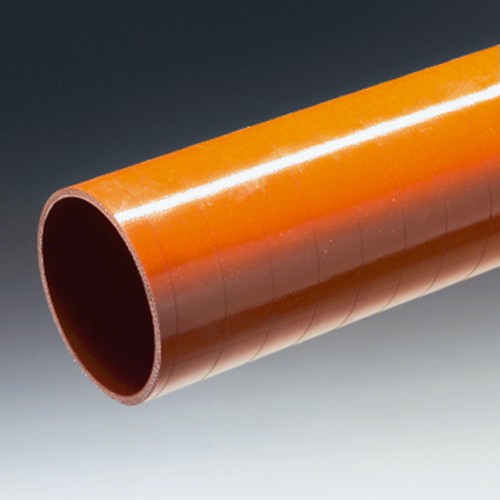
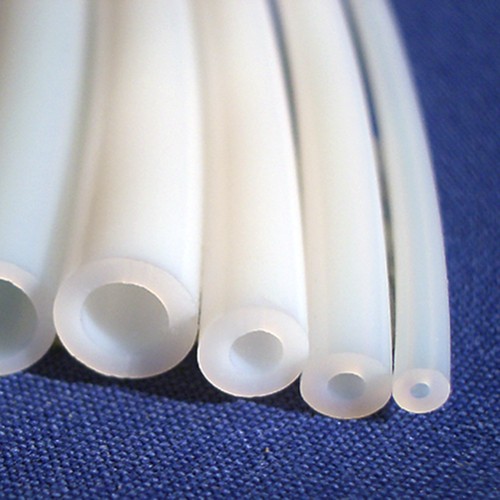
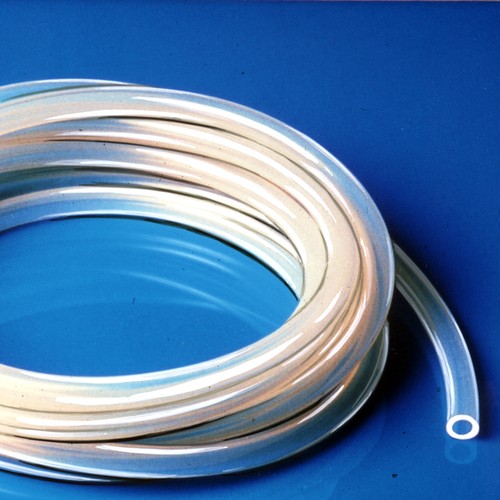
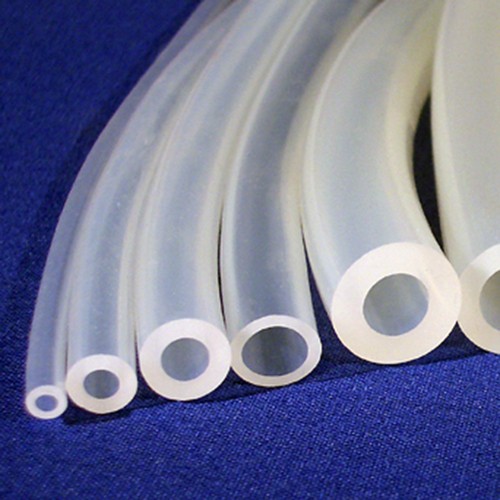
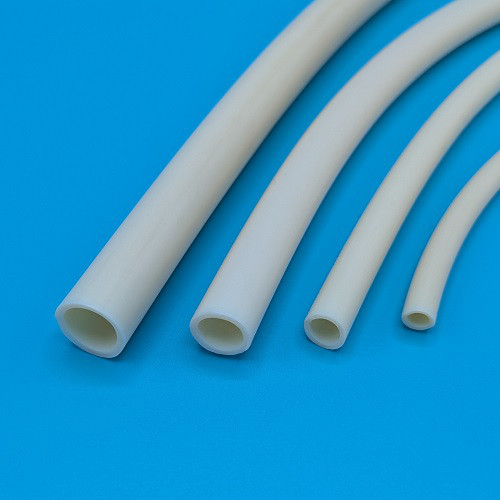
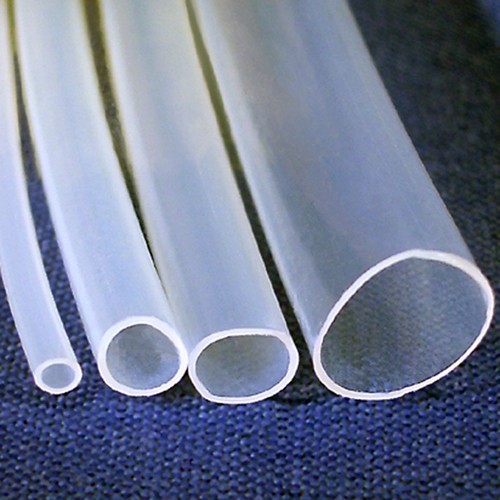
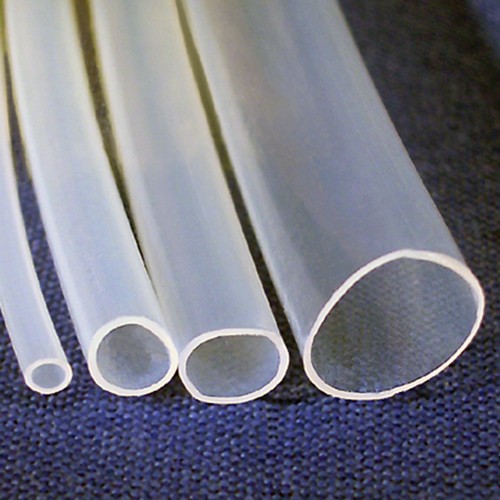
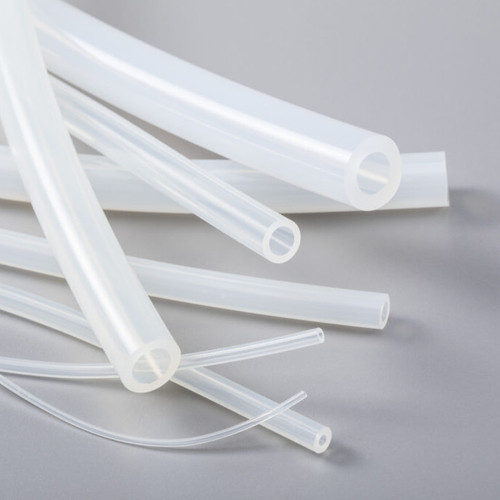
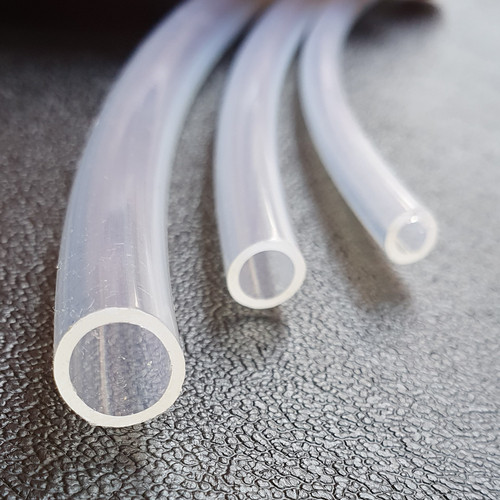
Heat-resistant hoses and heat-resistant rubber or plastic hoses are manufactured for temperatures up to +300 °C.
RCT supplies heat-resistant rubber hoses as well as heat-resistant plastic tubing. The rubber versions are designed for continuous use up to +300 °C, while the plastic types are suitable up to a maximum of +260 °C.
Heat-resistant hoses made of rubber or plastic
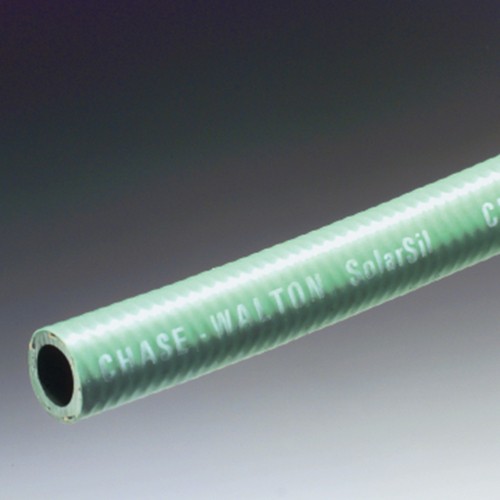
Heat-resistant rubber hoses include EPDM/PP high-performance pressure hoses and EPDM/PP high-performance pump hoses, as well as EPDM steam and high-pressure types and EPDM industrial lines. A special group are silicone-rubber products as high-temperature rubber lines, produced with and without reinforcement and designed to meet the highest thermal demands.
Heat-resistant plastic tubing covers MFA chemical tubing, PEEK high-pressure capillaries, PFA chemical tubing/PFA Antista variants, PFA corrugated lines as well as PTFE tubing/PTFE Antista designs, PTFE corrugated tubes and PTFE high-temperature pressure hoses. In addition, RCT offers PTFE suction and pressure assemblies as well as PTFE corrugated tubing with a smooth outer jacket.
In detail, the range of heat-resistant rubber and plastic products is as follows:
EPDM
EPDM steam hoses are heat-resistant rubber variants used in food processing, the soft-drink industry, dairy operations and process engineering. They are suitable for conveying hot water and steam. Max. operating pressure: 7 bar at +164 °C; max. temperature load likewise +164 °C; burst pressure: 70 bar at +20 °C.
EPDM industrial designs with glass-fabric braid withstand radiant heat up to +450 °C; allowable media temperature +100 °C; configured for max. operating pressures of 20 bar at +20 °C.
EPDM high-pressure twin-jacket versions with single steel braid cover working temperatures from −40 °C to +155 °C; they are therefore classed as heat-resistant rubber hoses and are used on high-pressure cleaners for hot water and steam.
EPDM/PP high-performance pressure and chemical hoses cover pressure ranges from 11 bar to 17 bar at +20 °C depending on size. These are considered heat-resistant rubber lines, with a working temperature from −50 °C to +140 °C. Notable are their chemical stability to most inorganic and organic media and their low gas permeability. Reinforcement: polyester braid; Shore hardness A 73° per DIN 53505 (German standard for Shore hardness, equivalent to ISO 7619-1 / ISO 868).
EPDM/PP high-performance pump and chemical designs have a Shore hardness of A 68° per DIN 53505; working temperature −40 °C to +150 °C, classifying them as heat-resistant rubber tubing that complies with FDA and BfR requirements.
FPM
FPM micro “spaghetti” chemical lines are heat-resistant rubber tubing for working temperatures from −20 °C to +200 °C, with short-term exposure up to +250 °C. They are virtually gas-tight, enabling the transfer of aggressive gases and vapors.
FPM pump hoses – inch sizes – are suitable for solvents, aliphatic and aromatic hydrocarbons and oils, as well as aggressive gases and vapors. This Viton® line can therefore be classified for gas service. Temperature range −20 °C to +200 °C, short-term up to +250 °C. The FPM/FKM type meets flammability class UL 94 V-0.
FPM variants with steel-wire braid (also termed FKM/Viton®) are suitable for high temperatures with a working range from −25 °C to +180 °C. Available sizes: DN 8, DN 10, DN 12, DN 15, DN 18 and DN 20; supplied in 1 m, 5 m and 15 m lengths.
Silicone
Puri-Flex pump hoses are silicone tubing for −50 °C to +135 °C; they are therefore heat-resistant rubber products for biotechnology, pharmaceutical processing, food applications and laboratory use. Shore hardness A 68° per DIN 53505; compliant with FDA and BfR and meet USP Class VI.
Silicone analysis tubing is made from premium elastomers; it is heat- and hot-air-resistant and thus belongs to the group of heat-resistant rubber lines. Working temperature −60 °C to +200 °C, with short-term exposure up to +350 °C; stable against live steam up to +140 °C and steam-sterilizable at +136 °C. Highly flexible and elastic; Shore hardness A 60° per DIN 53505.
Silicone analysis lines – coloured – are used for insulating wires and strands in electronics/electrical engineering. They are weather-, ageing-, UV- and ozone-proof; working temperature −60 °C to +200 °C (Class H); steam-sterilizable at +160 °C and hot-air-stable. Elongation at break < 300 % per DIN 53504 (German standard for tensile/elongation properties, equivalent to ISO 37 / ISO 34).
Silicone Antista chemical tubing is electrically conductive/dissipative and also classed as heat-resistant rubber lines; working temperature −50 °C to +180 °C; Shore hardness A 50° or A 70° per DIN 53505. Conductive properties are achieved by compounding silicone with carbon, retaining full elasticity. Elongation at break 350 % or 200 % depending on hardness per DIN 53504.
Silicone chemical tubing – standard – is used in laboratory, medical-technology and process-engineering applications. It offers excellent thermal stability from −60 °C to +200 °C, with short-term up to +250 °C; physiologically safe with an anti-adhesive surface. Not suitable for use as gas hoses.
Silicone pressure and vacuum hoses are intended for the pharmaceutical and food industries, vacuum and laboratory technology, and biotechnology. They offer outstanding chemical durability, are non-toxic, pyrogen-free and blood-compatible; compliant with FDA, BfR and USP Class VI. Temperature range −50 °C to +150 °C; depending on size, operating pressure 12–14 bar at +100 °C; vacuum resistance 99.9 % at +100 °C.
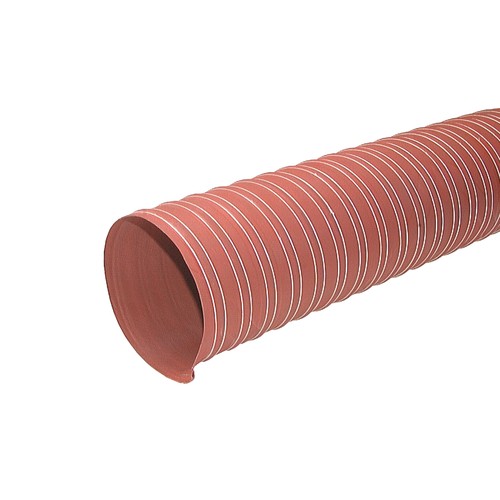
Silicone hot-air tubing is highly flexible, elastic and robust; well-suited for vacuum service. Operating range −85 °C to +310 °C; an internal spring steel spiral ensures dimensional stability.
Silicone high-heat chemical hoses are suitable for continuous elevated thermal service; they cover −50 °C to +300 °C. Shore hardness A 60° per DIN 53505; elongation at break 390 % per DIN 53504. Autoclavable at +136 °C and hot-air-sterilizable at +250 °C.
Silicone high-heat pressure chemical hoses with steel-wire braid are robust yet flexible, also at low temperatures. Suitable for continuous elevated thermal service; ozone-, weather- and ageing-resistant; pyrogen-free and non-toxic. Shore hardness A 60° per DIN 53505; working temperature −50 °C to +190 °C (short-term +250 °C). Max. working pressure for all sizes: 8 bar at +20 °C; reinforcement: internal glass-fiber braid.
Silicone high-temperature pharma pressure hoses – flexible – are intended for −40 °C to +150 °C; Shore hardness A 60° per DIN 53505; depending on size, working pressure 3.5–8.5 bar at +20 °C. Preferred uses in biotechnology and the pharmaceutical industry; excellent hot-air and cold stability; physiologically absolutely safe.
Silicone insulation tubing is used for thermal insulation; highly flexible, consisting of fine-pored cells with skin. Shore hardness A 15° per DIN 53505; temperature range −50 °C to +200 °C.
Silicone pharma pressure hoses with glass-fiber fabric reinforcement are designed for high-pressure applications between 7.5 bar and 20 bar at +20 °C depending on size. Translucent; Shore hardness A 70° per DIN 53505; working temperature −60 °C to +200 °C, short-term up to +250 °C. Elongation at break 460 % per DIN 53504. Compliant with FDA, BfR, USP Class VI and the European Pharmacopoeia.
Silicone pharma colour-code tubing is produced in blue, yellow, green, red, orange, violet and white per the RAL colour scale. Pyrogen-free and non-toxic; thermosensitive and biocompatible; notably elastic and flexible. Excellent hot-air stability and thermal endurance; suitable for −60 °C to +220 °C, short-term up to +280 °C. Elongation at break 500 % per DIN 53504; compliant with FDA, BfR, USP Class VI and the European Pharmacopoeia.
Silicone pump hoses – inch sizes, platinum-cured – cover −51 °C to +232 °C; Shore hardness A 55° per DIN 53505 for outstanding elasticity and flexibility. Peroxide-free and without extractable additives or plasticizers; anti-adhesive surface.
Silicone turbocharger lines are designed for −65 °C to +260 °C; Shore hardness A 55° per DIN 53505. Suitable only for low-pressure service, typically 2–4 bar at +20 °C depending on size. Notable for excellent hot-air and cold stability.
Silicone heat-exchanger profile hoses are used for cooling, heating and tempering reactors and flasks. Highly flexible and elastic; Shore hardness A 60° per DIN 53505; max. operating pressure 0.8 bar at +20 °C; working temperature −50 °C to +200 °C.
Silicone hoses for medical technology – platinum-cured – are intended for −60 °C to +200 °C. Autoclavable at +136 °C and hot-air-sterilizable at +160 °C; Shore hardness A 60° per DIN 53505. Made from platinum-cured silicone; free from extractables; exceptionally pure, non-toxic, absolutely tasteless and odourless, with excellent physiological properties and biocompatibility.
Silicone pump hoses with 2 and 3 stoppers belong to this group; suitable for −51 °C to +238 °C. Equipped with 2 or 3 stoppers for fixation in peristaltic-pump heads or cassette pump heads. Compliant with FDA, BfR, USP Class VI and the European Pharmacopoeia.
MFA
MFA chemical tubing/heat-resistant plastic tubing is absolutely crystal-clear and rated as highly durable for extreme thermal and mechanical demands. Applications include biotechnology, semiconductor fabrication, and chemical and laboratory technology. As heat-resistant plastic tubing they cover −70 °C to +240 °C with Shore hardness D 59° per DIN 53505. Depending on size, max. operating pressure 6.5–26 bar at +20 °C.
FEP
FEP chemical tubing is heat-resistant plastic tubing for conveying liquids and gases in laboratory technology, pilot-plant service and small-scale production. They provide outstanding thermal and mechanical stability together with excellent chemical durability. Temperature range −170 °C to +200 °C. Shore hardness D 53° per DIN 53505; gas-tight and used for aggressive vapors and gases. Compliant with FDA and BfR.
FEP chemical tubing – OD-toleranced – is a special variant used as hydraulic and pneumatic lines under high temperature requirements; also used in medical and biotechnical applications. Shore hardness D 55° per DIN 53505; working temperature −40 °C to +150 °C, classifying them as heat-resistant plastic tubing for demanding conditions.
PEEK
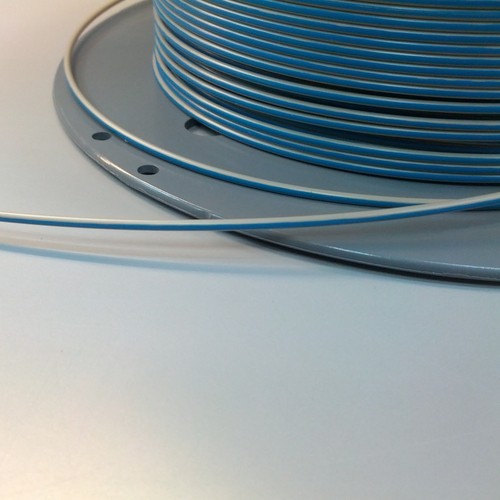
PEEK high-pressure capillary hoses – striped – are designed for 52–420 bar. They are also heat-resistant plastic hoses, covering −40 °C to +250 °C, short-term to +300 °C. PEEK types are odourless and tasteless, physiologically safe and biocompatible.
PEEK spiral capillary hoses are configured for high-pressure loads up to 150 bar max.; likewise heat-resistant plastic hoses with working temperatures from −40 °C to +250 °C.
PFA
PFA Antista chemical tubing/heat-resistant plastic tubing is electrically dissipative/conductive and used as antistatic tubing in potentially explosive atmospheres. They convey ultra-pure chemicals and gases; physiologically safe, non-toxic and free from extractables; thermoplastically processable and thus weldable. Working temperature −200 °C to +250 °C; surface resistance < 10⁶ Ω.
PFA chemical tubing is used particularly in process and production engineering, chemical technology, mechanical and apparatus engineering. They combine top-tier chemical stability with maximum temperature ; the surface is anti-adhesive, natural/translucent. Temperature range −260 °C to +260 °C.
ETFE
ETFE Antista chemical tubing is electrically conductive/dissipative with surface resistance < 10⁶ Ω. These antistatic fluoropolymer lines cover −200 °C to +250 °C and are therefore heat-resistant plastic tubing. Shore hardness D 65° per DIN 53505; smooth with an anti-adhesive inner surface; physiologically safe, non-toxic and free from extractables.
PTFE
PTFE chemical tubing is used in chemical process engineering, analytical technology, microelectronics and biotechnology. They offer very good stability against inorganic and organic media as well as excellent temperature resistance. As heat-resistant plastic tubing they cover −200 °C to +260 °C, short-term to +280 °C; anti-adhesive surface with very good dielectric properties. Gas-tight with very low gas permeability.
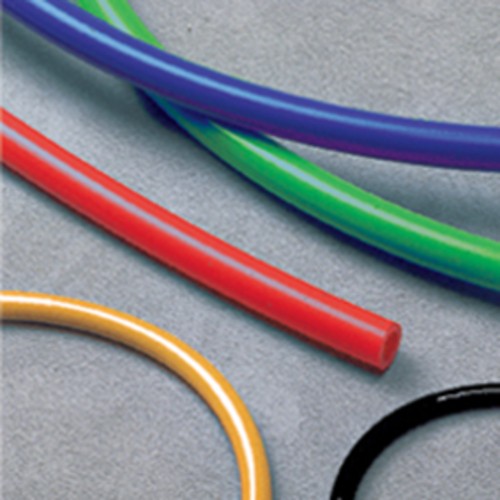
PTFE chemical tubing – coloured – is available in blue, orange, green, yellow, red and black per the RAL scale. Applications include microelectronics, analytics, biotechnology, medical technology and laboratory use. Excellent temperature stability: −200 °C to +260 °C. Extremely low gas permeability (practically gas-tight); physiologically safe, non-toxic and free from extractables; very good coefficient of sliding friction.
PTFE high-pressure hoses – heavy-wall – are heat-resistant plastic hoses for the highest pressure applications, 800–900 bar at +20 °C depending on size; temperature range −60 °C to +260 °C.
PTFE suction and pressure hoses are rated up to 16 bar at +20 °C for all types; vacuum capacity 600–800 mbar. They are heat-resistant plastic types with a temperature range from −30 °C to +150 °C. Applications in pharmaceutical processing, biotechnology, process engineering and chemical technology. The outer jacket is electrically dissipative with surface resistance < 10⁶ Ω. Compliant with FDA and BfR.
PTFE corrugated tubing with smooth outer jacket is a corrugated PTFE line for the highest temperature requirements; temperature range −20 °C to +150 °C; max. operating pressure 16 bar at +20 °C; vacuum capacity 0.9 bar at +20 °C. The inner liner meets FDA and BfR standards.
PTFE high-pressure hoses are PTFE pressure hoses with stainless-steel braid; compliant with FDA and BfR and offering top-level temperature resistance from −60 °C to +260 °C. Max. operating pressure 60–265 bar at +20 °C depending on size.
PTFE chemical tubing – micro thin-wall – is specialty tubing for microelectronics, analytics and laboratory work, as well as biotechnology, medical technology and bench-scale chemical processing. They feature remarkable chemical stability, a very low coefficient of friction and an anti-adhesive surface. Wide temperature range −260 °C to +260 °C, with short-term up to +280 °C. The high service temperatures qualify PTFE as a heat-resistant plastic tubing for chemical, lab and analytical applications.
Stainless steel
Stainless-steel pressure hoses are annularly corrugated types made of 1.4541 with single stainless-steel braid. Used in process chemistry, plant operations and apparatus engineering. As metal designs they are flexible yet pressure-resistant and offer high temperature stability from −10 °C to +500 °C; they therefore belong to the group of heat-resistant stainless-steel hoses. They also provide corrosion protection and torsional stiffness.
Stainless-steel pressure hose assemblies with threaded fittings are annularly corrugated hoses made of 1.4404 with single braid; one end fitted with a hex nipple (male thread), the other with a cone-sealing fitting made of 1.4571. Temperature range −10 °C to +300 °C; thus classed as heat-resistant hose assemblies. Max. operating pressure 25 bar at +20 °C for all types.
Stainless-steel vacuum hoses with small-flange connections are classed as heat-resistant hoses; they are annularly corrugated stainless-steel types per DIN 14541 (German standard for corrugated metal hoses; no direct ISO equivalent, EU usage). Temperature range −10 °C to +550 °C, identifying them as heat-resistant metal hoses. Vacuum integrity is verified by helium leak testing at a leak rate < 10⁻⁹ mbar/L/s.
Order heat-resistant hoses at rct-online.de/en
With more than 20 years of experience in hose technology, we supply a comprehensive range of heat-resistant hoses for your application. Delivery is ex-stock with no minimum-order surcharge, including short lengths. Our specialists are happy to help you select the optimal solution—by phone or e-mail. With our technical expertise, we will identify the right hose for your specific requirements.
Close window
Heat-resistant hoses and heat-resistant rubber or plastic hoses are manufactured for temperatures up to +300 °C.
RCT supplies heat-resistant rubber hoses as well as heat-resistant plastic tubing. The rubber versions are designed for continuous use up to +300 °C, while the plastic types are suitable up to a maximum of +260 °C.
Heat-resistant hoses made of rubber or plastic
Heat-resistant rubber hoses include EPDM/PP high-performance pressure hoses and EPDM/PP high-performance pump hoses, as well as EPDM steam and high-pressure types and EPDM industrial lines. A special group are silicone-rubber products as high-temperature rubber lines, produced with and without reinforcement and designed to meet the highest thermal demands.
Heat-resistant plastic tubing covers MFA chemical tubing, PEEK high-pressure capillaries, PFA chemical tubing/PFA Antista variants, PFA corrugated lines as well as PTFE tubing/PTFE Antista designs, PTFE corrugated tubes and PTFE high-temperature pressure hoses. In addition, RCT offers PTFE suction and pressure assemblies as well as PTFE corrugated tubing with a smooth outer jacket.
In detail, the range of heat-resistant rubber and plastic products is as follows:
EPDM
EPDM steam hoses are heat-resistant rubber variants used in food processing, the soft-drink industry, dairy operations and process engineering. They are suitable for conveying hot water and steam. Max. operating pressure: 7 bar at +164 °C; max. temperature load likewise +164 °C; burst pressure: 70 bar at +20 °C.
EPDM industrial designs with glass-fabric braid withstand radiant heat up to +450 °C; allowable media temperature +100 °C; configured for max. operating pressures of 20 bar at +20 °C.
EPDM high-pressure twin-jacket versions with single steel braid cover working temperatures from −40 °C to +155 °C; they are therefore classed as heat-resistant rubber hoses and are used on high-pressure cleaners for hot water and steam.
EPDM/PP high-performance pressure and chemical hoses cover pressure ranges from 11 bar to 17 bar at +20 °C depending on size. These are considered heat-resistant rubber lines, with a working temperature from −50 °C to +140 °C. Notable are their chemical stability to most inorganic and organic media and their low gas permeability. Reinforcement: polyester braid; Shore hardness A 73° per DIN 53505 (German standard for Shore hardness, equivalent to ISO 7619-1 / ISO 868).
EPDM/PP high-performance pump and chemical designs have a Shore hardness of A 68° per DIN 53505; working temperature −40 °C to +150 °C, classifying them as heat-resistant rubber tubing that complies with FDA and BfR requirements.
FPM
FPM micro “spaghetti” chemical lines are heat-resistant rubber tubing for working temperatures from −20 °C to +200 °C, with short-term exposure up to +250 °C. They are virtually gas-tight, enabling the transfer of aggressive gases and vapors.
FPM pump hoses – inch sizes – are suitable for solvents, aliphatic and aromatic hydrocarbons and oils, as well as aggressive gases and vapors. This Viton® line can therefore be classified for gas service. Temperature range −20 °C to +200 °C, short-term up to +250 °C. The FPM/FKM type meets flammability class UL 94 V-0.
FPM variants with steel-wire braid (also termed FKM/Viton®) are suitable for high temperatures with a working range from −25 °C to +180 °C. Available sizes: DN 8, DN 10, DN 12, DN 15, DN 18 and DN 20; supplied in 1 m, 5 m and 15 m lengths.
Silicone
Puri-Flex pump hoses are silicone tubing for −50 °C to +135 °C; they are therefore heat-resistant rubber products for biotechnology, pharmaceutical processing, food applications and laboratory use. Shore hardness A 68° per DIN 53505; compliant with FDA and BfR and meet USP Class VI.
Silicone analysis tubing is made from premium elastomers; it is heat- and hot-air-resistant and thus belongs to the group of heat-resistant rubber lines. Working temperature −60 °C to +200 °C, with short-term exposure up to +350 °C; stable against live steam up to +140 °C and steam-sterilizable at +136 °C. Highly flexible and elastic; Shore hardness A 60° per DIN 53505.
Silicone analysis lines – coloured – are used for insulating wires and strands in electronics/electrical engineering. They are weather-, ageing-, UV- and ozone-proof; working temperature −60 °C to +200 °C (Class H); steam-sterilizable at +160 °C and hot-air-stable. Elongation at break < 300 % per DIN 53504 (German standard for tensile/elongation properties, equivalent to ISO 37 / ISO 34).
Silicone Antista chemical tubing is electrically conductive/dissipative and also classed as heat-resistant rubber lines; working temperature −50 °C to +180 °C; Shore hardness A 50° or A 70° per DIN 53505. Conductive properties are achieved by compounding silicone with carbon, retaining full elasticity. Elongation at break 350 % or 200 % depending on hardness per DIN 53504.
Silicone chemical tubing – standard – is used in laboratory, medical-technology and process-engineering applications. It offers excellent thermal stability from −60 °C to +200 °C, with short-term up to +250 °C; physiologically safe with an anti-adhesive surface. Not suitable for use as gas hoses.
Silicone pressure and vacuum hoses are intended for the pharmaceutical and food industries, vacuum and laboratory technology, and biotechnology. They offer outstanding chemical durability, are non-toxic, pyrogen-free and blood-compatible; compliant with FDA, BfR and USP Class VI. Temperature range −50 °C to +150 °C; depending on size, operating pressure 12–14 bar at +100 °C; vacuum resistance 99.9 % at +100 °C.
Silicone hot-air tubing is highly flexible, elastic and robust; well-suited for vacuum service. Operating range −85 °C to +310 °C; an internal spring steel spiral ensures dimensional stability.
Silicone high-heat chemical hoses are suitable for continuous elevated thermal service; they cover −50 °C to +300 °C. Shore hardness A 60° per DIN 53505; elongation at break 390 % per DIN 53504. Autoclavable at +136 °C and hot-air-sterilizable at +250 °C.
Silicone high-heat pressure chemical hoses with steel-wire braid are robust yet flexible, also at low temperatures. Suitable for continuous elevated thermal service; ozone-, weather- and ageing-resistant; pyrogen-free and non-toxic. Shore hardness A 60° per DIN 53505; working temperature −50 °C to +190 °C (short-term +250 °C). Max. working pressure for all sizes: 8 bar at +20 °C; reinforcement: internal glass-fiber braid.
Silicone high-temperature pharma pressure hoses – flexible – are intended for −40 °C to +150 °C; Shore hardness A 60° per DIN 53505; depending on size, working pressure 3.5–8.5 bar at +20 °C. Preferred uses in biotechnology and the pharmaceutical industry; excellent hot-air and cold stability; physiologically absolutely safe.
Silicone insulation tubing is used for thermal insulation; highly flexible, consisting of fine-pored cells with skin. Shore hardness A 15° per DIN 53505; temperature range −50 °C to +200 °C.
Silicone pharma pressure hoses with glass-fiber fabric reinforcement are designed for high-pressure applications between 7.5 bar and 20 bar at +20 °C depending on size. Translucent; Shore hardness A 70° per DIN 53505; working temperature −60 °C to +200 °C, short-term up to +250 °C. Elongation at break 460 % per DIN 53504. Compliant with FDA, BfR, USP Class VI and the European Pharmacopoeia.
Silicone pharma colour-code tubing is produced in blue, yellow, green, red, orange, violet and white per the RAL colour scale. Pyrogen-free and non-toxic; thermosensitive and biocompatible; notably elastic and flexible. Excellent hot-air stability and thermal endurance; suitable for −60 °C to +220 °C, short-term up to +280 °C. Elongation at break 500 % per DIN 53504; compliant with FDA, BfR, USP Class VI and the European Pharmacopoeia.
Silicone pump hoses – inch sizes, platinum-cured – cover −51 °C to +232 °C; Shore hardness A 55° per DIN 53505 for outstanding elasticity and flexibility. Peroxide-free and without extractable additives or plasticizers; anti-adhesive surface.
Silicone turbocharger lines are designed for −65 °C to +260 °C; Shore hardness A 55° per DIN 53505. Suitable only for low-pressure service, typically 2–4 bar at +20 °C depending on size. Notable for excellent hot-air and cold stability.
Silicone heat-exchanger profile hoses are used for cooling, heating and tempering reactors and flasks. Highly flexible and elastic; Shore hardness A 60° per DIN 53505; max. operating pressure 0.8 bar at +20 °C; working temperature −50 °C to +200 °C.
Silicone hoses for medical technology – platinum-cured – are intended for −60 °C to +200 °C. Autoclavable at +136 °C and hot-air-sterilizable at +160 °C; Shore hardness A 60° per DIN 53505. Made from platinum-cured silicone; free from extractables; exceptionally pure, non-toxic, absolutely tasteless and odourless, with excellent physiological properties and biocompatibility.
Silicone pump hoses with 2 and 3 stoppers belong to this group; suitable for −51 °C to +238 °C. Equipped with 2 or 3 stoppers for fixation in peristaltic-pump heads or cassette pump heads. Compliant with FDA, BfR, USP Class VI and the European Pharmacopoeia.
MFA
MFA chemical tubing/heat-resistant plastic tubing is absolutely crystal-clear and rated as highly durable for extreme thermal and mechanical demands. Applications include biotechnology, semiconductor fabrication, and chemical and laboratory technology. As heat-resistant plastic tubing they cover −70 °C to +240 °C with Shore hardness D 59° per DIN 53505. Depending on size, max. operating pressure 6.5–26 bar at +20 °C.
FEP
FEP chemical tubing is heat-resistant plastic tubing for conveying liquids and gases in laboratory technology, pilot-plant service and small-scale production. They provide outstanding thermal and mechanical stability together with excellent chemical durability. Temperature range −170 °C to +200 °C. Shore hardness D 53° per DIN 53505; gas-tight and used for aggressive vapors and gases. Compliant with FDA and BfR.
FEP chemical tubing – OD-toleranced – is a special variant used as hydraulic and pneumatic lines under high temperature requirements; also used in medical and biotechnical applications. Shore hardness D 55° per DIN 53505; working temperature −40 °C to +150 °C, classifying them as heat-resistant plastic tubing for demanding conditions.
PEEK
PEEK high-pressure capillary hoses – striped – are designed for 52–420 bar. They are also heat-resistant plastic hoses, covering −40 °C to +250 °C, short-term to +300 °C. PEEK types are odourless and tasteless, physiologically safe and biocompatible.
PEEK spiral capillary hoses are configured for high-pressure loads up to 150 bar max.; likewise heat-resistant plastic hoses with working temperatures from −40 °C to +250 °C.
PFA
PFA Antista chemical tubing/heat-resistant plastic tubing is electrically dissipative/conductive and used as antistatic tubing in potentially explosive atmospheres. They convey ultra-pure chemicals and gases; physiologically safe, non-toxic and free from extractables; thermoplastically processable and thus weldable. Working temperature −200 °C to +250 °C; surface resistance < 10⁶ Ω.
PFA chemical tubing is used particularly in process and production engineering, chemical technology, mechanical and apparatus engineering. They combine top-tier chemical stability with maximum temperature ; the surface is anti-adhesive, natural/translucent. Temperature range −260 °C to +260 °C.
ETFE
ETFE Antista chemical tubing is electrically conductive/dissipative with surface resistance < 10⁶ Ω. These antistatic fluoropolymer lines cover −200 °C to +250 °C and are therefore heat-resistant plastic tubing. Shore hardness D 65° per DIN 53505; smooth with an anti-adhesive inner surface; physiologically safe, non-toxic and free from extractables.
PTFE
PTFE chemical tubing is used in chemical process engineering, analytical technology, microelectronics and biotechnology. They offer very good stability against inorganic and organic media as well as excellent temperature resistance. As heat-resistant plastic tubing they cover −200 °C to +260 °C, short-term to +280 °C; anti-adhesive surface with very good dielectric properties. Gas-tight with very low gas permeability.
PTFE chemical tubing – coloured – is available in blue, orange, green, yellow, red and black per the RAL scale. Applications include microelectronics, analytics, biotechnology, medical technology and laboratory use. Excellent temperature stability: −200 °C to +260 °C. Extremely low gas permeability (practically gas-tight); physiologically safe, non-toxic and free from extractables; very good coefficient of sliding friction.
PTFE high-pressure hoses – heavy-wall – are heat-resistant plastic hoses for the highest pressure applications, 800–900 bar at +20 °C depending on size; temperature range −60 °C to +260 °C.
PTFE suction and pressure hoses are rated up to 16 bar at +20 °C for all types; vacuum capacity 600–800 mbar. They are heat-resistant plastic types with a temperature range from −30 °C to +150 °C. Applications in pharmaceutical processing, biotechnology, process engineering and chemical technology. The outer jacket is electrically dissipative with surface resistance < 10⁶ Ω. Compliant with FDA and BfR.
PTFE corrugated tubing with smooth outer jacket is a corrugated PTFE line for the highest temperature requirements; temperature range −20 °C to +150 °C; max. operating pressure 16 bar at +20 °C; vacuum capacity 0.9 bar at +20 °C. The inner liner meets FDA and BfR standards.
PTFE high-pressure hoses are PTFE pressure hoses with stainless-steel braid; compliant with FDA and BfR and offering top-level temperature resistance from −60 °C to +260 °C. Max. operating pressure 60–265 bar at +20 °C depending on size.
PTFE chemical tubing – micro thin-wall – is specialty tubing for microelectronics, analytics and laboratory work, as well as biotechnology, medical technology and bench-scale chemical processing. They feature remarkable chemical stability, a very low coefficient of friction and an anti-adhesive surface. Wide temperature range −260 °C to +260 °C, with short-term up to +280 °C. The high service temperatures qualify PTFE as a heat-resistant plastic tubing for chemical, lab and analytical applications.
Stainless steel
Stainless-steel pressure hoses are annularly corrugated types made of 1.4541 with single stainless-steel braid. Used in process chemistry, plant operations and apparatus engineering. As metal designs they are flexible yet pressure-resistant and offer high temperature stability from −10 °C to +500 °C; they therefore belong to the group of heat-resistant stainless-steel hoses. They also provide corrosion protection and torsional stiffness.
Stainless-steel pressure hose assemblies with threaded fittings are annularly corrugated hoses made of 1.4404 with single braid; one end fitted with a hex nipple (male thread), the other with a cone-sealing fitting made of 1.4571. Temperature range −10 °C to +300 °C; thus classed as heat-resistant hose assemblies. Max. operating pressure 25 bar at +20 °C for all types.
Stainless-steel vacuum hoses with small-flange connections are classed as heat-resistant hoses; they are annularly corrugated stainless-steel types per DIN 14541 (German standard for corrugated metal hoses; no direct ISO equivalent, EU usage). Temperature range −10 °C to +550 °C, identifying them as heat-resistant metal hoses. Vacuum integrity is verified by helium leak testing at a leak rate < 10⁻⁹ mbar/L/s.
Order heat-resistant hoses at rct-online.de/en
With more than 20 years of experience in hose technology, we supply a comprehensive range of heat-resistant hoses for your application. Delivery is ex-stock with no minimum-order surcharge, including short lengths. Our specialists are happy to help you select the optimal solution—by phone or e-mail. With our technical expertise, we will identify the right hose for your specific requirements.