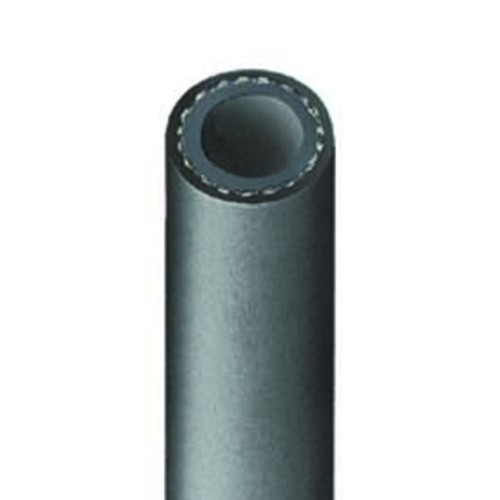
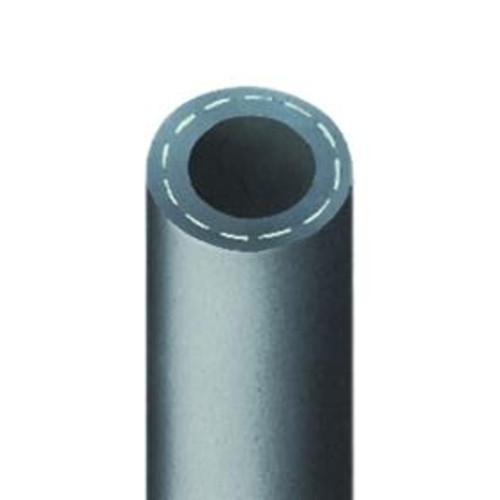
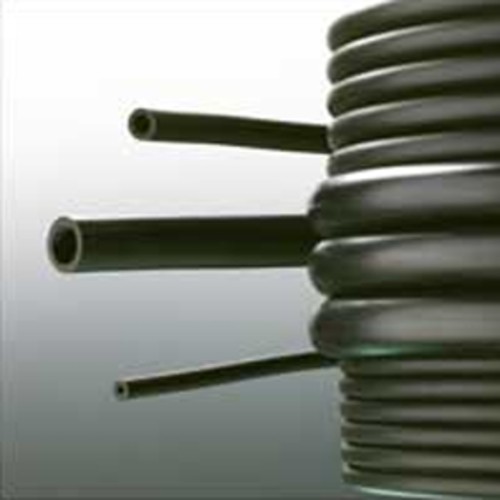
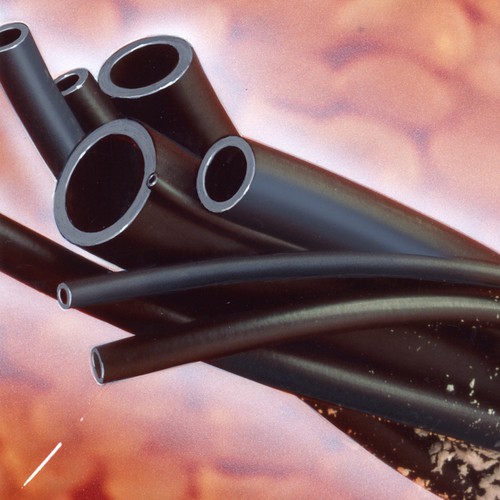
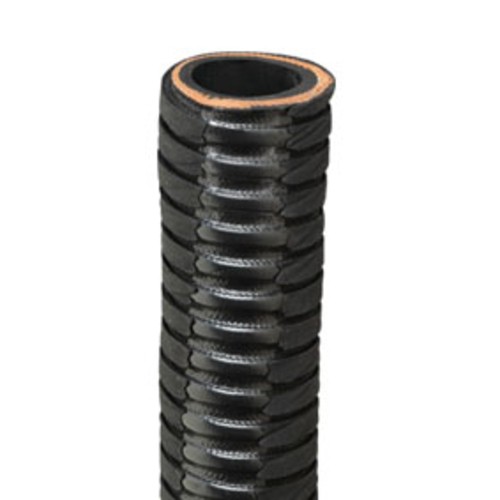
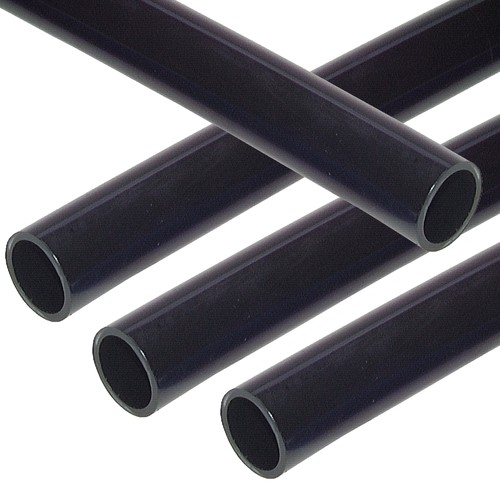
Fuel hoses/fuel hose as diesel hoses, gasoline hoses and oil hoses made of NBR and PVC.
As a specialist in hose technology, Reichelt Chemietechnik presents fuel hoses made from the materials NBR/Perbunan/Nitrile and PVC/THOMAVINYL as rubber hoses, tank truck hoses, chemical tubing, paint spray tubing, oil hoses, gasoline hoses and hot material hoses, as antistatic hoses, suction and pressure hoses as well as double-jacket hoses. In addition, RCT provides fuel hoses/gasoline and oil tubing as laboratory tubing.
Chemical resistance
of the plastics from which fuel hoses are manufactured.
These include:
- NBR (nitrile rubber/Perbunan®)
Nitrile rubber/Perbunan® is considered resistant to aldehydes, esters, ketones, aliphatic hydrocarbons as well as to hydraulic oils, mineral oils, diluted acids, diluted alkalis and hot water.
- PP (polypropylene/Hostalen®PP)
PP is regarded as resistant to lubricants, gasolines, aliphatic hydrocarbons, alcohols and ketones, organic acids, mineral acids, hydrogen peroxide, alkaline solutions, ammonia and amines.
- PTFE (polytetrafluoroethylene/THOMAFLON)
The resistance of PTFE is comprehensive; PTFE is absolutely resistant to gasoline, lubricants and other aliphatic hydrocarbons, benzene, xylene and other aromatic hydrocarbons, phenols, halogenated solvents, free halogens, esters, ketones, alkaline solutions, ammonia and amines as well as organic acids and mineral acids, hydrogen peroxide, ozone and other oxidizing agents, furthermore to hot water and water vapor as well as to UV radiation.
PTFE is not resistant to high-energy radioactive radiation, UV radiation and fluorine.
- PUR (polyurethane/Vulkollan®)
PUR is resistant to oils, greases, gasoline and other aliphatic hydrocarbons, ozone, UV radiation as well as energetic radiation;
PUR is conditionally resistant to aromatic hydrocarbons, halogenated solvents, acids and alkalis.
- PVC (polyvinyl chloride/THOMAVINYL)
is resistant to diluted acids and alkalis as well as gasoline and oils.
- Tygon (cross-linked PVC)
Tygon is considered resistant to acids and alkalis as well as mineral oil products.
- FPM/FKM (fluoroelastomer/Viton®/THOMAFLUOR)
FPM/FKM ensures resistance similar to that of the fluoropolymer PTFE; specifically, Viton is resistant to aliphatic hydrocarbons, aromatic hydrocarbons, halogenated hydrocarbons, fuels, silicone oil and other mineral oils as well as vegetable oils and fats and ozone.
- HDPE (high-density polyethylene)
HDPE is resistant to lubricants, greases, oils, gasoline and aliphatic hydrocarbons as well as alcohols, esters, ketones, organic acids, mineral acids, hot water, alkaline solutions, ammonia and amines.
Fuel hoses for transport, chemistry and industry
NBR hoses are rubber hoses with highly flexible properties; they are abrasion-resistant and demonstrate excellent resistance to oils, gasolines, fuels and propellants as well as to vegetable and animal oils. NBR/Perbunan tubing is also resistant to weak acids and alkalis. Perbunan tubing without textile reinforcement is manufactured with a Shore hardness of A 70° in accordance with DIN 53505 and allows an operating temperature from -20 °C to +100 °C.
NBR Antista tank truck and chemical hoses/fuel hoses are designed for maximum working pressures of 10 bar at +20 °C. Their vacuum resistance is 80 % relative to +20 °C. These tubes are equipped with a steel wire spiral and a synthetic textile reinforcement as the pressure carrier.
NBR chemical tubing is laboratory tubing for pressureless applications. It is available with inner diameters from 3 mm to 5 mm.
NBR double-jacket hot material hoses are designed for pressures of 8 bar at +20 °C. Their operating temperature ranges from -20 °C to +180 °C, with short-term exposure up to +220 °C possible. The burst pressure is 40 bar relative to +20 °C. A synthetic textile braid is used as reinforcement.
NBR double-jacket industrial tubing – metric – this fuel and industrial tubing is equipped with an inner liner made of nitrile rubber and an outer jacket made of CR (chloroprene rubber). Depending on tubing dimension, it is designed for pressure applications from 12 to 60 bar, based on +20 °C. A double synthetic textile reinforcement serves as the pressure carrier.
NBR double-jacket suction and pressure hoses ensure vacuum resistance of 80 % for hoses up to 125 mm I.D.; from I.D. 150 mm onwards, vacuum resistance is 60 %. The hose is extremely robust while maintaining high flexibility.
NBR paint spray tubing is flexible, lightweight pressure tubing for pressure applications of 25 bar at +20 °C. This tubing is reinforced with a synthetic textile braid as the pressure carrier.
NBR fuel hoses according to DIN 73379, Type B, which can convey hydraulic fluids in addition to fuels as well as glycol-based fluids, coolants and lubricants, are universal hoses for chemical and process engineering. For all dimensions, the pressure range is 15 bar for nitrile rubber oil/gasoline pressure tubing – antistatic. Tubing used in process chemistry, mechanical engineering and engine construction is designed for maximum pressures of 25 bar at +20 °C and has a burst pressure of 75 bar at +20 °C. Its electrical resistance is <106 ohms.
High-pressure and special hoses for extreme requirements
NBR suction and pressure oil and gasoline tubing – antistatic –/fuel hoses are used in plant engineering, refineries, transfer stations as well as in process and chemical engineering. They are configured for working pressures of 10 bar at +20 °C. Their burst pressure is 10 bar at +20 °C and their electrical resistance is <106 ohms.
The group of fuel hoses, gasoline hoses/oil hoses and their related groups is presented as follows:
NBR Antista tank truck and chemical hoses are fuel hoses; they are classified as tank truck hoses as well as fueling station hoses and are used in the mineral oil industry, chemical engineering and process engineering; fuel hoses are suction and pressure hoses that can also be used as vacuum hoses for vacuum applications; they are absolutely resistant to fuels and oils, are abrasion-resistant, durable as well as resistant to aging and weathering; the maximum operating pressure is 10 bar at +20 °C, with an operating temperature range from -50 °C to +70 °C. Their vacuum resistance is 80 % relative to +20 °C; the Antista tank truck and chemical hoses are antistatic/electrically conductive/electrically dissipative; their electrical resistance is <106 ohms.
Nitrile rubber chemical tubing, also referred to as nitrile tubing, represents fuel hoses with excellent elastomeric properties; it is therefore also described as nitrile rubber tubing. Its abrasion resistance and resistance to oils, fuels as well as vegetable and animal oils is excellent, as is its resistance to diluted acids and alkalis. The Shore hardness is A 70° in accordance with DIN 53505, with an operating temperature range from -20 °C to +100 °C.
Double-jacket hot material hoses for extreme temperatures
NBR double-jacket hot material hoses are used as rubber hoses for the transport of hot materials and mineral oils; therefore, these double-jacket hot material hoses also belong to the fuel hoses. The inner jacket is made of nitrile rubber and the outer jacket of CR (chloroprene rubber). The operating temperature range is -20 °C to +180 °C, with short-term exposure up to +220 °C possible; the maximum operating pressure is 8 bar at +20 °C.
NBR double-jacket industrial tubing – metric/inch – is oil- and gasoline-resistant tubing, also suitable for unleaded gasoline. This double-jacket industrial tubing therefore belongs to the fuel hoses and is characterized by excellent elasticity and high abrasion resistance. The temperature range of the nitrile rubber tubing is between -25 °C and +100 °C, with short-term exposure up to +120 °C possible. A double synthetic textile serves as the pressure carrier, with a maximum working pressure ranging from 12 to 50 bar at +20 °C, depending on the tubing dimension.
NBR double-jacket suction and pressure hoses are fuel hoses equipped with an absolutely smooth inner surface, resulting in minimal pressure losses. They are robust and flexible and are characterized by maximum abrasion resistance. The inner liner is made of nitrile rubber and the outer jacket of CR (chloroprene rubber). The temperature range is -20 °C to +80 °C, with short-term exposure of a fuel hose up to +100 °C possible. The pressure carrier consists of a double Rylon textile combined with a steel wire spiral. Vacuum resistance is 80 % for hoses up to I.D. 125 mm and 60 % for hoses from I.D. 150 mm upwards. The permanent pressure range is defined as 10 to 18 bar at +20 °C, taking hose dimension into account.
Paint spray hoses for coatings and finishes
Nitrile rubber paint spray tubing is flexible pressure tubing that also belongs to the group of fuel hoses and is highly elastic. As paint spray tubing, it is used for conveying acrylic resins, dispersion paints, spirit-based lacquers and polyester coatings, including two-component coatings. The operating temperature range is -20 °C to +80 °C; a synthetic textile braid serves as the pressure carrier, with a maximum operating pressure of 25 bar at +20 °C. The nitrile rubber paint spray tubing is electrically conductive/electrically dissipative; its electrical resistance is <106 ohms.
Chemical hoses with steel wire braid
NBR high-pressure double-jacket chemical hoses with a steel wire braid reinforcement are high-pressure hydraulic hoses for mineral oils, fuels and lubricants based on mineral and vegetable oils. These fuel hoses are used for conveying engine oils, HD oils and diesel fuels. This tubing is highly abrasion-resistant and flame-retardant as well as ozone- and weather-resistant. The inner liner is made of nitrile rubber and the outer jacket of CR (chloroprene rubber). The operating temperature range is -40 °C to +100 °C, with short-term exposure up to +125 °C possible. A steel wire braid serves as the pressure carrier, allowing pressure loads from 63 to 400 bar.
Nitrile rubber industrial chemical tubing is considered fuel hoses with excellent elastomeric quality, high mechanical strength, resistance to aging and weathering, and is characterized as fuel tubing by its resistance to mineral oils, animal and vegetable oils such as rapeseed oil as well as fuels, kerosene and unleaded gasoline. This industrial chemical tubing can also be referred to as nitrile rubber tubing and is manufactured with a Shore hardness of A 70° in accordance with DIN 53505. The operating temperature range is -30 °C to +110 °C.
Nitrile rubber industrial suction and pressure tubing used in process engineering, chemical engineering, the mineral oil industry and petrochemistry serves to convey alcohols, aldehydes, esters and ketones and is also temporarily resistant to chlorinated and aromatic hydrocarbons. This fuel tubing made of nitrile rubber is suction and pressure tubing suitable for pressure loads of 16 bar at +20 °C; the outer jacket consists of a conductive NBR/PVC compound. The operating temperature range is -20 °C to +80 °C, with short-term exposure up to +100 °C possible.
Fuel hoses according to DIN standard 73379
NBR fuel hoses according to DIN 73379 Type B are rubber hoses made of nitrile rubber. The temperature range is -40 °C to +90 °C, with short-term exposure up to +120 °C possible. The fuel hoses are suitable for pressure loads of 10 bar at +20 °C. The maximum medium temperature for fuels with a benzene content of up to 50 % is +80 °C, for super fuels up to +40 °C, for diesel fuels up to +80 °C and for coolants up to +90 °C, with coolants consisting of glycol and Glysantin.
NBR low-pressure chemical tubing with metal reinforcement represents fuel hoses with a galvanized steel wire braid. The temperature range is -30 °C to +90 °C and the maximum pressure load ranges from 10 to 20 bar at +20 °C, depending on tubing dimension. This low-pressure chemical tubing is fuel-resistant chemical tubing suitable for conveying mineral oils, lubricants as well as animal and vegetable oils and is regarded as fuel tubing for conveying hydraulic fluids.
NBR oil and gasoline pressure tubing – antistatic – represents fuel hoses with electrically conductive/electrically dissipative properties used in the mineral oil industry, process engineering and mechanical and plant engineering. It is designed for conveying mineral oil products with an aromatic content of up to 50 %. The nitrile rubber oil and gasoline pressure tubing – antistatic – is resistant to weathering and aging; the inner liner is made of nitrile rubber and the outer jacket of a compound suitable for temperatures from -40 °C to +80 °C. A textile reinforcement serves as the pressure carrier, ensuring an operating pressure of 25 bar at +20 °C. The electrical resistance is <106 ohms.
NBR/CSM high-pressure chemical tubing is pressure tubing designed for pressure ranges from 33 to 75 bar at +20 °C. As fuel and conveying tubing, it is used for conveying diesel oils, vegetable and animal oils as well as diluted alkalis and acids. The temperature range is -40 °C to +125 °C, with short-term exposure up to +140 °C possible.
NBR/PVC suction and pressure universal tubing is pressure-resistant fuel tubing designed for pressure ranges from 5 to 8 bar at +20 °C, depending on tubing dimension. Typical applications include refineries, mineral oil supply and plant engineering. It is resistant to oils, gasoline as well as diluted acids and alkalis. This suction and pressure universal chemical tubing is designed for temperature ranges from -15 °C to +75 °C and also for vacuum applications of 0.8 bar at +20 °C. Pressure resistance of the fuel tubing is ensured by an embedded steel wire spiral.
Nitrile rubber hoses are also marketed under the following names:
Perbunan® hoses
Nitrile hoses
Nitrile rubber hoses
Gasoline and oil hoses made of PVC & PTFE – properties & applications
Fuel hoses include gasoline tubing/oil tubing made of PVC for pressureless applications. The PVC compound used is resistant to aging, abrasion-resistant and robust; it is flame-retardant, UV-resistant and resistant to sunlight exposure.
Resistance to oils, greases, gasolines, fuels and other aliphatic hydrocarbons is ensured, based on +20 °C. The Shore hardness is A 77° in accordance with DIN 53505 and the operating temperature range is +10 °C to +60 °C.
Specifically, this includes the following fuel hose:
PVC gasoline and oil tubing is transparent; its Shore hardness A is 77° in accordance with DIN 53505 and its application temperature range is -10 °C to +60 °C. The pressure range of the fuel tubing is specified as 7.5 to 13 bar at +20 °C, depending on tubing dimension. The surface resistance is 1011 ohms. The PVC gasoline and oil tubing is resistant to greases, mineral oils, gasoline and diesel fuels as well as other aliphatic hydrocarbons.
The absolutely resistant fuel hoses include:
PTFE corrugated tubes/corrugated hoses with a smooth outer jacket. This hose type is used in petrochemical processing, food chemistry, process engineering and the chemical industry. It is flexible due to its helically corrugated PTFE liner. An aramid braid serves as the pressure carrier, ensuring a pressure range of 16 bar at +20 °C. Temperature ranges from -20 °C to +150 °C are possible. The fuel hose as a PTFE corrugated tube/PTFE corrugated hose is antistatic/electrically conductive; its electrical resistance/conductive resistance is <109 ohms.
Fuel hoses now available at rct-online.de/en – high resistance & quality!
Our range includes high-quality fuel hoses for diesel, gasoline and oil made from resistant materials such as nitrile rubber, PTFE, PVC and FPM/FKM. Whether for use in tank trucks, refineries, chemical engineering or industrial applications – here you will find the right solution for your requirements. Use our electronic resistance list to identify the ideal material for your specific application, or find detailed information on the chemical and technical properties of the hoses in our glossary. Order directly via our online shop now or contact us for individual consultation!
Close window
Fuel hoses/fuel hose as diesel hoses, gasoline hoses and oil hoses made of NBR and PVC.
As a specialist in hose technology, Reichelt Chemietechnik presents fuel hoses made from the materials NBR/Perbunan/Nitrile and PVC/THOMAVINYL as rubber hoses, tank truck hoses, chemical tubing, paint spray tubing, oil hoses, gasoline hoses and hot material hoses, as antistatic hoses, suction and pressure hoses as well as double-jacket hoses. In addition, RCT provides fuel hoses/gasoline and oil tubing as laboratory tubing.
Chemical resistance
of the plastics from which fuel hoses are manufactured.
These include:
- NBR (nitrile rubber/Perbunan®)
Nitrile rubber/Perbunan® is considered resistant to aldehydes, esters, ketones, aliphatic hydrocarbons as well as to hydraulic oils, mineral oils, diluted acids, diluted alkalis and hot water.
- PP (polypropylene/Hostalen®PP)
PP is regarded as resistant to lubricants, gasolines, aliphatic hydrocarbons, alcohols and ketones, organic acids, mineral acids, hydrogen peroxide, alkaline solutions, ammonia and amines.
- PTFE (polytetrafluoroethylene/THOMAFLON)
The resistance of PTFE is comprehensive; PTFE is absolutely resistant to gasoline, lubricants and other aliphatic hydrocarbons, benzene, xylene and other aromatic hydrocarbons, phenols, halogenated solvents, free halogens, esters, ketones, alkaline solutions, ammonia and amines as well as organic acids and mineral acids, hydrogen peroxide, ozone and other oxidizing agents, furthermore to hot water and water vapor as well as to UV radiation.
PTFE is not resistant to high-energy radioactive radiation, UV radiation and fluorine.
- PUR (polyurethane/Vulkollan®)
PUR is resistant to oils, greases, gasoline and other aliphatic hydrocarbons, ozone, UV radiation as well as energetic radiation;
PUR is conditionally resistant to aromatic hydrocarbons, halogenated solvents, acids and alkalis.
- PVC (polyvinyl chloride/THOMAVINYL)
is resistant to diluted acids and alkalis as well as gasoline and oils.
- Tygon (cross-linked PVC)
Tygon is considered resistant to acids and alkalis as well as mineral oil products.
- FPM/FKM (fluoroelastomer/Viton®/THOMAFLUOR)
FPM/FKM ensures resistance similar to that of the fluoropolymer PTFE; specifically, Viton is resistant to aliphatic hydrocarbons, aromatic hydrocarbons, halogenated hydrocarbons, fuels, silicone oil and other mineral oils as well as vegetable oils and fats and ozone.
- HDPE (high-density polyethylene)
HDPE is resistant to lubricants, greases, oils, gasoline and aliphatic hydrocarbons as well as alcohols, esters, ketones, organic acids, mineral acids, hot water, alkaline solutions, ammonia and amines.
Fuel hoses for transport, chemistry and industry
NBR hoses are rubber hoses with highly flexible properties; they are abrasion-resistant and demonstrate excellent resistance to oils, gasolines, fuels and propellants as well as to vegetable and animal oils. NBR/Perbunan tubing is also resistant to weak acids and alkalis. Perbunan tubing without textile reinforcement is manufactured with a Shore hardness of A 70° in accordance with DIN 53505 and allows an operating temperature from -20 °C to +100 °C.
NBR Antista tank truck and chemical hoses/fuel hoses are designed for maximum working pressures of 10 bar at +20 °C. Their vacuum resistance is 80 % relative to +20 °C. These tubes are equipped with a steel wire spiral and a synthetic textile reinforcement as the pressure carrier.
NBR chemical tubing is laboratory tubing for pressureless applications. It is available with inner diameters from 3 mm to 5 mm.
NBR double-jacket hot material hoses are designed for pressures of 8 bar at +20 °C. Their operating temperature ranges from -20 °C to +180 °C, with short-term exposure up to +220 °C possible. The burst pressure is 40 bar relative to +20 °C. A synthetic textile braid is used as reinforcement.
NBR double-jacket industrial tubing – metric – this fuel and industrial tubing is equipped with an inner liner made of nitrile rubber and an outer jacket made of CR (chloroprene rubber). Depending on tubing dimension, it is designed for pressure applications from 12 to 60 bar, based on +20 °C. A double synthetic textile reinforcement serves as the pressure carrier.
NBR double-jacket suction and pressure hoses ensure vacuum resistance of 80 % for hoses up to 125 mm I.D.; from I.D. 150 mm onwards, vacuum resistance is 60 %. The hose is extremely robust while maintaining high flexibility.
NBR paint spray tubing is flexible, lightweight pressure tubing for pressure applications of 25 bar at +20 °C. This tubing is reinforced with a synthetic textile braid as the pressure carrier.
NBR fuel hoses according to DIN 73379, Type B, which can convey hydraulic fluids in addition to fuels as well as glycol-based fluids, coolants and lubricants, are universal hoses for chemical and process engineering. For all dimensions, the pressure range is 15 bar for nitrile rubber oil/gasoline pressure tubing – antistatic. Tubing used in process chemistry, mechanical engineering and engine construction is designed for maximum pressures of 25 bar at +20 °C and has a burst pressure of 75 bar at +20 °C. Its electrical resistance is <106 ohms.
High-pressure and special hoses for extreme requirements
NBR suction and pressure oil and gasoline tubing – antistatic –/fuel hoses are used in plant engineering, refineries, transfer stations as well as in process and chemical engineering. They are configured for working pressures of 10 bar at +20 °C. Their burst pressure is 10 bar at +20 °C and their electrical resistance is <106 ohms.
The group of fuel hoses, gasoline hoses/oil hoses and their related groups is presented as follows:
NBR Antista tank truck and chemical hoses are fuel hoses; they are classified as tank truck hoses as well as fueling station hoses and are used in the mineral oil industry, chemical engineering and process engineering; fuel hoses are suction and pressure hoses that can also be used as vacuum hoses for vacuum applications; they are absolutely resistant to fuels and oils, are abrasion-resistant, durable as well as resistant to aging and weathering; the maximum operating pressure is 10 bar at +20 °C, with an operating temperature range from -50 °C to +70 °C. Their vacuum resistance is 80 % relative to +20 °C; the Antista tank truck and chemical hoses are antistatic/electrically conductive/electrically dissipative; their electrical resistance is <106 ohms.
Nitrile rubber chemical tubing, also referred to as nitrile tubing, represents fuel hoses with excellent elastomeric properties; it is therefore also described as nitrile rubber tubing. Its abrasion resistance and resistance to oils, fuels as well as vegetable and animal oils is excellent, as is its resistance to diluted acids and alkalis. The Shore hardness is A 70° in accordance with DIN 53505, with an operating temperature range from -20 °C to +100 °C.
Double-jacket hot material hoses for extreme temperatures
NBR double-jacket hot material hoses are used as rubber hoses for the transport of hot materials and mineral oils; therefore, these double-jacket hot material hoses also belong to the fuel hoses. The inner jacket is made of nitrile rubber and the outer jacket of CR (chloroprene rubber). The operating temperature range is -20 °C to +180 °C, with short-term exposure up to +220 °C possible; the maximum operating pressure is 8 bar at +20 °C.
NBR double-jacket industrial tubing – metric/inch – is oil- and gasoline-resistant tubing, also suitable for unleaded gasoline. This double-jacket industrial tubing therefore belongs to the fuel hoses and is characterized by excellent elasticity and high abrasion resistance. The temperature range of the nitrile rubber tubing is between -25 °C and +100 °C, with short-term exposure up to +120 °C possible. A double synthetic textile serves as the pressure carrier, with a maximum working pressure ranging from 12 to 50 bar at +20 °C, depending on the tubing dimension.
NBR double-jacket suction and pressure hoses are fuel hoses equipped with an absolutely smooth inner surface, resulting in minimal pressure losses. They are robust and flexible and are characterized by maximum abrasion resistance. The inner liner is made of nitrile rubber and the outer jacket of CR (chloroprene rubber). The temperature range is -20 °C to +80 °C, with short-term exposure of a fuel hose up to +100 °C possible. The pressure carrier consists of a double Rylon textile combined with a steel wire spiral. Vacuum resistance is 80 % for hoses up to I.D. 125 mm and 60 % for hoses from I.D. 150 mm upwards. The permanent pressure range is defined as 10 to 18 bar at +20 °C, taking hose dimension into account.
Paint spray hoses for coatings and finishes
Nitrile rubber paint spray tubing is flexible pressure tubing that also belongs to the group of fuel hoses and is highly elastic. As paint spray tubing, it is used for conveying acrylic resins, dispersion paints, spirit-based lacquers and polyester coatings, including two-component coatings. The operating temperature range is -20 °C to +80 °C; a synthetic textile braid serves as the pressure carrier, with a maximum operating pressure of 25 bar at +20 °C. The nitrile rubber paint spray tubing is electrically conductive/electrically dissipative; its electrical resistance is <106 ohms.
Chemical hoses with steel wire braid
NBR high-pressure double-jacket chemical hoses with a steel wire braid reinforcement are high-pressure hydraulic hoses for mineral oils, fuels and lubricants based on mineral and vegetable oils. These fuel hoses are used for conveying engine oils, HD oils and diesel fuels. This tubing is highly abrasion-resistant and flame-retardant as well as ozone- and weather-resistant. The inner liner is made of nitrile rubber and the outer jacket of CR (chloroprene rubber). The operating temperature range is -40 °C to +100 °C, with short-term exposure up to +125 °C possible. A steel wire braid serves as the pressure carrier, allowing pressure loads from 63 to 400 bar.
Nitrile rubber industrial chemical tubing is considered fuel hoses with excellent elastomeric quality, high mechanical strength, resistance to aging and weathering, and is characterized as fuel tubing by its resistance to mineral oils, animal and vegetable oils such as rapeseed oil as well as fuels, kerosene and unleaded gasoline. This industrial chemical tubing can also be referred to as nitrile rubber tubing and is manufactured with a Shore hardness of A 70° in accordance with DIN 53505. The operating temperature range is -30 °C to +110 °C.
Nitrile rubber industrial suction and pressure tubing used in process engineering, chemical engineering, the mineral oil industry and petrochemistry serves to convey alcohols, aldehydes, esters and ketones and is also temporarily resistant to chlorinated and aromatic hydrocarbons. This fuel tubing made of nitrile rubber is suction and pressure tubing suitable for pressure loads of 16 bar at +20 °C; the outer jacket consists of a conductive NBR/PVC compound. The operating temperature range is -20 °C to +80 °C, with short-term exposure up to +100 °C possible.
Fuel hoses according to DIN standard 73379
NBR fuel hoses according to DIN 73379 Type B are rubber hoses made of nitrile rubber. The temperature range is -40 °C to +90 °C, with short-term exposure up to +120 °C possible. The fuel hoses are suitable for pressure loads of 10 bar at +20 °C. The maximum medium temperature for fuels with a benzene content of up to 50 % is +80 °C, for super fuels up to +40 °C, for diesel fuels up to +80 °C and for coolants up to +90 °C, with coolants consisting of glycol and Glysantin.
NBR low-pressure chemical tubing with metal reinforcement represents fuel hoses with a galvanized steel wire braid. The temperature range is -30 °C to +90 °C and the maximum pressure load ranges from 10 to 20 bar at +20 °C, depending on tubing dimension. This low-pressure chemical tubing is fuel-resistant chemical tubing suitable for conveying mineral oils, lubricants as well as animal and vegetable oils and is regarded as fuel tubing for conveying hydraulic fluids.
NBR oil and gasoline pressure tubing – antistatic – represents fuel hoses with electrically conductive/electrically dissipative properties used in the mineral oil industry, process engineering and mechanical and plant engineering. It is designed for conveying mineral oil products with an aromatic content of up to 50 %. The nitrile rubber oil and gasoline pressure tubing – antistatic – is resistant to weathering and aging; the inner liner is made of nitrile rubber and the outer jacket of a compound suitable for temperatures from -40 °C to +80 °C. A textile reinforcement serves as the pressure carrier, ensuring an operating pressure of 25 bar at +20 °C. The electrical resistance is <106 ohms.
NBR/CSM high-pressure chemical tubing is pressure tubing designed for pressure ranges from 33 to 75 bar at +20 °C. As fuel and conveying tubing, it is used for conveying diesel oils, vegetable and animal oils as well as diluted alkalis and acids. The temperature range is -40 °C to +125 °C, with short-term exposure up to +140 °C possible.
NBR/PVC suction and pressure universal tubing is pressure-resistant fuel tubing designed for pressure ranges from 5 to 8 bar at +20 °C, depending on tubing dimension. Typical applications include refineries, mineral oil supply and plant engineering. It is resistant to oils, gasoline as well as diluted acids and alkalis. This suction and pressure universal chemical tubing is designed for temperature ranges from -15 °C to +75 °C and also for vacuum applications of 0.8 bar at +20 °C. Pressure resistance of the fuel tubing is ensured by an embedded steel wire spiral.
Nitrile rubber hoses are also marketed under the following names:
Perbunan® hoses
Nitrile hoses
Nitrile rubber hoses
Gasoline and oil hoses made of PVC & PTFE – properties & applications
Fuel hoses include gasoline tubing/oil tubing made of PVC for pressureless applications. The PVC compound used is resistant to aging, abrasion-resistant and robust; it is flame-retardant, UV-resistant and resistant to sunlight exposure.
Resistance to oils, greases, gasolines, fuels and other aliphatic hydrocarbons is ensured, based on +20 °C. The Shore hardness is A 77° in accordance with DIN 53505 and the operating temperature range is +10 °C to +60 °C.
Specifically, this includes the following fuel hose:
PVC gasoline and oil tubing is transparent; its Shore hardness A is 77° in accordance with DIN 53505 and its application temperature range is -10 °C to +60 °C. The pressure range of the fuel tubing is specified as 7.5 to 13 bar at +20 °C, depending on tubing dimension. The surface resistance is 1011 ohms. The PVC gasoline and oil tubing is resistant to greases, mineral oils, gasoline and diesel fuels as well as other aliphatic hydrocarbons.
The absolutely resistant fuel hoses include:
PTFE corrugated tubes/corrugated hoses with a smooth outer jacket. This hose type is used in petrochemical processing, food chemistry, process engineering and the chemical industry. It is flexible due to its helically corrugated PTFE liner. An aramid braid serves as the pressure carrier, ensuring a pressure range of 16 bar at +20 °C. Temperature ranges from -20 °C to +150 °C are possible. The fuel hose as a PTFE corrugated tube/PTFE corrugated hose is antistatic/electrically conductive; its electrical resistance/conductive resistance is <109 ohms.
Fuel hoses now available at rct-online.de/en – high resistance & quality!
Our range includes high-quality fuel hoses for diesel, gasoline and oil made from resistant materials such as nitrile rubber, PTFE, PVC and FPM/FKM. Whether for use in tank trucks, refineries, chemical engineering or industrial applications – here you will find the right solution for your requirements. Use our electronic resistance list to identify the ideal material for your specific application, or find detailed information on the chemical and technical properties of the hoses in our glossary. Order directly via our online shop now or contact us for individual consultation!