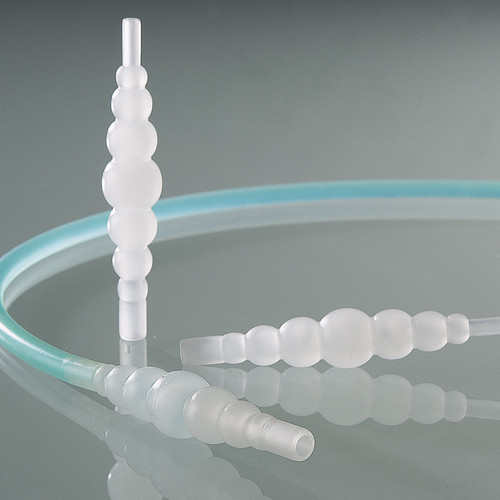
Plastic Barbed Fittings: Hose Connectors for Versatile Applications
At Reichelt Chemietechnik, you can choose from a wide range of tube and hose connectors at attractive prices. Plastic hose barbs are an important product group alongside barbs made of metals such as brass. These plastic barbed fittings are available from our range in the following materials:
- PA (polyamide)
- POM (polyoxymethylene, Delrin®)
- PP (polypropylene, Hostalen® PP)
- HDPE (high-density polyethylene)
- TPX (polymethylpentene)
- PVDF (polyvinylidene fluoride, Kynar®, Solef®)
- PTFE (polytetrafluoroethylene, THOMAFLON)
Areas of Application and General Properties
Plastic hose barbs and metal hose barbs, such as brass fittings, are used in micro and macro applications. They are also used in chemical engineering, process engineering and production technology. Further applications include medical technology and pharmaceutical technology. These sectors require plastic barbed fittings that comply with FDA and BfR requirements. They must also meet the guidelines of the European Pharmacopoeia.
These fields of application require the highest raw material quality for hose connectors. The production standard of the fittings reflects current state-of-the-art technology. It therefore meets the highest quality requirements. Reichelt Chemietechnik ensures this quality through its own internal controls.
RCT barbed fittings cover a wide temperature range. For example, the continuous temperature is +200 °C for PTFE. It is +140 °C for PVDF, +280 °C for PFA and +110 °C for PP. Hose fittings are chemically resistant to varying degrees, depending on the fitting material. In individual cases, this can be checked easily for each hose barb using our resistance chart.
Chemical Resistance of Hose Barbs and Barbed Hose Connectors
- HDPE (High-Density Polyethylene)
A hose made from this plastic is resistant to lubricants, greases, oils and petrol. It is also resistant to aliphatic hydrocarbons, alcohols, esters, ketones and organic acids. Resistance also covers mineral acids, alkaline solutions, ammonia, amines and hot water.
- POM (Delrin®)
POM is resistant to lubricants, petrol, benzene, xylene and other aromatic hydrocarbons. It is also resistant to esters, ketones, alkaline solutions, ammonia and amines. It also withstands hydrogen peroxide and hot water.
- PP (Hostalen® PP)
PP is resistant to lubricants, petrol, aliphatic hydrocarbons, alcohols and ketones. It also resists organic acids and mineral acids. Resistance also extends to hydrogen peroxide, alkaline solutions, ammonia and amines.
- TPX (Polymethylpentene)
TPX offers very good chemical resistance to alcohols, acids and alkalis. However, TPX has limited resistance to ketones, esters, greases and oils.
- PVDF (Solef®/Kynar®)
This fluoroplastic is resistant to petrol, aliphatic hydrocarbons and halogenated solvents. It is also resistant to ammonia solutions and aliphatic amines. It also withstands aniline, organic acids, hydrogen peroxide, hot water and UV radiation. PVDF has limited resistance to benzene, xylene and other aromatic hydrocarbons, as well as phenols.
- PTFE (THOMAFLON)
PTFE offers the highest resistance to almost all organic and inorganic media. These include lubricants, petrol and other aliphatic hydrocarbons. They also include benzenes, xylenes and other aromatic hydrocarbons. PTFE is resistant to phenols, halogenated solvents, free halogens, esters and ketones. It also resists alkaline solutions, ammonia and amines. Resistance also covers organic acids and mineral acids. PTFE is also resistant to hydrogen peroxide and ozone as strong oxidising agents. It also resists hot water, hot steam and UV radiation.
- PA 6.6 (Nylon)
PA 6.6 offers reliable chemical resistance to lubricants, oils and petrol. It is also resistant to aliphatic hydrocarbons, alcohols and ketones. It also withstands cyclic hydrocarbons, aromatic hydrocarbons, trichloroethylene and perchloroethylene. PA 6.6 is also resistant to ammonia and amines. This plastic has limited resistance to hot water and UV radiation.
The Product Range of barded Hose Connectors
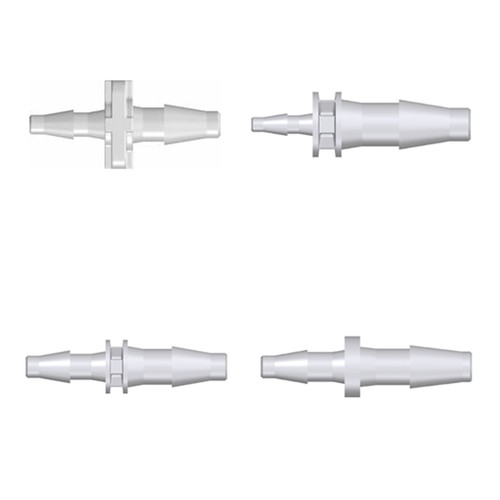
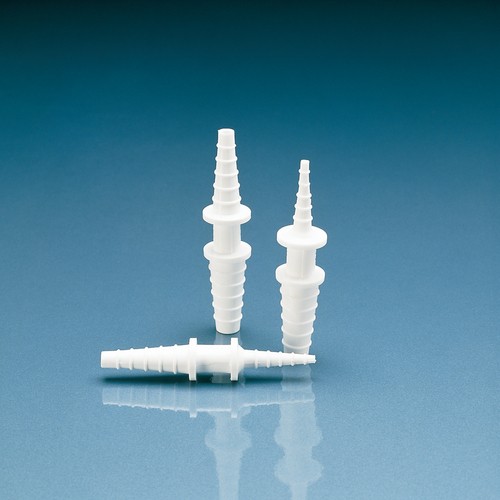
Hose Barbs and Hose Connectors with Barbs on Both Sides
Straight reducing hose barbs made from:
Straight hose barbs made from:
Hose Barbs with Male Thread or Screw-In Thread
Straight hose barbs with male thread made from:
- HDPE
- PA
- POM
- POM – bulkhead
- PP
- PVDF
- PTFE
On Thread Hose Barbs with Female Thread or Screw
Straight hose barbs with female thread made from:
Mini Hose Barbs
- Mini reducing hose barbs with bridge
- Mini reducing hose barbs without bridge
- Mini hose barbs with bridge
- Mini hose barb without bridge
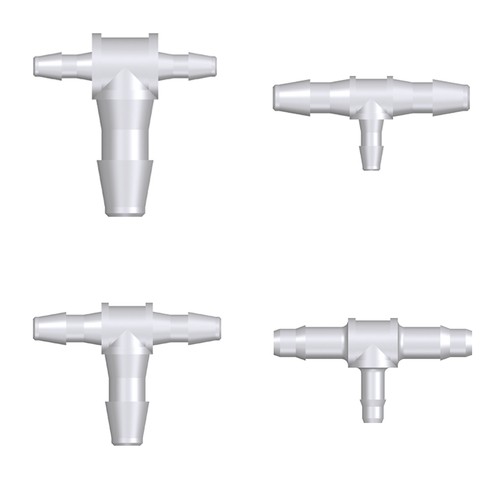
- Mini T hose barbs with bridge
- Mini elbow hose barb with bridge
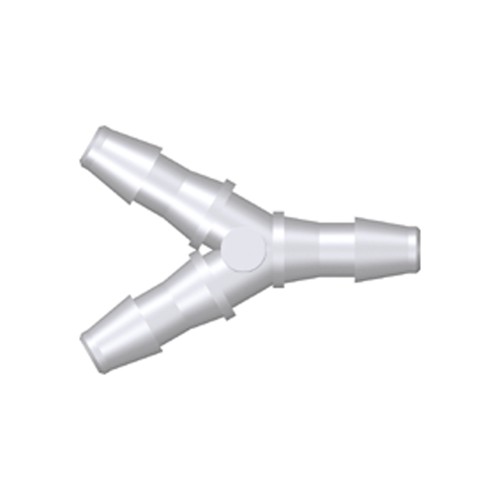
- Mini Y hose barbs
Mini Hose Barbs with Male Thread or Screw-In Thread
- Mini hose barbs with M6x1 male thread
- Mini hose barbs with NPT 1/8" thread
- Mini hose barbs with UNF 1/4"-28 thread
- Mini hose barbs with UNF 10-32 thread – short
- Mini hose barbs with UNF 10-32 male thread – long
- Mini hose barbs with NPT 1/8" thread
- Mini T hose barbs with UNF 10-32 male thread – short
- Mini T hose barbs with UNF 10-32 thread – long
- Mini elbow barbs with NPT 1/8" male thread
- Mini elbow hose barbs with UNF 10-32 thread – short
- Mini elbow hose barbs with UNF 10-32 male thread – long
The Properties of the Most Important Plastics
PP
Polypropylene is a thermoplastic from the polyolefin group. The material is physiologically safe and free from plasticisers. Due to its physiological safety, PP is used for medical products. This mainly applies to disposable items such as syringes, spatulas and containers. Examples include beakers, bottles, flasks and similar items. The material is also well suited for producing plastic hose barbs.
PP chemical hoses are also used as fixed lines for conveying liquids and sensitive media. They are used in medical, chemical and biological laboratories. They are also established components in production technology, pharmaceutical manufacturing and the food industry. At room temperature, a PP hose or hose barb with union nut is stable against most solvents. It is also stable against petrol, greases and oils. The same applies to alkalis and acids, except oxidising acids such as nitric acid. The plastic is not resistant to UV radiation. This makes hose barbs made from this material unsuitable for outdoor use. The maximum continuous temperature is +110 °C. The minimum operating temperature is 0 °C.
PVDF
PVDF is a semi-crystalline, plasticiser-free thermoplastic. It is also used for plastic hose barbs and other hose connectors. The technical properties of this material differ significantly from other fluorinated plastics.
Due to its favourable physiological properties, PVDF is also used in food technology and medical technology. It is used as a coating material for packaging. It is also used for hoses and seals. PVDF hose materials are essential in chemical laboratories and plant operation. In addition to standard hoses with many nominal diameters, the range includes flexible spiral and corrugated hoses. Heat-shrinking tubing forms a special version.
PVDF hoses and hose barbs made from this material have also proven reliable in biochemical and medical laboratories. Products made from this plastic are often used for sterile filtration of water and physiological solutions. The plastic is also free from plasticisers and physiologically safe. It is not self-burning, but decomposes at higher temperatures. Due to its high chemical stability, the material does not rot. The maximum short-term operating temperature is +160 °C. In continuous operation, it is +140 °C. The minimum operating temperature is -30 °C.
PTFE
PTFE is a hydrophobic plastic. No other plastic exceeds its chemical resistance and solvent resistance. PTFE is considered physiologically safe. It has held FDA approval since 1960. It is also approved by the BfR. Its physical properties correspond to thermoplastics. For this reason, it is necessarily assigned to this material group.
The material belongs to the polyhalogenoolefins and is completely hydrophobic. The very strong carbon-fluorine bond supports the high chemical and thermal resistance of hose barbs made from PTFE. Only elemental fluorine and alkali metals such as sodium can attack it chemically. The free alkali metal reacts with the fluorine in PTFE. This leaves elemental plastic behind. This reaction is used to chemically roughen PTFE surfaces for bonding. The maximum operating temperature of a PTFE hose barb is +300 °C for short periods. The minimum operating temperature is -200 °C.
PA 6
PA 6 offers high mechanical strength, good impact resistance and good wear resistance. The material is temperature-resistant. The maximum continuous working temperature of a PA 6 hose barb is +70 °C. The Shore hardness D is 82° according to DIN ISO 7619-1. Moisture absorption is 3%. PA 6 is UV-resistant and resistant to oils and petrol. It has limited, but generally good, resistance to acids and alkalis.
HDPE
For a plastic, HDPE has a comparatively high density. It also offers high impact resistance, even at lower temperatures. The chemical resistance of an HDPE hose barb is good. This applies to both inorganic and organic media. The material is resistant to ageing and weathering. However, it has only limited UV resistance. The Shore hardness D according to DIN 53505 is 64°. The material is dyed black. The maximum working temperature should not exceed +80 °C where possible.
POM
Reichelt Chemietechnik produces POM in three versions. These include natural and black versions, also in FDA- and BfR-compliant grades. POM offers high rigidity, strength and mechanical hardness. Its retention capacity is notable, combined with high impact resistance, even at low temperatures. The material does not creep. Instead, it offers high dimensional stability. It is therefore well suited for producing plain bearings, rollers and gear wheels. It is also suitable for plastic hose barbs. POM is physiologically safe and approved for food-contact applications. It complies with fire class UL 94-HB. The working temperature should not exceed +105 °C in continuous operation. It should not exceed +140 °C for short periods. The material is BfR- and FDA-compliant.
Buy Plastic Hose Barbs and Other Hose Connectors at rct-online.de
If you are looking for plastic hose barbs or brass and metal hose barbs, our RCT online shop offers a suitable selection. Order high-quality hose barbs at attractive prices. Do you have any questions? Call us on +49 6221 31250. Our plastics specialists will advise you on questions about materials and shipping. You can also send an email to technik@rct-online.de.
Customers from Germany, Austria, Switzerland and many other countries have trusted RCT Reichelt Chemietechnik for more than 30 years. This applies to all questions relating to laboratory supplies. Broad selection, high quality and fair shipping costs.
Plastic Barbed Fittings: Hose Connectors for Versatile Applications
At Reichelt Chemietechnik, you can choose from a wide range of tube and hose connectors at attractive prices. Plastic hose...
read more »
Close window
Plastic Barbed Fittings: Hose Connectors for Versatile Applications
At Reichelt Chemietechnik, you can choose from a wide range of tube and hose connectors at attractive prices. Plastic hose barbs are an important product group alongside barbs made of metals such as brass. These plastic barbed fittings are available from our range in the following materials:
- PA (polyamide)
- POM (polyoxymethylene, Delrin®)
- PP (polypropylene, Hostalen® PP)
- HDPE (high-density polyethylene)
- TPX (polymethylpentene)
- PVDF (polyvinylidene fluoride, Kynar®, Solef®)
- PTFE (polytetrafluoroethylene, THOMAFLON)
Areas of Application and General Properties
Plastic hose barbs and metal hose barbs, such as brass fittings, are used in micro and macro applications. They are also used in chemical engineering, process engineering and production technology. Further applications include medical technology and pharmaceutical technology. These sectors require plastic barbed fittings that comply with FDA and BfR requirements. They must also meet the guidelines of the European Pharmacopoeia.
These fields of application require the highest raw material quality for hose connectors. The production standard of the fittings reflects current state-of-the-art technology. It therefore meets the highest quality requirements. Reichelt Chemietechnik ensures this quality through its own internal controls.
RCT barbed fittings cover a wide temperature range. For example, the continuous temperature is +200 °C for PTFE. It is +140 °C for PVDF, +280 °C for PFA and +110 °C for PP. Hose fittings are chemically resistant to varying degrees, depending on the fitting material. In individual cases, this can be checked easily for each hose barb using our resistance chart.
Chemical Resistance of Hose Barbs and Barbed Hose Connectors
- HDPE (High-Density Polyethylene)
A hose made from this plastic is resistant to lubricants, greases, oils and petrol. It is also resistant to aliphatic hydrocarbons, alcohols, esters, ketones and organic acids. Resistance also covers mineral acids, alkaline solutions, ammonia, amines and hot water.
- POM (Delrin®)
POM is resistant to lubricants, petrol, benzene, xylene and other aromatic hydrocarbons. It is also resistant to esters, ketones, alkaline solutions, ammonia and amines. It also withstands hydrogen peroxide and hot water.
- PP (Hostalen® PP)
PP is resistant to lubricants, petrol, aliphatic hydrocarbons, alcohols and ketones. It also resists organic acids and mineral acids. Resistance also extends to hydrogen peroxide, alkaline solutions, ammonia and amines.
- TPX (Polymethylpentene)
TPX offers very good chemical resistance to alcohols, acids and alkalis. However, TPX has limited resistance to ketones, esters, greases and oils.
- PVDF (Solef®/Kynar®)
This fluoroplastic is resistant to petrol, aliphatic hydrocarbons and halogenated solvents. It is also resistant to ammonia solutions and aliphatic amines. It also withstands aniline, organic acids, hydrogen peroxide, hot water and UV radiation. PVDF has limited resistance to benzene, xylene and other aromatic hydrocarbons, as well as phenols.
- PTFE (THOMAFLON)
PTFE offers the highest resistance to almost all organic and inorganic media. These include lubricants, petrol and other aliphatic hydrocarbons. They also include benzenes, xylenes and other aromatic hydrocarbons. PTFE is resistant to phenols, halogenated solvents, free halogens, esters and ketones. It also resists alkaline solutions, ammonia and amines. Resistance also covers organic acids and mineral acids. PTFE is also resistant to hydrogen peroxide and ozone as strong oxidising agents. It also resists hot water, hot steam and UV radiation.
- PA 6.6 (Nylon)
PA 6.6 offers reliable chemical resistance to lubricants, oils and petrol. It is also resistant to aliphatic hydrocarbons, alcohols and ketones. It also withstands cyclic hydrocarbons, aromatic hydrocarbons, trichloroethylene and perchloroethylene. PA 6.6 is also resistant to ammonia and amines. This plastic has limited resistance to hot water and UV radiation.
The Product Range of barded Hose Connectors
Hose Barbs and Hose Connectors with Barbs on Both Sides
Straight reducing hose barbs made from:
Straight hose barbs made from:
Hose Barbs with Male Thread or Screw-In Thread
Straight hose barbs with male thread made from:
- HDPE
- PA
- POM
- POM – bulkhead
- PP
- PVDF
- PTFE
On Thread Hose Barbs with Female Thread or Screw
Straight hose barbs with female thread made from:
Mini Hose Barbs
- Mini reducing hose barbs with bridge
- Mini reducing hose barbs without bridge
- Mini hose barbs with bridge
- Mini hose barb without bridge
- Mini T hose barbs with bridge
- Mini elbow hose barb with bridge
- Mini Y hose barbs
Mini Hose Barbs with Male Thread or Screw-In Thread
- Mini hose barbs with M6x1 male thread
- Mini hose barbs with NPT 1/8" thread
- Mini hose barbs with UNF 1/4"-28 thread
- Mini hose barbs with UNF 10-32 thread – short
- Mini hose barbs with UNF 10-32 male thread – long
- Mini hose barbs with NPT 1/8" thread
- Mini T hose barbs with UNF 10-32 male thread – short
- Mini T hose barbs with UNF 10-32 thread – long
- Mini elbow barbs with NPT 1/8" male thread
- Mini elbow hose barbs with UNF 10-32 thread – short
- Mini elbow hose barbs with UNF 10-32 male thread – long
The Properties of the Most Important Plastics
PP
Polypropylene is a thermoplastic from the polyolefin group. The material is physiologically safe and free from plasticisers. Due to its physiological safety, PP is used for medical products. This mainly applies to disposable items such as syringes, spatulas and containers. Examples include beakers, bottles, flasks and similar items. The material is also well suited for producing plastic hose barbs.
PP chemical hoses are also used as fixed lines for conveying liquids and sensitive media. They are used in medical, chemical and biological laboratories. They are also established components in production technology, pharmaceutical manufacturing and the food industry. At room temperature, a PP hose or hose barb with union nut is stable against most solvents. It is also stable against petrol, greases and oils. The same applies to alkalis and acids, except oxidising acids such as nitric acid. The plastic is not resistant to UV radiation. This makes hose barbs made from this material unsuitable for outdoor use. The maximum continuous temperature is +110 °C. The minimum operating temperature is 0 °C.
PVDF
PVDF is a semi-crystalline, plasticiser-free thermoplastic. It is also used for plastic hose barbs and other hose connectors. The technical properties of this material differ significantly from other fluorinated plastics.
Due to its favourable physiological properties, PVDF is also used in food technology and medical technology. It is used as a coating material for packaging. It is also used for hoses and seals. PVDF hose materials are essential in chemical laboratories and plant operation. In addition to standard hoses with many nominal diameters, the range includes flexible spiral and corrugated hoses. Heat-shrinking tubing forms a special version.
PVDF hoses and hose barbs made from this material have also proven reliable in biochemical and medical laboratories. Products made from this plastic are often used for sterile filtration of water and physiological solutions. The plastic is also free from plasticisers and physiologically safe. It is not self-burning, but decomposes at higher temperatures. Due to its high chemical stability, the material does not rot. The maximum short-term operating temperature is +160 °C. In continuous operation, it is +140 °C. The minimum operating temperature is -30 °C.
PTFE
PTFE is a hydrophobic plastic. No other plastic exceeds its chemical resistance and solvent resistance. PTFE is considered physiologically safe. It has held FDA approval since 1960. It is also approved by the BfR. Its physical properties correspond to thermoplastics. For this reason, it is necessarily assigned to this material group.
The material belongs to the polyhalogenoolefins and is completely hydrophobic. The very strong carbon-fluorine bond supports the high chemical and thermal resistance of hose barbs made from PTFE. Only elemental fluorine and alkali metals such as sodium can attack it chemically. The free alkali metal reacts with the fluorine in PTFE. This leaves elemental plastic behind. This reaction is used to chemically roughen PTFE surfaces for bonding. The maximum operating temperature of a PTFE hose barb is +300 °C for short periods. The minimum operating temperature is -200 °C.
PA 6
PA 6 offers high mechanical strength, good impact resistance and good wear resistance. The material is temperature-resistant. The maximum continuous working temperature of a PA 6 hose barb is +70 °C. The Shore hardness D is 82° according to DIN ISO 7619-1. Moisture absorption is 3%. PA 6 is UV-resistant and resistant to oils and petrol. It has limited, but generally good, resistance to acids and alkalis.
HDPE
For a plastic, HDPE has a comparatively high density. It also offers high impact resistance, even at lower temperatures. The chemical resistance of an HDPE hose barb is good. This applies to both inorganic and organic media. The material is resistant to ageing and weathering. However, it has only limited UV resistance. The Shore hardness D according to DIN 53505 is 64°. The material is dyed black. The maximum working temperature should not exceed +80 °C where possible.
POM
Reichelt Chemietechnik produces POM in three versions. These include natural and black versions, also in FDA- and BfR-compliant grades. POM offers high rigidity, strength and mechanical hardness. Its retention capacity is notable, combined with high impact resistance, even at low temperatures. The material does not creep. Instead, it offers high dimensional stability. It is therefore well suited for producing plain bearings, rollers and gear wheels. It is also suitable for plastic hose barbs. POM is physiologically safe and approved for food-contact applications. It complies with fire class UL 94-HB. The working temperature should not exceed +105 °C in continuous operation. It should not exceed +140 °C for short periods. The material is BfR- and FDA-compliant.
Buy Plastic Hose Barbs and Other Hose Connectors at rct-online.de
If you are looking for plastic hose barbs or brass and metal hose barbs, our RCT online shop offers a suitable selection. Order high-quality hose barbs at attractive prices. Do you have any questions? Call us on +49 6221 31250. Our plastics specialists will advise you on questions about materials and shipping. You can also send an email to technik@rct-online.de.
Customers from Germany, Austria, Switzerland and many other countries have trusted RCT Reichelt Chemietechnik for more than 30 years. This applies to all questions relating to laboratory supplies. Broad selection, high quality and fair shipping costs.