 Reichelt Chemietechnik Magazine
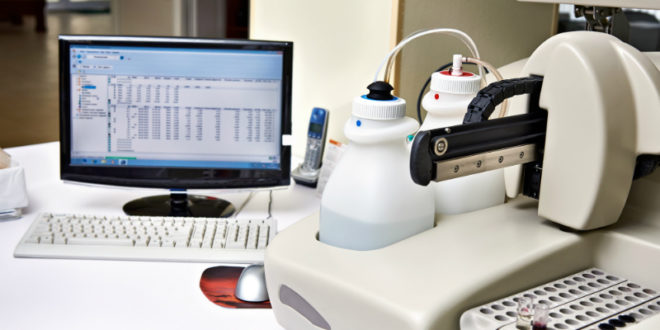
Transferring corrosive media is a routine task in the laboratory. That makes choosing the right tubes and hoses all the more important if you want to avoid unpleasant surprises. Reliable chemical tubes prevent leaks and stop the transferred medium from being contaminated. The following section explains which plastic hoses suit acids, bases, oxidising agents, or aggressive gases.
Spoilt for Choice
The choice of chemical tubes is huge, so picking the right material for the job is rarely easy. All too often, people simply grab whatever hose is within reach. Yet that hose may not be intended for aggressive media at all. The result is a serious loss of both performance and safety. Match the tube material instead to the medium and to the ambient conditions you expect.
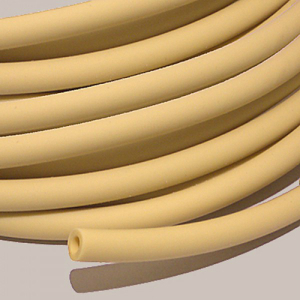
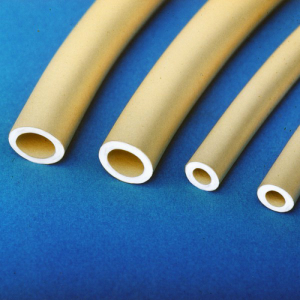
What Are Aggressive Media?
“Aggressive” media are liquids and gases that can damage materials on brief or prolonged contact. As a rule, the term covers inorganic and organic acids and bases. Typical examples are hydrochloric, sulphuric, nitric, phosphoric and acetic acid, plus ammonia and alkali hydroxide solutions.
Oxidising agents belong here too, such as hydrogen peroxide of organic or inorganic origin. Several gases also fall into this category: ozone, chlorine, hydrogen chloride and hydrogen bromide. Solvents matter as well — organic ones in particular, for example acetone, ethanol or hydrocarbons.
They, too, help define what makes a hose chemical-resistant. One thing is easy to overlook: mechanical stress can damage chemical tubes as well. Such wear may also limit their use as tube assemblies.
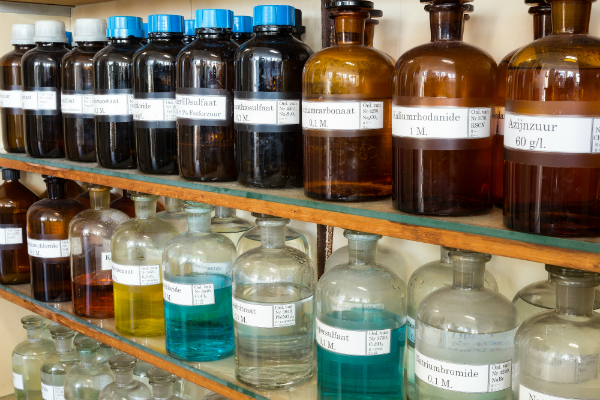
For this reason, always check a plastic hose for compatibility and resistance before you use it. The guidance below will help you choose the right product for transferring aggressive media.
Guidance for Tubing Selection
Chemical-resistance tables and lists should be your first port of call. They show how well products withstand different chemicals. Always check the conditions under which that resistance was assessed. A substance may have no effect on a hose at room temperature. Even so, it could still attack the tube or hose at higher temperatures or pressures. As a rule, stronger forces — pressure above all — and higher temperatures raise the demands on the product.
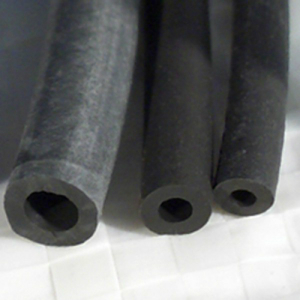
If the lists draw a blank, a simple test can help. Take small test pieces from your chemical tube and weigh each one. Note the diameter and length too, if you do not already have these figures. Then place the pieces in your chosen fluid for at least two days. Afterwards, rinse, dry and measure them again. Any deviation from the earlier values points to incompatibility. Obvious changes in appearance or feel are warning signs too.
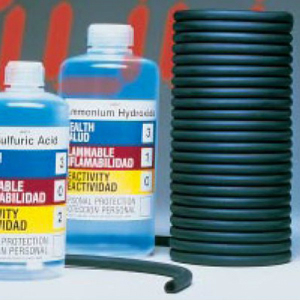
Even after the lists and any preliminary tests, due care still applies. Handling potentially damaging liquids and gases always demands caution. Your first reference point should be the operating manual.
Inspect the material regularly while it is in use. Wash it thoroughly once the job is done. Both steps reduce risk and extend its service life.
Chemical Tubes in Focus
Compatibility between hose materials and chemicals varies enormously. Even so, a few plastic products offer near-universal inertness for industrial and chemical use. The examples below should help you choose the right chemical tube for the job.
Silicone Tubings
Versilic®, Elastosil®, Silopren® and THOMASIL are common trade names for organosiloxane-based rubbers.
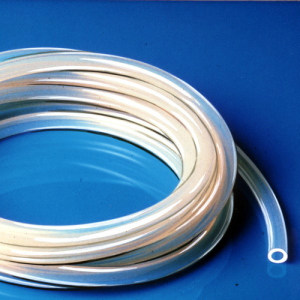
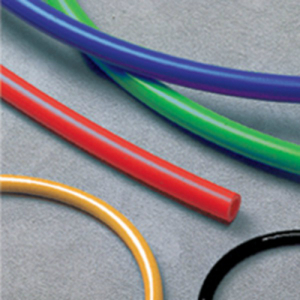
Silicone rubber is really an umbrella term for many different types. Blanket statements about it therefore tend to come with exceptions. Silicone tubings are widespread in the laboratory. For most aggressive media and liquids, though, they suit only limited use.
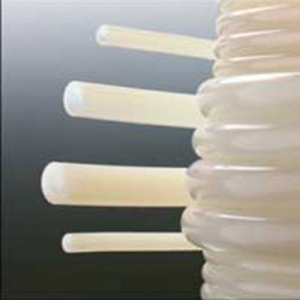
Hydrogen peroxide – of organic or inorganic origin – does not attack the material, even at higher concentrations. The same holds for sodium hydroxide solution and acetic acid. Other acids, though, grow more destructive as their concentration rises. Its high gas permeability makes the material unsuitable for transferring gases. A silicone tubing for chemicals is usually clear – transparent or translucent. This lets you inspect the transferred medium visually. Simple pinch clamps regulate the flow, and the hose routes easily through curves and bends.
EPDM Tubings
Trade names such as Nordel®, Keltan®, Vistalon® and THOMAPREN denote EPDM rubbers. These rubbers combine three monomer components in varying proportions. EPDM stands for ethylene propylene diene rubber. Its resistance makes it a popular choice for chemical tubes or hoses. Because the composition varies, always check the product specification before transferring aggressive media. That way, you confirm suitability for your particular case.
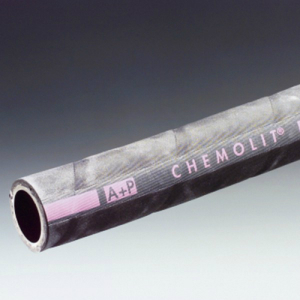
EPDM tubings excel at transferring steam and hot water. Their resistance to alkalis and dilute acids holds up in almost any environment. They also cope with some aggressive gases, such as ozone and chlorine. Mineral oils, greases and petrol are a different story. The material can swell badly in these, and in aliphatic, aromatic or chlorinated hydrocarbons. For such media, a tubing assembly is not recommended. EPDM tubings usually come in light or dark colours. Their mechanical properties are robust and typical of elastomers.
FKM Tubings
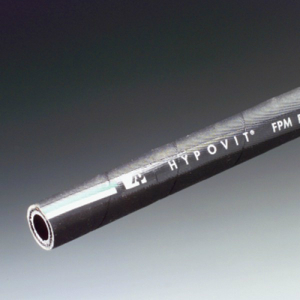
Fluoroelastomers (FKM, formerly FPM) combine high temperature resistance with chemical stability. They are marketed under names such as Viton®, Tecnoflon®, Fluorel® and THOMAFLUOR.
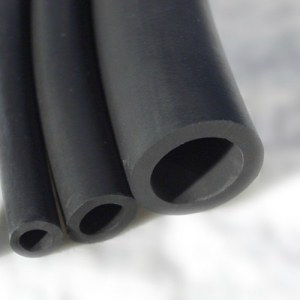
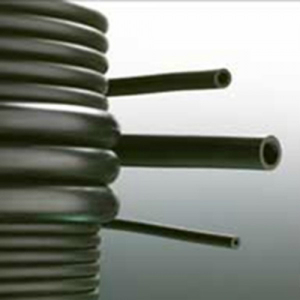
With concentrated inorganic acids, an FKM tubing has the edge over EPDM. These include hydrochloric, sulphuric and nitric acid. Against alkalis, though, FKM clearly comes off worse. Both materials still handle corrosive gases such as chlorine and ozone. For this purpose, FKM tubing assemblies are recommended. That product is highly elastic. It keeps that elasticity under mechanical load and at high temperatures. Its excellent abrasion resistance is also worth noting.
PTFE Tubings
Polytetrafluoroethylene (PTFE) is sold as Teflon® PTFE, Chemfluor®, Hostaflon® TF and THOMAFLON. PTFE tubings resist almost every aggressive substance. In fact, no chemical tube or hose offers higher chemical stability. Fierce acids such as aqua regia and oleum leave these kind of material untouched.
Both bring virtually every other chemical-resistant hose to its knees. Bases pose no problem either, including ammonia and sodium hydroxide solutions. Nor do aggressive gases such as chlorine, hydrogen chloride, nitrogen oxides and ozone.
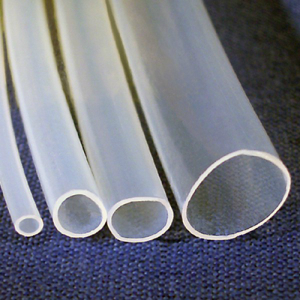
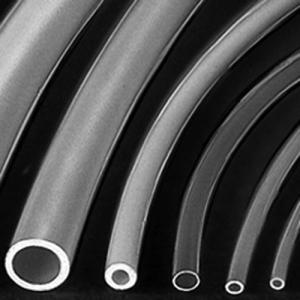
The material also performs well with many aggressive substances at elevated temperatures. A few extreme cases still call for caution. With molten alkali metals and elemental fluorine, PTFE is the wrong choice. Anyone relying on PTFE’s chemical resistance should also know its mechanical limits.
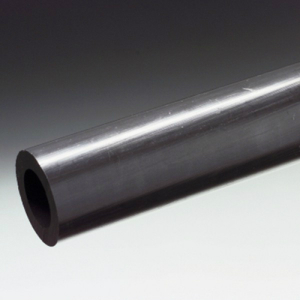
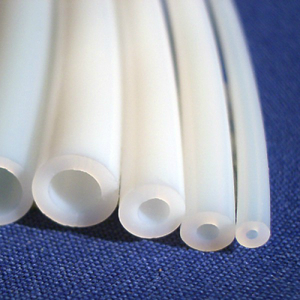
Against elastomer tubings of silicone or EPDM, PTFE feels noticeably less flexible. Tight bends are hard to achieve. The material also creeps under pressure, even at room temperature, which can cause problems. For anyone working at the extremes, though, there is no way around PTFE chemical tubes.
Transferring Aggressive Media – A Conclusion
With aggressive media, choose the material of lines carefully. Only then can you guarantee both safety and performance. Chemical resistance is the primary criterion, without doubt. Other characteristics matter too: flexibility, pressure behaviour and temperature behaviour. If you have little experience here, or feel unsure, consult a qualified specialist. PTFE may look like the ultimate hose material. Even so, a degree of caution is in order.
And yes: among all the tube types here, none can hold a candle to PTFE. Its chemical resistance and thermal load capacity stand alone.
That said, there is no point using a sledgehammer to crack a nut. The economics of tube selection matter as well. Most other types cost less than PTFE. For many applications, they are entirely sufficient. The subject of chemical-resistant tubes is far from closed. New studies appear all the time, each widening the range of suitable plastics.
Sources:
Sylvia Wetscher: Medienbeständigkeit von Polyethylen für Langzeitanwendungen, Leoben, 2011, master’s thesis, Chair of Materials Science and Testing of Polymers, Montanuniversität Leoben
Gottfried W. Ehrenstein, Sonja Pongratz: Beständigkeit von Kunststoffen, 2007, Hanser Publishing ISBN 978-3-446-21851-2