 Reichelt Chemietechnik Magazine
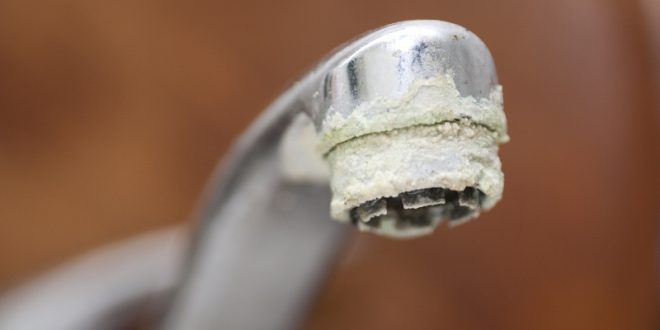
Limescale deposits on chrome-plated or stainless steel fittings, and clouded tiles in the bathroom, are unsightly. In water heaters, in the coffee machine or in pipework, however, they cause problems, because they reduce heat transfer and impede the flow of water. But not all lime is the same.
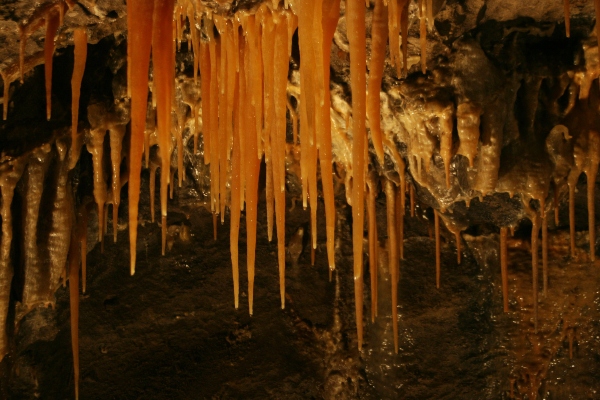
Forestry businesses have lime spread over large areas of woodland to counteract the acidification of forest soils – and gardeners do exactly the same on their lawns. Limestone is likewise indispensable as a building material: marble was already used in antiquity for palaces, temples and sculptures that still fascinate us today. No less fascinating are the bizarre formations in limestone caves, the stalactites and stalagmites nature has shaped from lime over thousands of years, hidden from view. And the global climate, too, is substantially influenced by lime and its cycle in nature. Whether it is welcome or not, we encounter lime, this natural material, constantly and everywhere, and it plays a significant role in our lives.
What lime is and where it is found
Lime is calcium carbonate (CaCO3), the calcium salt of carbonic acid (H2CO3), an acid that does not actually exist in this form, because it is unstable and decomposes into water and carbon dioxide (CO2). It does, however, form stable salts: the carbonates, a class of chemical compounds. Lime occurs in nature in many different shapes and forms. The largest proportion is found in water as limestone, marine deposits that shellfish and corals, among others, helped to form.
In the course of the Earth’s history, tectonic events have uplifted the world’s seabeds, from which entire mountain ranges eventually emerged, such as the Wetterstein Mountains in Europe or the Dolomites in the Limestone Alps.
Marble is a particularly beautiful form of calcareous rock: crystalline, and formed later from limestone deposits deep in the Earth’s crust at high temperature and pressure. Processes like these, which take place over millions of years, are what mineralogists call “metamorphic transformations”.

The class of “natural” carbonates also includes potassium carbonate (K2CO3), which goes by the historically derived common name “potash”, and sodium carbonate (Na2CO3), better known as “soda”. These, and in some places lime as well, are constituents of salt deposits that were once formed as early seas evaporated.
Unwelcome lime in the water: the degree of hardness
The grey, dull deposits on the shower wall and on the chrome-plated tap are familiar to everyone. The reason for them is the lime dissolved in the water, which is left behind when the water evaporates, just as it was when the primordial seas dried out.
Depending on how much lime the water contains, a distinction is made between “hard” and “soft” water, which can be observed from the different amounts of lather produced with soap.
Plenty of lather means soft water with a low lime content, whereas little lather indicates hard water with a high lime content. This is because the lime dissolved in the water reacts with soaps (the sodium or potassium salts of long-chain carboxylic acids) to form sparingly soluble calcium salts: the “lime soaps”. As a result, the readily water-soluble sodium or potassium soaps are no longer available for lather and the cleaning action that goes with it; indeed, lime soaps are also a constituent of the unwelcome limescale deposits in the bathroom.

Water hardness naturally depends on where the water comes from. Mountain water contains more minerals (potassium and calcium, for example) and therefore more lime, making it harder than drinking water obtained by riverbank filtration. In Germany, the hardness of water is defined as the calcium oxide content (CaO) in millimoles of calcium oxide per litre of water and stated in “degrees of German hardness” (°dH).

On this scale, water with a calcium oxide content of up to 1.3 mmol/l, corresponding to a water hardness of up to 7 °dH, is “soft” water. Water with a calcium oxide content of more than 2.5 mmol/l, by contrast, is “hard” water, corresponding to a hardness above 14 °dH. A rule of thumb that is easier to remember: one degree of German water hardness (1 °dH) corresponds to 10 mg of calcium oxide per litre of water. Yet all these figures are likely to interest only a few: the layperson senses water hardness when doing the laundry and showering, or recognises it from the scale deposits in the kettle.
Where does lime come from? The carbon cycle
Because of the carbon contained in the carbonate, lime is part of the geological carbon cycle in the non-living world and, as a natural material, one of many carbon reservoirs. Although carbon occurs in comparatively small quantities on our planet, at 0.03 %, it is a crucial element for the climate. Some 99 % of all carbon by mass is fixed in sediments, largely in carbonates and therefore also in the natural material lime.
When calcareous rock weathers, atmospheric CO2 dissolved in water, in rainwater for example, converts the insoluble calcium carbonate CaCO3 into soluble calcium hydrogen carbonate Ca(HCO3)2.
This mobilises calcium carbonate from the rock, and the water carries it away. Leaching of this kind is also how lime finds its way into our drinking water, where it is ultimately responsible for water hardness. Under altered external conditions, such as different temperatures, the hydrogen carbonate can convert straight back into carbon dioxide and calcium carbonate, and the latter is then deposited as a solid.

In the form of hydrogen carbonate, lime finally also makes its way via the rivers into the seas. Microorganisms, shellfish and corals use it to build their exoskeletons, which, after the organisms die, settle on the seabed as carbonate sediment.
If the proportion of carbon dioxide in the atmosphere increases, the CO2 concentration in the world’s oceans rises as well.
More carbon dioxide consequently dissolves in them and the seas begin to “acidify”. The consequences for marine flora and fauna are far-reaching, because these organisms are then no longer able to form the lime they need to build their skeletons. Forecasts state that the pH value, which normally averages pH = 8.25, will fall to 7.5 by the end of the century unless global countermeasures are taken and anthropogenic CO₂ emissions are reduced considerably.

Popular building material
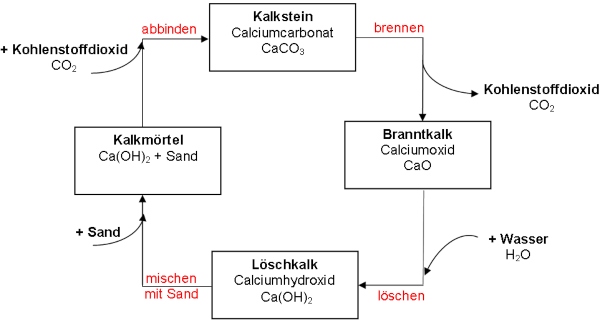
Like marble, lime has been known as a building material since antiquity. While marble can be quarried comparatively easily with muscle power, hammer and chisel and used directly, limestone as it is found in nature is not particularly well suited as a building material. It is porous and therefore less strong, and in our latitudes in particular it would quickly fall victim to weathering. To obtain a building material from natural limestone (CaCO3), the stone has to be brought into a suitable chemical form. This is done in a two-stage conversion process, “lime burning” and the subsequent “lime slaking” – the product also being known as slaked lime.
The limestone CaCO3 quarried and ground is first calcined at around +1000 °C in kiln-like plants, or “burned” as it is called, converting it into carbon dioxide and calcium oxide (CaO), the “quicklime”:
Lime burning: CaCO3 → CaO + CO2
Quicklime reacts exothermically with water, that is, with a vigorous release of heat, to form calcium hydroxide Ca(OH)2, the strongly alkaline “slaked lime”:
Lime slaking: CaO + H2O → Ca(OH)2
If slaked lime is mixed with sand, the result is lime mortar. As it sets, the slaked lime reacts with carbon dioxide from the air to form solid limestone once again, calcium carbonate (CaCO3):
Setting: Ca(OH)2 + CO2 → CaCO3 + H2O
In the process, calcium carbonate forms finely crystalline structures which, together with angular crushed sand, produce a firm matrix and thus hold the masonry together. Today, lime mortar is used predominantly for the interior fit-out of buildings and, usually with further aggregates, as external render.
Everywhere and nowhere
Lime is omnipresent, as troublesome deposits in the bathroom and as the mineral constituent of drinking water that determines its hardness. In nature, however, we come to know its true beauty, in limestone ranges that rose from the early seas over the course of millions of years, and in caves and grottoes. Lime has been known as a building material since antiquity, as fine marble, as limestone and as quicklime for structures that still command our deep respect. Even today, the construction industry cannot do without lime. Its most important function, though, is as part of the inorganic carbon cycle, which matters so much for the world’s climate.
The natural material lime is an all-rounder that plays its visible and invisible roles in many areas of everyday life and in nature.
Image credits:
Featured image | © Angela Staenicke – stock.adobe.com
Michelangelo's David | © Rico Heil (User:Silmaril) – de.wikipedia.org
Limescale deposits on the shut-off valve | © Richard Huber – commons.wikimedia.org
Technical lime cycle | © H. Hoffmeister – de.wikipedia.org