 Reichelt Chemietechnik Magazine
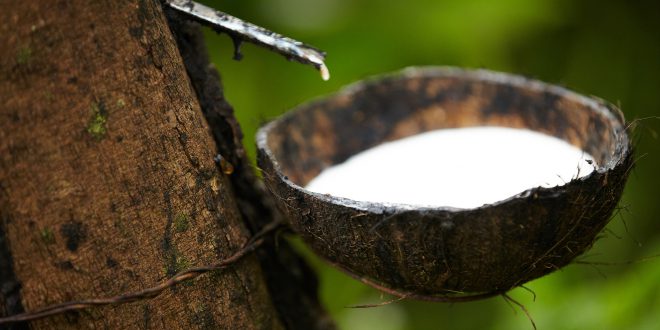
Since the second phase of the Industrial Revolution in the 1870s, a modern world without rubber has been almost inconceivable. The material is encountered wherever something must be sealed to keep unwanted substances out or desired media in – as with rubber gloves, seals, or the air inside a tire. To convert thermoplastic natural rubber into elastomeric plastics, it is vulcanized. In this way, it becomes an essential engineering material.
Natural Latex and Rubber
Colloquially, the term rubber refers to an elastomer originally obtained from a plant’s milky sap. In botanical terminology, this milky sap is also referred to as latex.
In chemical terminology, latex more generally describes an emulsion of polymer particles in an aqueous phase. The term is also commonly used for the rubber and the products manufactured from it. Today, latex is used to manufacture products such as rubber hoses, including latex hoses, seals, and plugs, as well as semi-finished products such as rubber sheets and rubber mats.
What Is Latex Made Of? How Is the Milky Sap Produced?
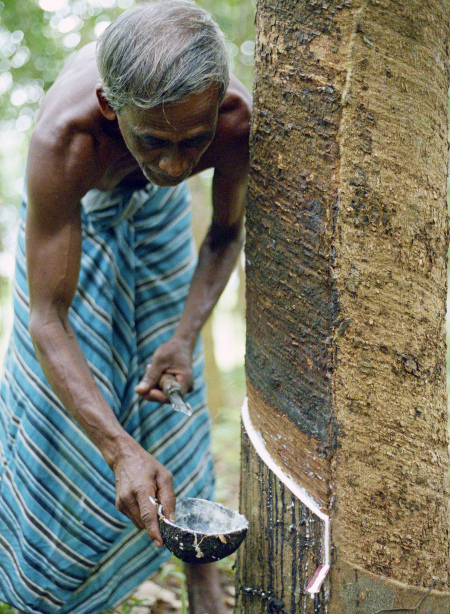
Natural latex is produced by various plant families, most prominently the spurge family (Euphorbiaceae). This sticky and indigestible milky sap is generated by specialized latex cells or laticifers within the plant and serves as a natural defense against herbivores, particularly when it contains toxic or irritating substances. Natural latex is harvested by tapping the latex vessels located in the bark.
Isoprenes are hydrocarbons composed of the building block isoprene (2-methylbuta-1,3-diene) and are constituents of many natural substances. In the plant kingdom, terpenes occur in large quantities, for example in resins. In humans, they are found as components of lipids and steroid hormones. Trees release isoprene into the atmosphere in such large amounts as aerosols that it can cause forested mountain ranges to appear bluish. The eucalyptus forests of the Blue Mountains on Australia’s east coast, for instance, shimmer blue under certain daylight conditions.
Another polymeric isoprene is found in the latex of the gutta-percha tree native to Southeast Asia, which has also been used industrially to a lesser extent. Unlike the latex of the rubber tree, it predominantly contains trans-configured 1,4-polyisoprene consisting of only about 1,500 monomer units. Gutta-percha is more chemically resistant than rubber but sensitive to air and less elastic. However, it becomes moldable when heated and is used, for example, in dental applications.
Early Practical Applications of Latex
One of the earliest practical uses of latex employed the milky sap of the mulberry tree Castilla elastica. In pre-Columbian Central America, it was used thousands of years ago to produce rubber bands, vessels, sandals, and balls for the Mesoamerican ballgame. After the bloody Spanish conquest of Mexico, a demonstration of the ballgame before Emperor Charles V by an Aztec team was likely the first use of rubber in Europe – and for nearly 200 years, almost the only one.
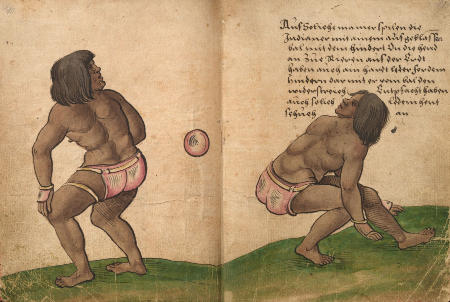
This changed when the French explorer Charles-Marie de la Condamine (1701–1774) observed in the 1740s how indigenous peoples of the Amazon region harvested and used rubber. The indigenous populations of Central America had long known – well before Columbus’s arrival – how to transform the plastically deformable, sticky rubber into elastic material using plant extracts – knowledge that was not readily available elsewhere. Nevertheless, numerous applications for water-repellent and moldable latex soon emerged in Europe and North America during industrialization.
Goodyear and the Development of Vulcanization
Another early application of rubber was inflatable life preservers sealed with a valve. When American inventor Charles Goodyear (1800–1860) developed a new valve in the 1830s, he attempted to market it to Roxbury Rubber. However, the company had no further need: all existing life jackets had melted into a sticky mass during the summer heat. This inspired Goodyear to develop a method to better control the hardness and tackiness of the material.
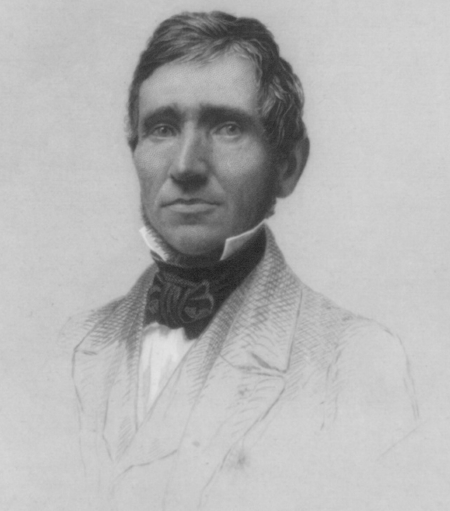
In one of his experiments, he discovered that treatment with nitric acid reduced stickiness, although the material still melted under heat. Goodyear learned of the work of German chemist Friedrich Wilhelm Lüdersdorff (1801–1886) and American inventor Nathaniel Hayward (1808–1865), both of whom had independently observed that adding sulfur reduced the tackiness of natural rubber.
After optimizing the process, rubber could be produced industrially from 1844 onward. However, Goodyear himself derived little benefit. The company bearing his name, the Goodyear Tire & Rubber Company, was founded nearly 40 years after his death.
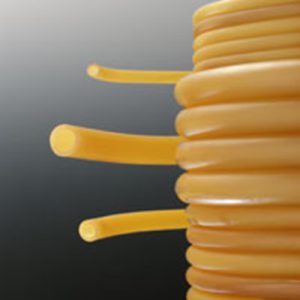
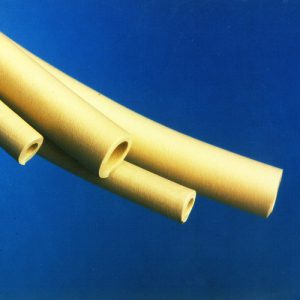
Because heat and sulfur were involved in the process, reminiscent of volcanic activity, inventor, painter, and author William Brockedon (1787–1854) coined the term “vulcanization.” The most common process uses 1.8–2.5% sulfur by mass at temperatures between +120 and +160 °C, with 2-mercaptobenzothiazole or related compounds acting as accelerators.
How Is Natural Rubber Vulcanized?
Chemically, curing raw rubber according to the Goodyear process involves sulfur atoms or chains linking the allyl groups (-CH=CH-CH2-) of the isoprenoids, typically at only every hundredth or thousandth isoprene unit.
An additional application of sulfur vulcanization is inverse vulcanization, in which polymeric sulfides are linked by hydrocarbons. This technique is used, for example, in the production of lithium–sulfur batteries.
Vulcanization can even be experienced when repairing a punctured bicycle tube. Such tubes are typically made from cost-effective, airtight butyl rubber. Rubbing releases reactive molecules. The patches consist of unvulcanized raw rubber protected from atmospheric oxygen by a film. The vulcanizing adhesive contains adhesive to hold the patch in place and – as one can readily smell – sulfur, which gradually cross-links the macromolecules.
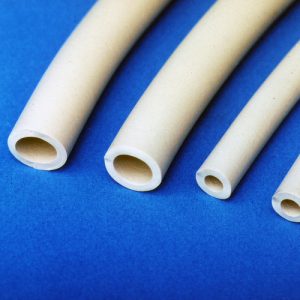
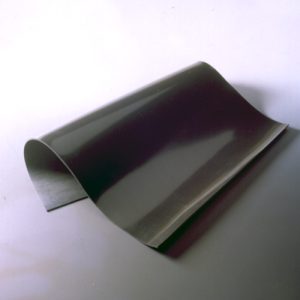
Although sulfur bridges are gradually replaced by atmospheric oxygen over time, causing rubber to become brittle, vulcanization is difficult to reverse in a targeted manner. To address tire waste, devulcanization processes break sulfur bridges thermally and with ultrasonic assistance. While not yet widely established on an industrial scale, devulcanization is considered a promising recycling method for used tires, allowing the material to be reused in new rubber compounds.
The Search for a Substitute for Natural Rubber
The growing demand for natural rubber gave rise to so-called “rubber barons,” some of whom did not shy away from slavery and genocide. Political difficulties in supplying rubber from the Amazon region intensified efforts to find alternative rubber sources. Synthetic rubbers can, for example, be produced from petroleum.
After English chemist Charles Hanson Greville Williams (1829–1910) isolated isoprene from rubber and determined the molecular formula C5H8, French chemist Gustave Bouchardat (1842–1918) succeeded in 1879 in producing a rubber-like substance from isoprene using hydrochloric acid. In 1901, Russian chemist Ivan Kondakov (1857–1931) achieved the first synthesis of (methyl) rubber from 2,3-dimethylbutadiene, later developed into an industrial process by German chemist Fritz Hofmann (1866–1956). However, methyl rubber lacked sufficient elasticity to serve as a viable replacement.
BUNA and the Breakthrough of Synthetic Rubbers
The first economically viable synthetic rubber was developed in 1926 by German chemists Walter Bock (1895–1948) and Eduard Tschunkur (1874–1946) at IG Farben. Marketed under the name “BUNA,” it was an emulsion polymer of 1,3-butadiene and styrene that, like methyl rubber, could also be vulcanized thermally.
Chloroprene rubber, known as neoprene, was developed in the 1930s by the U.S. company DuPont and is characterized by high chemical resistance. Later marketed as “BUNA-S,” it remains one of the most important synthetic elastomers. The technical term “BUNA” has since become synonymous with synthetic rubber in general usage.
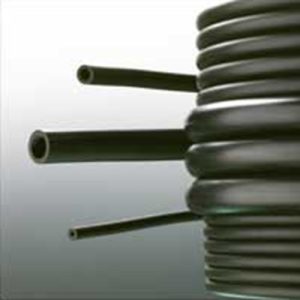
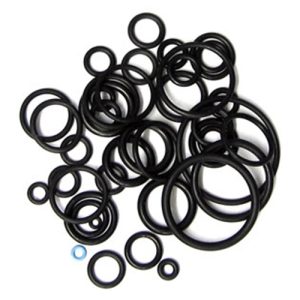
Synthetic rubber is indispensable in numerous industrial products, including conveyor belts, drive belts, plastic hoses, seals, and more. Specific properties such as elasticity, weather resistance, and chemical resistance are often required. Frequently used materials include styrene-butadiene rubber (SBR), nitrile rubber (NBR), and chloroprene rubber (CR).
In almost all modern machines, it is used for power transmission, sealing, insulation, and damping. The impact of vulcanization on human mobility and daily life can therefore hardly be overstated.
Image Sources:
Featured image | © Yuri Arcurs/peopleimages.com – stock.adobe.com
Rubber Cultivation in Sri Lanka | © Salix Oculus, CC BY-SA 4.0 <https://creativecommons.org/licenses/by-sa/4.0>, via Wikimedia Commons
Mesoamerican Ballgame (Costume Book by Christoph Weiditz) | © Christoph Weiditz, Public domain, via Wikimedia Commons
Inventor Charles Goodyear (1800–1860) | © William G. Jackman, Public domain, via Wikimedia Commons