The term “tolerance” originates from the Latin word “tolerare”, meaning to endure, withstand, or bear. In everyday language, it often describes the acceptance of different beliefs, religions, cultures, worldviews, or …
Read more »Alle Beiträge
Plastics in Medicine and Medical Technology
The share of plastics used in the medical sector accounts for only around 2 percent of the total volume of plastics produced worldwide. Despite this comparatively low proportion of overall …
Read more »Heating and Cooling Equipment in the Laboratory
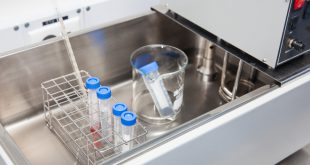
Physical processes and chemical reactions often exhibit a significant dependence on temperature. Electrical resistance, as described by Ohm’s law, increases with rising temperature in metallic conductors, whereas it decreases with …
Read more »Standard Ground Joints in Chemistry
In the chemical laboratory, many standards must be observed, including those for standard ground joints on laboratory apparatus or glass containers. Standard ground joints ensure that glassware and vessels, such …
Read more »Plastic Shortage: Rising prices and scarce raw materials explained
The convergence of several events led to a plastic shortage and a sharp increase in prices. This affected not only plastics, but also other raw materials such as metals, wood …
Read more »Chromatography: From Colour Writing to Modern Separation Science
Where the history of chromatography begins remains uncertain. Nature itself performs the process: a chemical mixture separates into its individual components as it passes through an environment made of different …
Read more »Silicon: Properties and Applications
Without silicon, our modern daily life would look entirely different. It is found in every microchip but also in baking moulds, lubricants, cosmetics, and plastics: the element silicon. Silicon – …
Read more »Polyolefins – Properties, Differences and Applications
The term polyolefins refers to polymers produced from alkenes such as ethene, propene, butene, 2-methylpropene, and 4-methyl-1-pentene. Polyolefins are saturated hydrocarbons characterized by low density, good chemical resistance, low water …
Read more »Deionised and Ultrapure Water: Production and Use
Fully demineralised water, also known as deionised, demi-water, demineralised, distilled, or ultrapure water — all look just like regular tap or spring water but contain very few or no foreign …
Read more »Natural Rubber – What Is It?
Rubber was already known to the Maya, who used it to produce waterproof containers and elastic balls and to bond shoes. It is obtained by tapping the rubber tree, which …
Read more »
Reichelt Chemietechnik Magazine