 Reichelt Chemietechnik Magazine
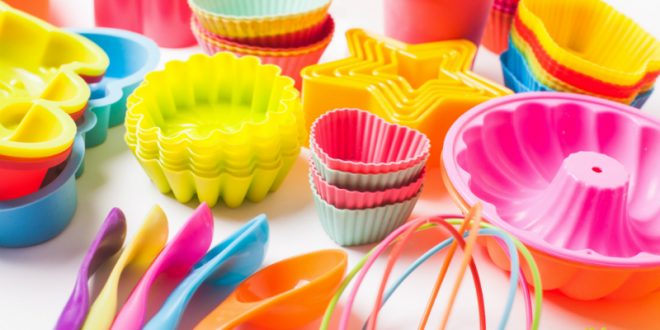
Among plastics, silicones are exceptional performers, combining chemical resistance to a wide range of substances with high temperature stability and flexibility – even at very low temperatures down to -100 °C. They are resistant to weathering, UV radiation and ozone. Above all, however, they are considered biocompatible, which explains their broad use in pharmaceutical and food applications as well as in medical technology. Silicone products are part of everyday life – whether when removing a freshly baked cake from its mold or taking a phone out of its case. Often unnoticed, they ensure that jackets remain dry in the rain, window seals reliably block out wind, or a car operates reliably.
It All Began with a Failed Experiment…
At the beginning of the 20th century, the English chemist Frederic Stanley Kipping (1863-1949), who was studying the chemistry of silicon, aimed to synthesize silico-ketones – analogous to the synthesis of ketones from acid chlorides via the Grignard reaction, which was well-established at the time. However, instead of a liquid, low-viscosity “silico-ketone,” he obtained a viscous white material. As he quickly realized, it bore little resemblance to a ketone and he had no idea what to do with it.
Instead of ketones with the hypothetical empirical formula R2Si=O, he had synthesized polysiloxanes – the fundamental building blocks of all silicones.
The name itself is a lasting reminder of Kipping and his pioneering work – the term “silicone” is derived from “silico-ketone.” It was only years later that polysiloxanes, as early synthetic polymers, were combined with glass fibers to form a material. However, this development initially went largely unnoticed and soon faded into obscurity. Polysiloxanes only achieved their breakthrough when Kipping’s complex and uneconomical synthesis route was replaced by the much simpler Müller-Rochow process.
At almost the same time, in the early 1940s, chemists Richard Müller (1903-1999) in Germany and Eugene George Rochow (1909-2002) in the USA independently patented the synthesis of chloromethylsilanes. In this process, methyl chloride is passed at high temperatures over highly pure silicon in the presence of copper as a catalyst. This results in mono- or polysubstituted chloromethylsilanes, which are separated by fractional distillation and serve as starting materials for the synthesis of polysiloxanes. Even after more than 70 years, the process – named after its developers – remains highly relevant: to this day, over 90 % of chloromethylsilanes are produced industrially using this method.
A New Type of Plastic
Unlike “conventional” plastics, synthetic silicone-based polymers are not built on carbon-carbon (-C-C-) chains but on a silicon-oxygen (-Si-O-Si-) backbone. The bond energy of the silicon-oxygen bond is higher than that of a comparable carbon-carbon bond, which explains the excellent temperature resistance as well as ozone and UV stability of silicones. This fundamental difference makes silicones unique among synthetic materials and accounts for their wide range of applications.
Functionality and Diversity
Silicone-based polymers are encountered as silicone oils used in impregnating agents or antifoaming agents, as solid silicone resins applied to buildings and construction material surfaces to protect against moisture, and as elastic silicone rubbers.
Their great diversity is rooted in their structure, as each silicon atom in the -(Si-O-Si)x-chain has two available bondings sites.
These can be saturated with organic groups such as methyl groups (-CH3) or linked via oxygen atoms to other silicon atoms to form two- or three-dimensional networks. The higher the degree of cross-linking via oxygen, the harder the resulting material becomes.
Silicone Rubbers – A Class of Their Own
The largest share of silicone products consists of silicone rubbers. The different types vary depending on their manufacturing process, type of cross-linking, and degree of cross-linking.
Room-temperature-vulcanizing rubbers (RTV) cure at ambient temperatures, whereas high-temperature-vulcanizing rubbers (HTV) require elevated temperatures. The cross-linking of polysiloxanes into various silicone rubbers can occur via three different mechanisms.
Peroxide Cross-Linking
The peroxide process has been used for over fifty years and is technologically well established. Organic peroxide compounds such as bis(2,4-dichlorobenzoyl) peroxide or dicumyl peroxide initiate the polymerization reaction and decompose at elevated temperatures.
Silicone rubbers cross-linked by peroxides must therefore be post-cured at temperatures below 200 °C for an extended period to remove the by-products of radical polymerization.
Platinum-Catalyzed Addition Cross-Linking
For plastics used in medical, pharmaceutical, or food applications, many manufacturers opt for platinum-cured silicone rubbers from the outset. Platinum or organoplatinum compounds are used as catalysts.
These remain in such minimal quantities in the final product that regulatory authorities such as the FDA (U.S. Food and Drug Administration) or the BfR (German Federal Institute for Risk Assessment named “Bundesinstitut für Risikobewertung“) raise no concerns, allowing silicones produced by this method to be approved for medical, pharmaceutical, and food applications.
In addition to their safety, the rapid vulcanization and the ability to control cross-linking speed via temperature are key advantages of platinum curing. However, even trace amounts of amines or sulfur can interfere with the process, acting as catalyst poisons.
Condensation Cross-Linking
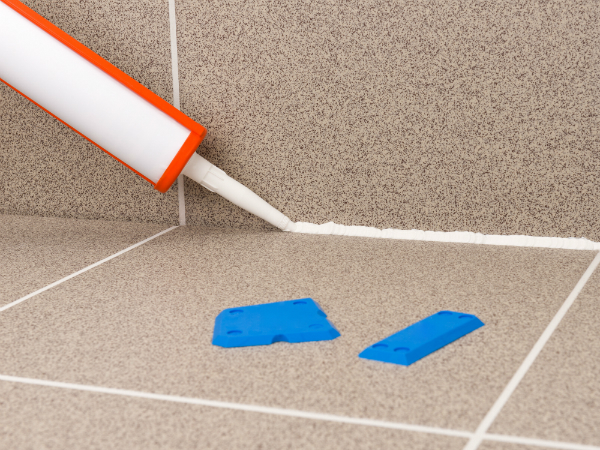
In condensation curing, terminal hydroxyl groups of siloxanes react to form polysiloxane chains, which are cross-linked into two- or three-dimensional polymers using short-chain bifunctional amines, alcohols, or carboxylic acids, resulting in elastic silicone rubbers. Organotin or organotitanium compounds serve as catalysts, and the reaction is initiated by atmospheric oxygen. Room-temperature-curing silicone formulations are commonly used as sealants in construction applications.
Tailor-Made Polymers for Diverse Applications
By varying silicone rubbers and cross-linking methods, silicones can be engineered to exhibit specific properties. HTV silicone rubbers, for example, remain flexible and stable over a wide temperature range from -50 °C to 200 °C, and in some cases up to 300 °C. They are used in seals for the automotive and food industries, cable insulation, and damping materials.
RTV silicone rubbers are particularly valued for their thermal conductivity and electrical insulation properties, making them ideal for applications in electrical and electronic systems.
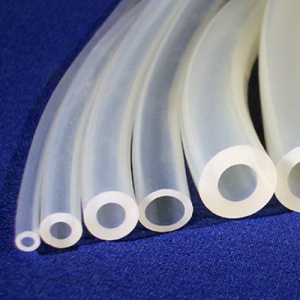
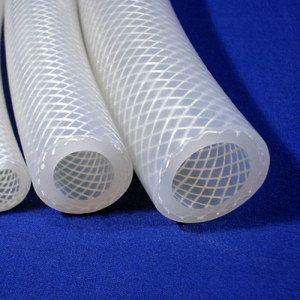
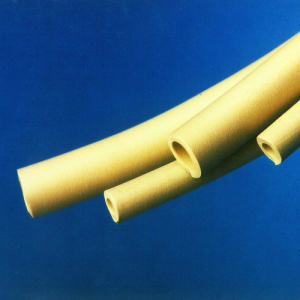
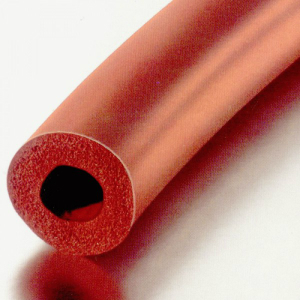
Liquid silicone rubbers (LSR) have lower viscosity compared to HTV and RTV silicones. They can be processed via injection molding into a wide variety of shapes, such as silicone hoses. Since LSR silicones are always platinum-cured, products made from them are suitable for use in medical technology.
Additives Enhance Polymer Properties
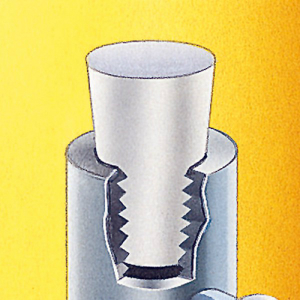
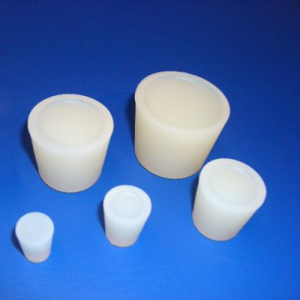
To improve mechanical properties, silicone polymers often require fillers such as fumed silica (SiO2) or other inert materials. However, additional auxiliaries, additives, stabilizers, and especially plasticizers are generally not necessary. As a result, many materials used in medical technology, pharmaceuticals, and food industries are based on silicone rubbers. The physiological safety of silicone hoses, seals, or silicone stoppers, their high purity, and their compatibility with all common sterilization methods further support their use in these sensitive applications.
Synthetic Polymers of the Future
Silicones possess properties that make them indispensable high-tech materials across many industries. Future developments may further expand their applications. For instance, early promising attempts are being made to use silicones in 3D printing, enabling faster and more efficient production of application-specific products. Another emerging form is silicone nanofilaments at the nanometer scale, which exhibit extreme properties and can impart superhydrophobic characteristics to surfaces – far exceeding the hydrophobicity of conventional materials. This opens the door to entirely new material properties and applications – the future of silicones remains an exciting field!