 Reichelt Chemietechnik Magazine
In laboratory environments, substances often need to be free of moisture, samples must be kept dry, or stored under constant humidity conditions. Desiccants for gases, liquids, or solids – as well as the appropriate laboratory equipment – are essential for this purpose. This article explores key questions such as: what to consider when selecting a desiccant, which types – regenerable or non-regenerable – are suitable for specific applications, and which devices, such as desiccators, are used.
This becomes particularly important when substances or products are sensitive to elevated temperatures or moisture, or when they must be stored under dry conditions over extended periods.
Moisture Removal
The focus here is on the removal of water, i.e., moisture. A key consideration is the physical state of the substance to be dried. Accordingly, desiccants are categorized for use with gases, liquids, or solids.
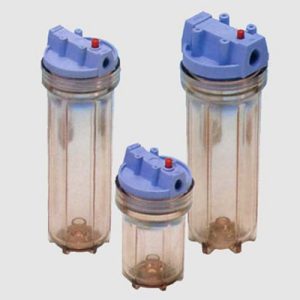
Drying can occur either through a chemical reaction between the desiccant and water or physically through adsorption. Gases and liquids can flow and therefore passed through or over the desiccant. This is referred to as dynamic drying. In such cases, desiccants are often used in the form of granules housed within a filter housing.
In static drying, the desiccant is either added directly to the substance and removed afterward, or stored alongside the substance in a container. A common example is small nonwoven sachets included in the packaging of high-quality leather goods. Through adsorption, they maintain low humidity levels to ensure consistent product quality. Other applications include consumer electronics, corrosion-sensitive items, pharmaceuticals, and dietary supplements, all of which are often stored in dry environments prior to sale.
Regenerable Desiccants
Solid desiccants used in the laboratory are classified as regenerable or non-regenerable.
Examples of regenerable desiccants include:
| Desiccant | Regeneration | Application | Not suitable for |
| Aluminum oxide | 150-200 °C | Non-polar substances | Polar substances |
| Calcium sulfate | 250-350 °C | Rapid drying | High humidity |
| Potassium carbonate | 100-150 °C | Basic solvents, acetone, chlorinated hydrocarbons | Acids |
| Copper sulfate | 50 °C; vacuum | Low molecular fatty acids, alcohols, esters | Amines, nitriles, ammonia |
| Silica gel | 150 °C | High humidity, desiccators | Liquids, alkaline substances |
| Molecular sieves | 400-550 °C | Low temperatures, drying tubes, desiccators | High humidity |
| Alumina (bentonite) | 150 °C | High humidity, gases | Corrosion-sensitive environments |
Regeneration is recommended on a laboratory scale, but in industrial settings it is often uneconomical due to energy costs. The process can be supported by applying a partial vacuum. The effectiveness of regeneration can be monitored via mass loss.
Non-Regenerable Desiccants
Other desiccants react chemically with absorbed water or bind it within a crystal lattice, making regeneration difficult or only possible at very high temperatures. These include:
| Desiccant | Application | Not suitable for |
| Calcium chloride | Olefins, aromatics, ethers, esters, acetone, haloalkanes | Ammonia, amines, alcohols, aldehydes, phenols, esters, ketones |
| Calcium oxide | Ammonia, amines, alcohols, ethers | Acids, aldehydes, ketones, esters |
| Calcium hydride | Low residual moisture, hydrocarbons, ethers | Protic substances |
| Magnesium sulfate | Widely applicable | |
| Elemental sodium | Aprotic solvents | Halogenated compounds, protic solvents, ketones, aldehydes, esters |
| Sodium sulfate | Widely applicable | High humidity |
| Lithium aluminum hydride | Hydrocarbons, ethers | Protic solvents |
| Phosphorus pentoxide | Saturated aliphatics, aromatics, nitriles, halogenated hydrocarbons, carbon disulfide | Acids, alcohols, amines, ketones, aldehydes, ethers |
The chosen desiccant must not react chemically with the substance being dried. It must also provide sufficient and irreversible moisture-binding capacity within the relevant temperature range.
Solid Desiccants in the Laboratory
An approximate understanding of the moisture content of the substance is essential for determining the required amount of desiccant. For industrial purposes, German standard DIN 55474 provides guidance, which can also serve as a reference in laboratory settings.
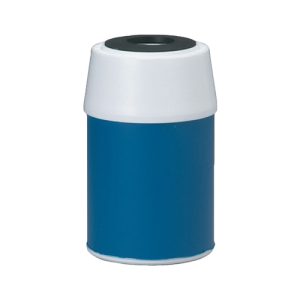
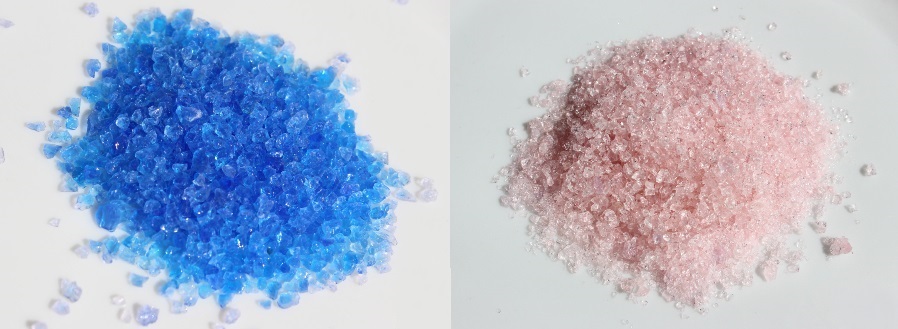
One example is the Blue Gel Granulate Sorbent, which offers a particularly high water absorption capacity. This simplifies both the handling of this desiccant and the monitoring of its effectiveness. Silica gel has a high specific adsorption capacity, allowing it to absorb up to approximately 40% of its own mass in moisture.
Molecular sieves are synthetically produced porous aluminosilicates with defined pore diameters. They are also known as zeolites (from the Greek zeo lithos = boiling stone). Natural zeolites effervesce when heated, releasing their bound water. Depending on pore size, they can selectively adsorb not only water but also other solvent or gas molecules. They are particularly effective at low moisture levels and low temperatures, where other desiccants are no longer efficient.
Alumina, also known as bentonite, is a naturally occurring mineral mixture. Its main component, montmorillonite – a sodium aluminosilicate present at 60 to 80 % – is responsible for its water absorption capacity and associated swelling properties.
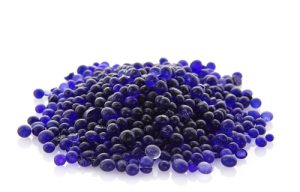
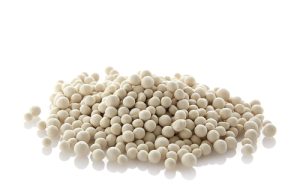
Aluminum oxide also binds other polar substances such as alcohols. It is therefore suitable for drying non-polar substances that contain only trace amounts of moisture, such as hydrocarbons, halogenated hydrocarbons, or ethers.
Liquid Desiccants in the Laboratory
Concentrated sulfuric acid occupies a special position as a liquid desiccant due to its high absorption capacity and rapid action. It is typically used in desiccators, where the substance to be dried is stored above the acid, which removes moisture from the surrounding air. For acidic or pH-neutral gases, the gas can alternatively be passed through a wash bottle containing sulfuric acid. Concentrated sulfuric acid is unsuitable as a desiccant for unsaturated organic compounds, alcohols, ketones, basic substances, hydrogen sulfide, or hydrogen iodide.
Gaseous Desiccants in the Laboratory
Gaseous drying agents used in the laboratory include primarily air and, for inert conditions, nitrogen or noble gases. A practical application is the spray drying of solids. Nitrogen, noble gases, and compressed air are supplied in certified quality and can be used without pre-treatment. Ambient air is usually pre-dried by cooling and condensation of its moisture content, then reheated to drying temperature. This process is already integrated into modern spray dryers.
Selection of the Desiccant
Several parameters influence the selection of a suitable desiccant, including:
- Physical state of the substance to be dried
- Equipment design
- Chemical properties of the substance to be dried
- Initial moisture content
- Target residual moisture
- Quantity of material to be dried
- Cost of the desiccant
- Regeneration or disposal requirements
The equipment design depends on the physical state of the substance to be dried.
For drying gases, the gas can be passed over the desiccant or, in the case of a liquid desiccant, passed through it. Liquid substances are either mixed with the desiccant or stored in a closed system above it. A closed system means that no exchange of material with the surroundings takes place.
Solids are generally dried by storing them above the desiccant in a closed system. The initial moisture content, the target residual moisture after drying, and the quantity of material determine the required capacity of the desiccant at the chosen temperature. This can be regulated by the amount of desiccant used. Alternatively, the initial moisture content can be reduced by thermal pre-drying or by pre-drying with lower-cost desiccants. The desiccant and the substance to be dried must not react chemically with one another. Finally, cost considerations should also factor into the selection process, including whether regeneration or disposal is the more practical option.
Laboratory Equipment for Drying
Depending on the physical state of both the desiccant and the substance to be dried, desiccators, drying tubes, and gas washing bottles are used.
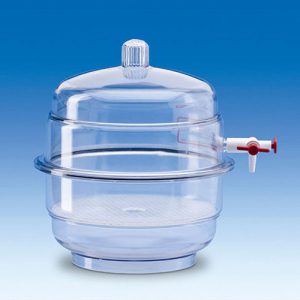

Desiccator
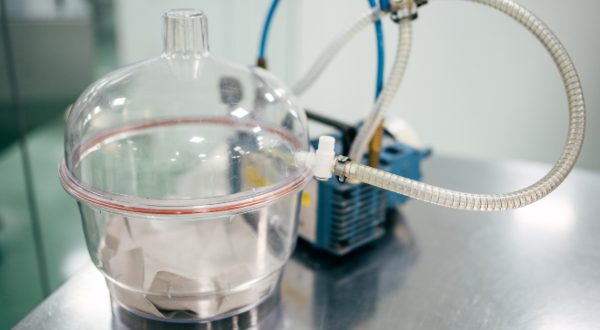
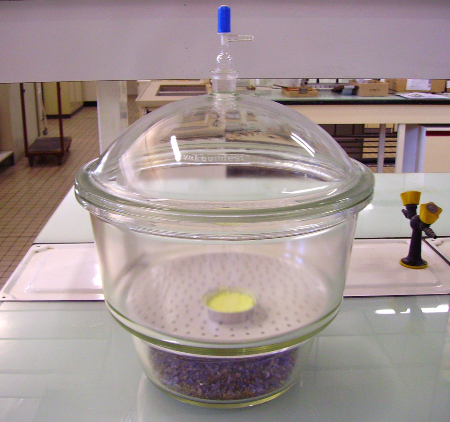
Desiccators are used for drying solid substances in the laboratory. They consist of two-part glass vessels that can be sealed airtight via a ground-glass joint, which is greased to ensure a proper seal. Vacuum desiccators may feature a stopcock in the lid for controlled venting and evacuation. The lower section, separated from the upper section by a perforated plate made of ceramic or plastic, holds the desiccant. The sample to be dried is placed in an open vessel on top of the perforated plate. If the ground-glass surfaces adhere too firmly, a desiccator opener may be used, or the joint area can be gently warmed with a hot-air dryer.
Drying Tube
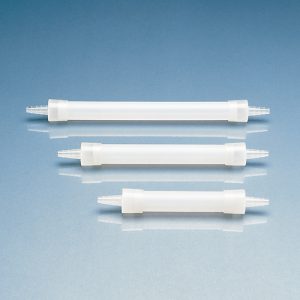
Drying tubes made of glass or plastic are filled with a solid desiccant held in place between plugs of cotton wool or glass wool. They are available in straight or angled designs. One end is connected airtight to the laboratory apparatus – via a standard ground-glass joint or tubing – containing the moisture-sensitive substance, while the other end remains open to allow gas exchange.
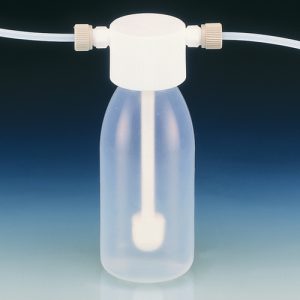
Gas Washing Bottle
Gas washing bottles made of glass or chemically inert plastic are used for drying gases. The gas is introduced via a dip tube and passed through a liquid desiccant such as sulfuric acid. To maximize the gas-liquid contact surface through the formation of small bubbles, the outlet can be designed as a nozzle plate or frit.
Conclusion
Desiccants play a crucial role in laboratory environments. In addition to direct drying through physical contact, indirect drying via the surrounding atmosphere is also employed. When direct contact occurs, the desiccant must not react chemically with the substance being dried. Key selection factors include moisture-binding capacity, cost, and the feasibility of regeneration in the laboratory.
Image sources:
Cover image | © Alexej – stock.adobe.com
Blue gel (silica gel) with indicator dye, dry (left image) | © Poyraz 72, CC BY-SA 4.0 <https://creativecommons.org/licenses/by-sa/4.0>, via Wikimedia Commons
Blue gel (silica gel) with indicator dye, moist (right image) | © Poyraz 72, CC BY-SA 4.0 <https://creativecommons.org/licenses/by-sa/4.0>, via Wikimedia Commons
Vacuum desiccator with perforated plate | © Cjp24, CC BY-SA 3.0 <https://creativecommons.org/licenses/by-sa/3.0>, via Wikimedia Commons