 Reichelt Chemietechnik Magazine
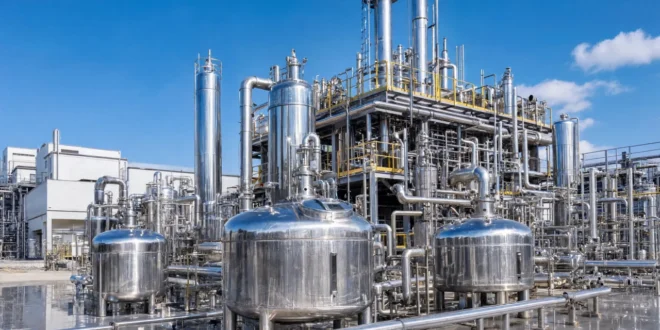
Chemical products have become indispensable to everyday life. Plastic household items, medicines, detergents and specialised chemicals inside high-tech goods all make our lives easier, more comfortable and more liveable. Both basic chemicals and complex synthesised products rely on large-scale plants for mass production. This article explains what a chemical plant looks like and how it works.
Scale-Up: Moving a Chemical Reaction from the Lab to Industrial Scale
In the lab, chemists first synthesise a new product in small quantities. They convert a few milligrams or grams of substance, whereas industry works on the scale of tonnes. Bridging that gap is a challenge. It demands expertise in industrial chemistry, process engineering, chemical reaction engineering and reactor design.
A smooth scale-up succeeds only when specialists from all these fields work together.
At the same time, plants must meet demanding standards. These cover operational safety, cost-efficiency, environmental protection and sustainable, resource-efficient production – above all in the chemical industry.
The Industrial Revolution as a Driver of Chemical Engineering
Before the Industrial Revolution, manufacturers produced chemical goods mainly in small workshops. Tanneries and dye works led the way. In the mid-eighteenth century, the Englishman John Roebuck (1718–1794) developed the lead chamber process for making sulphuric acid. It was one of the first industrial processes in chemical engineering. The first chemical factories followed soon after, among them the “Chemische Fabrik Marktredwitz” in Germany and the “Laboratorium” in Winterthur, Switzerland. As the chemical industry rose in the early nineteenth century, industrial chemistry and plant construction advanced alongside it. The first large-scale products were sulphuric acid, soda and synthetic dyes.
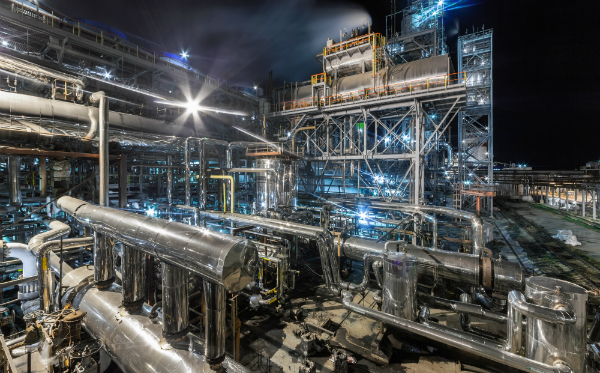
The name BASF still recalls this era: Badische Anilin- und Soda-Fabrik. Many pioneering discoveries in organic and inorganic chemistry date from this period. One example is the synthesis of acetylsalicylic acid, among the first synthetically produced medicines. To manufacture such products, the chemical industry needed ever more sophisticated plants.
A milestone in chemical engineering was the Haber-Bosch process for ammonia synthesis. It required reactors that could withstand high pressures and temperatures.
Scaling to Industrial Level Takes Many Experts Working Together
A synthesis developed in the lab is only a first step. What works there does not transfer easily to large-scale production. Key technical questions for the scale-up include:
- choosing the right type of reactor
- setting the optimum reaction conditions, including the right catalyst
- developing and optimising suitable separation processes
Chemical reaction engineers handle the technical side. They design the reactors and keep them running at their best, working closely with process engineers. Economics also take centre stage, since developing, building and operating a chemical plant costs both time and money. Planning and operation must respect safety and environmental factors too, along with the legal framework of official permits and statutory regulations.
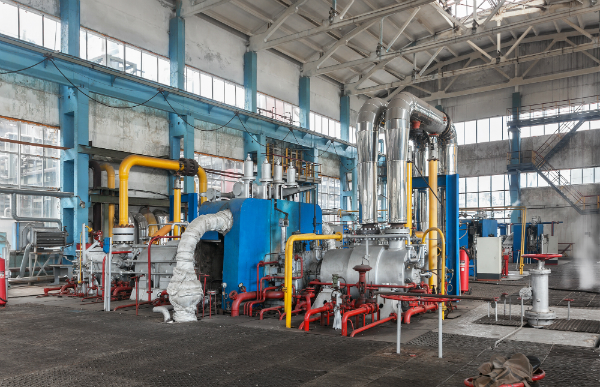
How a Typical Chemical Plant Works
A reaction in a chemical plant normally runs through three phases.
The Preparation Phase
This phase prepares the reactants (starting materials) for the reaction itself. Operators might crush, grind or heat them, for example. The exact steps depend entirely on what the second phase, the reaction phase, requires.
The Reaction Phase
It takes place in purpose-built reactors, run either as a batch or a continuous-flow process. Choosing the right method and reactor design calls for several reaction parameters. From these, engineers calculate the material and heat balances.
The material balance shows how the amount of substance in the reactor changes over time. It requires the stoichiometry and kinetics under the chosen conditions. From this, engineers can calculate the maximum achievable conversion for a given reactor size – and therefore the daily output of a chemical product. The heat balance, in turn, shows how heat changes over time within the reactor volume. This parameter governs how energy is added or removed during the reaction.
Pressure, temperature and concentration all steer the reaction, yet catalysts matter most today. Almost every chemical process uses them to run faster and more efficiently.
The Work-Up Phase
In the final step, the process separates the products formed from any remaining reactants and by-products. Reactants usually return to the reaction chamber. The reaction phase may be seen as the heart of a chemical plant – after all, the actual reaction happens there. Even so, the work-up phase generates the highest operating and capital costs. These can account for up to 80% of the entire production process.
The most common separation method is rectification (distillation). As a thermal process, it consumes enormous amounts of energy and therefore drives up costs.
Chemical engineering uses other work-up and separation methods too, such as filtration and centrifugation.
The Infrastructure of a Chemical Plant
The three phases described here apply to a single chemical plant. For the upstream and downstream steps to run, a complex infrastructure must surround the production unit itself. The pre- and post-processing phases call for various types of equipment – for example, laboratory equipment for stirring and mixing, drying, extracting or condensing. Chemical apparatus engineering, a speciality within chemical engineering, develops the units that carry out these so-called unit operations.
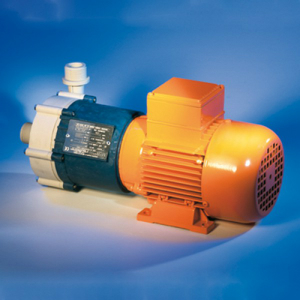 Every material has to be fed in and drawn off, which calls for dedicated pumps and piping systems. Liquid chemicals and solvents need safe storage in purpose-built tank farms. Waste products and effluents leave the plant through separate disposal routes, and most sites run their own treatment works on the premises. Exhaust air from a production facility must also pass through special filter systems before release.
Safety Comes First
The chemical industry follows especially high safety standards, and the entire plant must stay under constant supervision. Temperature sensors in reactors and flow meters in pipes and chemical hoses record inflows and outflows in real time.

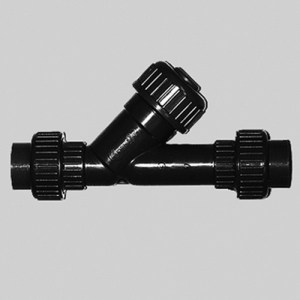
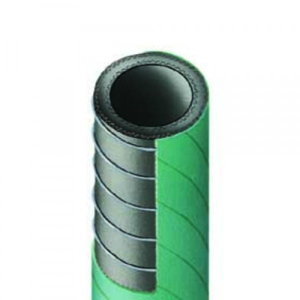
Safety valves help prevent the worst in an emergency. Every material used must withstand the chemistry, temperature and pressure involved. This includes seals for reactors and piping systems, along with chemical hoses that carry aggressive media.

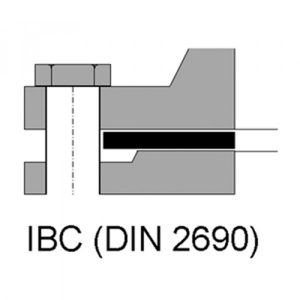
A chemical plant is therefore a highly complex system. Every component must work safely, reliably and in harmony with the rest.
Future Trends
Several developments in chemistry and process engineering will grow more important in the years ahead. One is the drive to make production even more economical, as cost pressure in the sector keeps rising. Alongside this, plants aim to improve energy and raw-material efficiency, just as other industries do.
Miniaturising plants, above all in speciality chemicals, will also reshape how chemical plants are planned and built. Rising automation and the arrival of “Industry 4.0” add to this shift. Processes increasingly draw on sustainable raw materials, and biotechnological methods keep gaining ground. Each of these trends brings fresh challenges for developing process technology.
Image sources:
Featured image | © Khalilrajput – stock.adobe.com
Chemical plant for ammonia production | © Всеволод Чуванов – stock.adobe.com
Compressor station for ammonia production | © Всеволод Чуванов – stock.adobe.com
Chemical industry evolving – future graphic | © Alexander Limbach – stock.adobe.com