 Reichelt Chemietechnik Magazine
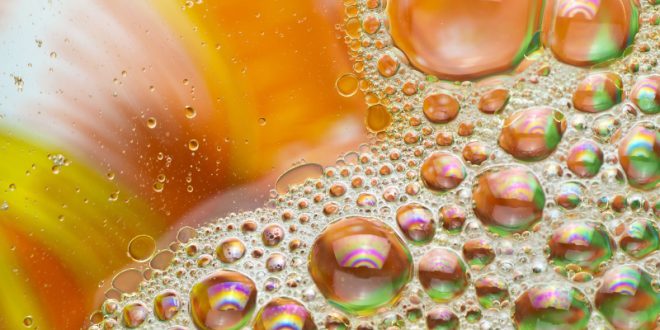
Nature shows us how it is done. Saponins, lecithins and phospholipids are plant compounds found in legumes, chestnuts, nuts and many other species. Despite their chemical differences, these substances share one property: they lower the interfacial tension between immiscible phases enough for both to coexist as suspensions or dispersions. These are natural surfactants. Modern chemistry recreated them long ago and tailored them to specific uses. Today, synthetic surfactants help around the home – with laundry, cleaning and dishes – and have become indispensable across many industries.
Surfactants Versus Detergents: A Common Confusion
Everyday language often treats “surfactant” as a synonym for “detergent” or “cleaning agent”. In the strict sense, though, it only supports a cleaning process.
The terms “detergent” and “cleaning agent”, by contrast, describe products that contain further substances alongside the surfactant.
EU Regulation No 648/2004, paragraph 2.1, defines a detergent accordingly: any substance or preparation that contains soaps and/or other surfactants and is intended for washing and cleaning.
How Surfactants Work: The Amphiphilic Molecule
Surfactants owe their versatility to their molecular structure, the many ways they combine, and the resulting chemical and physical properties. Each molecule has an amphiphilic structure. In other words, it carries both a hydrophilic and a hydrophobic part.
The hydrophilic part bears polar groups – alcohol, ether, carboxylate or sulfonate groups – which promote water solubility. The hydrophobic part consists mainly of non-polar hydrocarbon chains: saturated or unsaturated alkyl groups that dissolve in non-polar media.
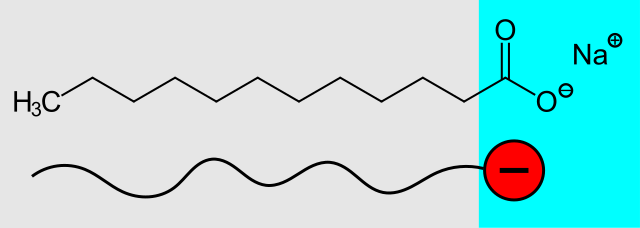
In perfluorinated and silicone types, the hydrophobic part comprises perfluorinated carbon atoms or siloxane groups.
This chemical architecture makes all these substances surface-active. By lowering the interfacial tension, they lift deposits from surfaces and hold them in suspension.
Micelles and the Critical Concentration
Above a critical concentration in water or another liquid, the molecules form association complexes called micelles. Some of them agglomerate, so the hydrophobic tail points away from the water into the interior, while only the hydrophilic head touches the surrounding water. Chemists call such heterogeneous mixtures dispersions.
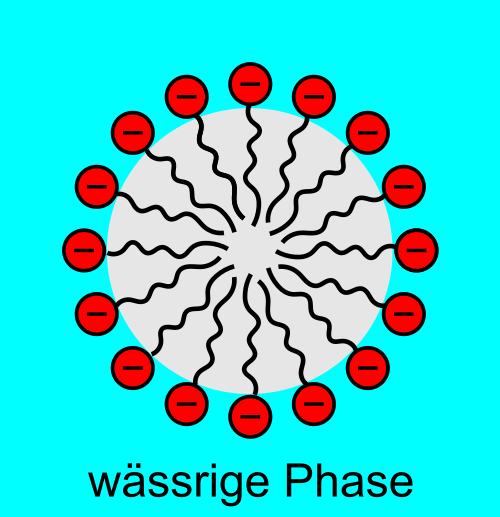
The hydrophilic part drives the sheer diversity of available surfactants, because it can be cationic, anionic or non-ionic. Amphoteric molecules widen the range further: they carry both a positive and a negative functional group, such as a carboxylate and a quaternary ammonium group. Chain length and the chemical make-up of the hydrophobic part add still more variety.
Soaps: The Original Surface-Active Agents
The first surfactants that people made and used were soaps. Even in antiquity, artisans obtained them by boiling olive oil with bone ash or with natural soda from salt lakes and salt deserts.
Long before that, since the Neolithic, people are thought to have used the plant known today as common soapwort (Saponaria officinalis). A member of the pink family, it stores the wash-active saponins in its leaves and stems, and above all in its roots.
Oils and fats alike are esters of glycerol – the trihydric alcohol propane-1,2,3-triol – with long-chain carboxylic acids. We therefore call these acids “fatty acids”. Boiling fats and oils with alkaline lyes splits them apart. This “saponification” uses caustic soda or caustic potash. It yields glycerol and the water-soluble sodium or potassium salts of the underlying carboxylic acids: the soaps. Their long hydrocarbon residue is hydrophobic, whereas the terminal carboxyl group is hydrophilic.
Caustic soda produces solid soaps: the curd soaps. Additives then refine these into toilet soaps and other soap products. Potash soaps, by contrast, have a soft, greasy consistency. We therefore call them soft soaps, and they serve mainly as industrial cleaners.
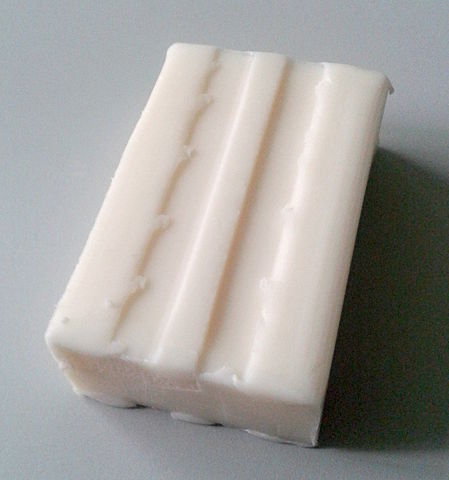
Hard water carries appreciable concentrations of magnesium and/or calcium ions. In it, soaps form sparingly soluble “lime soaps” that clean poorly or not at all.
How Surface-Active Agents Wash Laundry
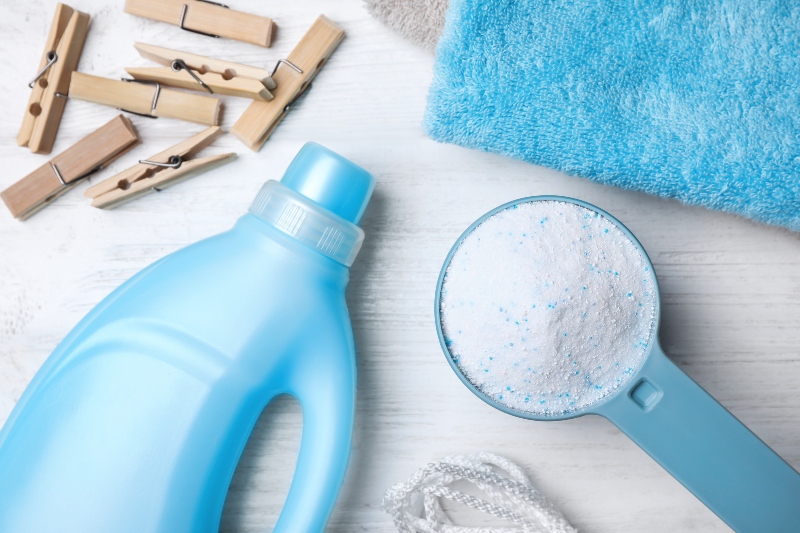
The cleaning power of surfactants in washing powders and other detergents rests on several abilities. They adsorb onto surfaces and other molecules. Dispersion lets them hold dirt particles suspended in solution. Wetting matters too, as the precondition for any wet-cleaning process.
Once these molecules have lifted a dirt particle from the fabric, dispersion keeps it in solution, ready to rinse away. This stops the particle from settling back onto the garment.
During the final rinse, the water flushes the particles away together with the detergent residues.
Flotation Agents in Water Treatment and Recycling
As flotation agents, surfactants support wastewater treatment, waste-paper recycling and ore processing.
Flotation is a physico-chemical enrichment process that recovers solids from aqueous suspensions with the help of surface-active wetting agents. The principle is simple. Introducing air foams up the suspension. Gas bubbles attach to particles according to their wettability, so chemically different particles gain different buoyancy. More hydrophobic particles attract more air bubbles than less hydrophobic ones. They therefore rise to the surface sooner, where operators can skim them off.
In this way, de-inking flotation lifts printing ink and dyes off printed waste paper. Non-ionic and cationic surfactants release the pigments, and later process steps turn the fibres back into packaging material and recycled paper. The same principle separates ore from barren gangue.
The wastewater and sludge from these processes place a considerable burden on the environment. Treatment plants clean them before they reach public waters. The remaining sewage sludge goes either to landfill or to incineration. Its use as fertiliser faces strict limits, because the heavy-metal content is usually high. EU Directive 86/278/EEC sets these limits to protect the environment, and soil in particular, wherever agriculture uses sewage sludge.
Wetting Agents in Crop Protection Products
Many crop protection formulations contain surfactants. Here they act as wetting agents, spreading the active ingredients evenly across the surface and helping them penetrate the plant cell membranes.
Using such agents on a large scale in agriculture remains highly contentious. Their entry into natural water reserves harms aquatic organisms over the long term. And once they spread through drinking water, they may endanger the health of affected populations.
During the reassessment of glyphosate use, the polyethoxylated tallow amines (POEA) – non-ionic surface-active agents used until then – fell into disrepute. The EU banned them from glyphosate formulations in 2016.
Cleaning Plastic Tubing
For laboratory work, catering, the food and beverage industry and many other fields, tubing is indispensable as a flexible conveying line.
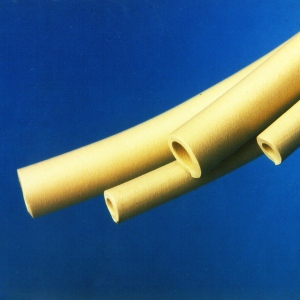
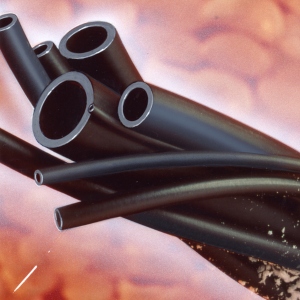
Whether rigid plastic tubing or flexible elastomer tubing: to avoid dismantling equipment for cleaning, operators need durable, hard-wearing tubing. It must survive repeated cleaning with surface-active agents unharmed, so it can serve again even after a change of medium.
Tubing made from ethylene propylene diene/polypropylene (EPDM/PP) resists most organic and inorganic media. You can therefore clean it with alkaline or acidic surface-active cleaners. Afterwards, thorough rinsing is essential to remove every trace of detergent – especially since tubing cleaners for the beverage, food and medical sectors often contain germ-reducing additives too.
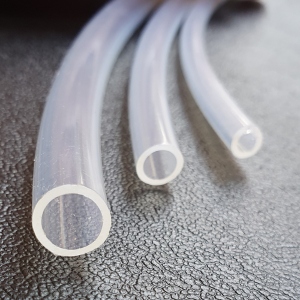
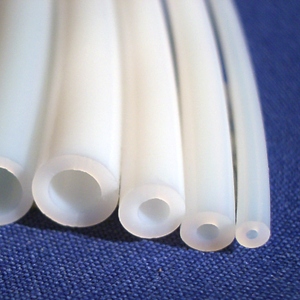
Numerous hard, fluorinated plastics also serve as base materials for washable food-grade and medical tubing, such as PTFE (polytetrafluoroethylene) or FEP (fluorinated ethylene propylene).
The Curse of Surfactants: An Environmental Legacy
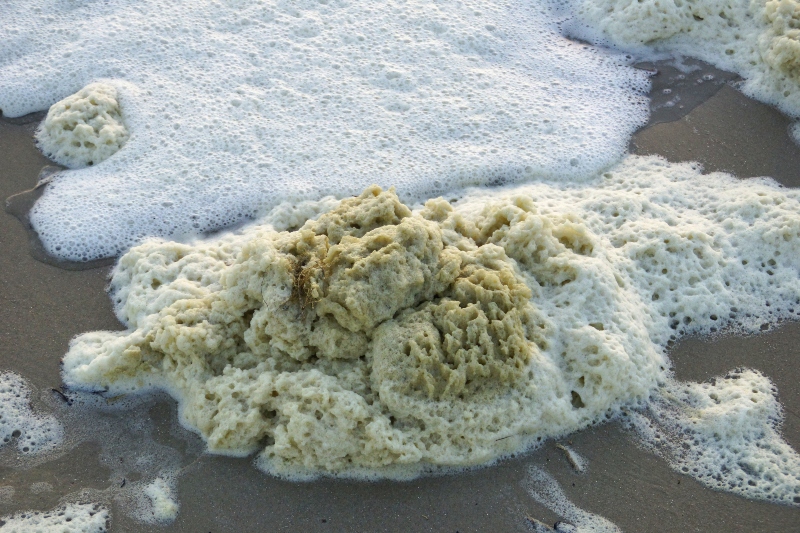
The hot summer of 1959 in Germany pushed river levels low. At the same time, tetrapropylenebenzenesulfonate (TPS) – an anionic surfactant used in huge quantities in heavy-duty detergents and industrial soaps – broke down only poorly. The result: rivers and surface waters foamed over on a wide scale. In 1961 the German government responded with the “Detergents in Washing and Cleaning Agents Act”, which demanded the highest possible biodegradability of surface-active and wash-active substances.
Its vague requirements were easy to circumvent, so in 1975 the “Act on the Environmental Compatibility of Washing and Cleaning Agents” – the Detergents Act (WRMG) – replaced it. Several amendments have since kept it current, and it now regulates the environmentally compatible composition of detergents by law.
The law bars manufacturers from placing detergents on the market unless they can demonstrate at least 80% biodegradability by a defined test method. This outlawed branched, poorly degradable alkylbenzene sulfonates such as TPS. It also spurred the development of more readily biodegradable products, such as linear alkylbenzene sulfonates and fatty or oxo alcohol ethoxylates.
Toxic Compounds and Bioaccumulation
Some of these compounds raise more serious concerns. Perfluorooctanoic acid (PFOA), needed as an emulsifier to manufacture polymers such as polytetrafluoroethylene, is suspected of causing cancer and of disrupting thyroid hormones. PFOA is bioaccumulative: it builds up in the body rather than being excreted.
This finding prompted a strict set of rules governing the distribution and use of substances classified as toxic. Under the Stockholm Convention, no one may manufacture or place PFOA on the market from July 2020.
Must We Give Up Synthetic Surfactants in Future?
Chemical industry research has always aimed – and still aims – to develop biodegradable surfactants. The detergents on sale today have all passed testing. Used as intended, they pose no danger to people or the environment. Even so, surfactants are not entirely harmless, and we should all limit their use to what is necessary. They burden wastewater, and with it the finite capacity of treatment plants.
Their use in agriculture, by contrast, deserves a critical eye. Spraying crop protection products and weedkillers carries them straight into the environment.
Even proven high biodegradability offers no guarantee, because degradation takes time – so ecosystems still face immediate effects. Giving up these additives entirely is barely feasible, least of all in intensive agriculture. The task therefore falls to industry: to develop environmentally friendly, non-toxic products.
Image sources:
Featured image | © hjschneider – stock.adobe.com
Sodium laurate | © Roland.chem – de.wikipedia.org
Micelle in a surfactant solution | © Roland.chem – de.wikipedia.org
Curd soap (sodium soap) | © Graf Foto – commons.wikimedia.org
Detergent | © New Africa – stock.adobe.com
Foam on the sea | © Matthias Stolt – stock.adobe.com