 Reichelt Chemietechnik Magazine
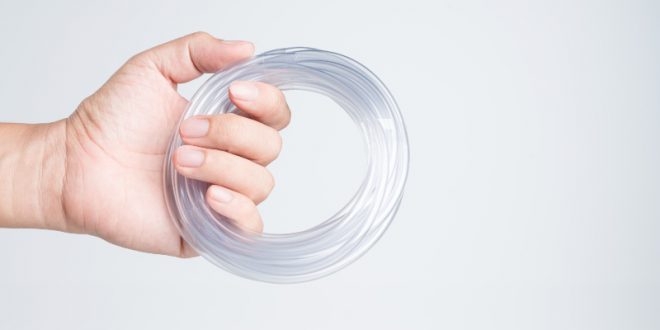
The material silicone rubber offers a wide range of excellent technical properties and is therefore used in many different applications. But what can this elastomer do—the one found in clothing, shoes, baking accessories, prosthetics, medical devices, and cable sheathing? The following article takes a closer look at how silicone rubber is manufactured, its properties, its processing, and where it can be found.
What Is Silicone Rubber?
The term silicone rubber is a collective name for a wide variety of elastomers. These elastomers are not purely organic compounds whose main molecular chains—like those of natural rubber or other organic rubbers—are built from carbon. Instead, they consist of silicone polymer chains with alternating oxygen and silicon atoms arranged in sequence, i.e., -Si-O-Si bonds (siloxane bonds). For this reason, they are also referred to as polyorganosiloxanes.
The History of Polyorganosiloxanes
The French chemist Antoine Laurent de Lavoisier (1743–1793) discovered the element silicon (Si) in 1787. It is a constituent of rocks and many minerals and is the second most abundant chemical element in the Earth’s solid crust after oxygen. Together with oxygen, silicon forms the basis of polyorganosiloxanes.

After the discovery of silicon, its chemical investigation initially faded into the background. It was not until the beginning of the 20th century that silicon and its chemistry returned to the spotlight. During his professorship at University College Nottingham from 1897 to 1936, the English chemist Frederic Stanley Kipping (1863–1946) achieved the first synthesis of organic silicon compounds—the basis of polyorganosiloxanes. He referred to these polyorganosiloxanes, which were partly oily, partly elastic, or even resin-like, as “silicon ketones.” However, he could not envisage any practical use for his discovery, and as a result, it was initially forgotten.
Only when industry began searching for alternatives to natural rubber in the late 1920s did Kipping’s work—and other earlier research into silicon chemistry—become interesting for industrial research. Researchers looked for a suitable starting material for silicon-based elastomers that could be produced profitably on an industrial scale. The breakthrough for future silicone production was achieved simultaneously by the German chemist Richard Gustav Müller (1903–1999) and the American Eugene George Rochow (1909–2002). Working independently, they developed the fundamental synthesis of chloromethylsilanes for silicone production. This became known in chemical history as the Müller–Rochow synthesis.
Synthesis of Silicones
Like many other plastics (e.g., polyethylene terephthalate, PET), silicone rubber is also produced by polycondensation.
Chloromethylsilanes are the starting point for silicone production. During hydrolysis, the chlorine atoms are replaced by hydroxyl groups:
(CH3)2SiCl2 + 2 H2O → (CH3)2Si(OH)2 + 2 HCl
The silanols that form immediately condense, splitting off water and forming polymethylsiloxanes.
n (CH3)2Si(OH)2 → [-O-Si(CH3)2-]n + n H2O
The most important of these base polymers are poly(dimethylsiloxanes), poly(methylphenylsiloxanes), and poly(methylvinylsiloxanes). Depending on the vinyl, methyl, phenyl, or fluoroalkyl groups, the different silicone rubber types obtain their specific properties.
The polymerization of the selected monomers proceeds in several steps.
For example, dichlorodimethylsilane forms chain-like polymers via the intermediate dimethyldisilanol through condensation, i.e., by splitting off water. This process repeats continuously, resulting in linear, chain-like polymers.
If free hydroxyl groups are available as reaction partners in the polymer chain, the linear polymers continue to grow into two- and three-dimensional structures. In the synthesis approach, silanes such as chlorotrimethylsilane are also used as additives. Capping the reactive OH groups terminates the condensation process.
If the consistency of certain silicone rubber products needs to be adjusted, plasticizers such as low-molecular silicones can be used. If finely dispersed silicon dioxide (“silica”) is added instead, it increases the strength and dimensional stability of the silicone rubber.

Organic peroxides are used to crosslink the molecules into two- and three-dimensional networks to form the elastomer. At elevated temperatures, they decompose into highly reactive radicals and thus promote crosslinking of the polymer chains.
Properties of Silicone Rubber
Silicone rubber differs from other elastomers due to its unique technical properties, which result from its polymer structure. The mechanical and chemical properties can be strongly influenced by the type and amount of additives such as reinforcing substances and fillers.
Because of the wide range of applications and the properties required in each case, the exact chemical composition of industrially available silicone rubbers is hardly known. However, this is not a problem for users. Each silicone rubber type offered is a proven specialty product for its specific intended application and provides the chemical and technical properties required for that purpose.
In general, however, all types are chemically, mechanically, and thermally very stable elastomers. They offer good high- and low-temperature resistance from -100 °C to +300 °C, flexibility and elasticity that are nearly independent of temperature, and outstanding UV and weather resistance. In addition, they exhibit a long service life—even under mechanically and chemically unfavorable conditions—which makes silicone rubber a material of choice for peristaltic pump hoses, very good electrical insulating properties, maximum dimensional stability after vulcanization, and—compared with other rubbers—significantly higher gas permeability.
They are also considered physiologically and toxicologically harmless, have exceptional purity, and are odorless and tasteless.
Processing Methods
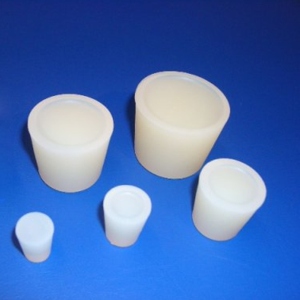
The methods used to process silicone rubber depend on the required mechanical, chemical, and physical properties and on whether liquid silicone rubber or solid silicone rubber is involved. The part geometry and the production quantity also play an important role. If large quantities with complex geometries and high product quality are to be produced, injection molding is ideally suited. It delivers largely post-processing-free vulcanizates in high dimensional accuracy in a fully automated process and thus enables shorter production cycles.
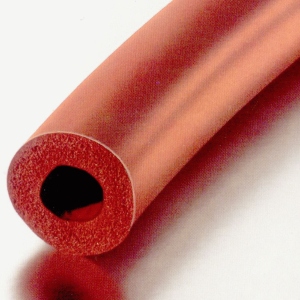
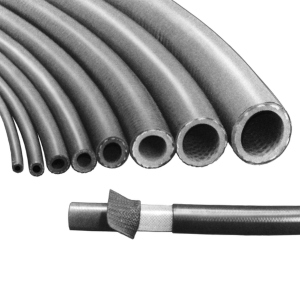
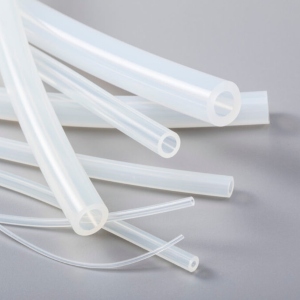
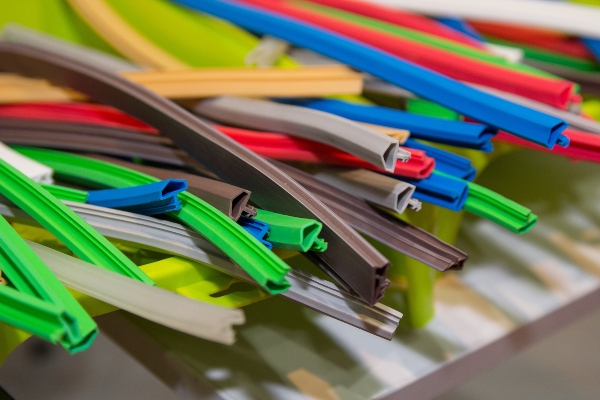
In extrusion, the rubber is pressed through a shaping die and then vulcanized. The required pressure is generated by a conveying screw, where the starting material is homogenized, degassed, and compacted. This method is suitable for manufacturing continuous products, so-called “meter goods.” Hoses, round cords, profiles, and flat strips are produced using this process.
In compression molding, the solid material is vulcanized under pressure and at high temperatures in predefined molds. The vulcanization time depends on the temperature of the starting materials, the mold temperature, and the thickness of the molded parts. The main methods—compression molding and transfer molding—are suitable for producing semi-finished products.
Applications for Silicone Rubber
The range of applications for this versatile elastomer is broad due to its excellent properties.
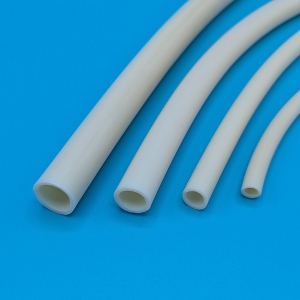
In hose technology, chemically largely inert silicone hoses—so-called chemical hoses—are manufactured from silicone rubber in particular. They are used to convey liquids in chemical laboratories, in the food industry, as well as in bio- and medical technology and in pharmaceutical applications. Because the material shows very high gas permeability compared with other plastic hoses—especially for carbon dioxide (CO2)—silicone hoses are generally unsuitable for conveying gases. However, they can be used for the targeted gassing of liquids. This physiologically harmless, thermally stable material is also used for peristaltic pump hoses, food hoses, and analytical hoses.
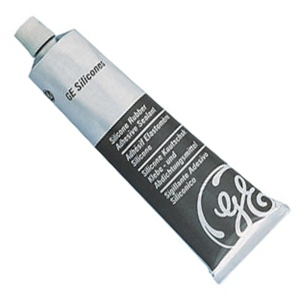
These hoses are also found in engine technology, for example as turbocharger hoses. In addition, the material is used for seals, exhaust hangers, vibration dampers, and cable sheathing.
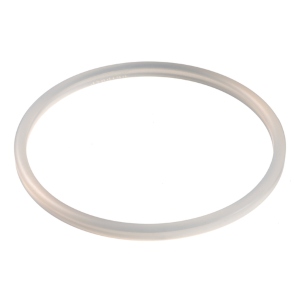
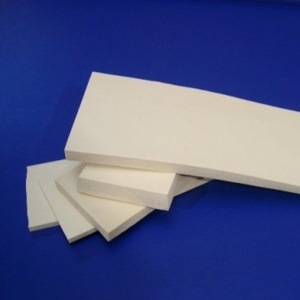
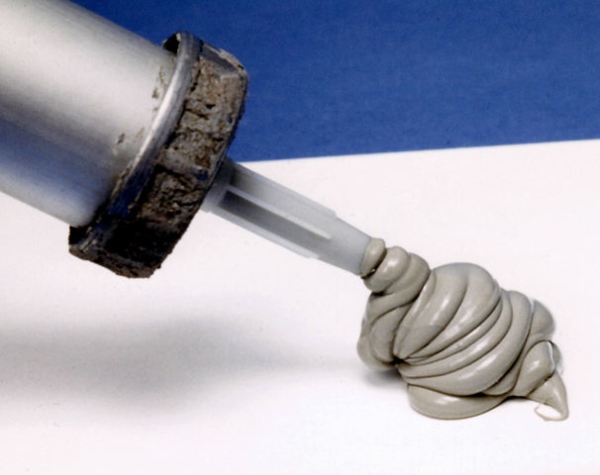
The material is also used as thermostable electrical insulation and as an elastic sealing material, for example for O-rings and other flat gaskets. In the construction industry, silicone rubber serves not only as a sealant for filling joints but also as a coating compound for fabrics or for producing molding and potting compounds.
In the medical and pharmaceutical industries, silicone rubber is used not only for hoses but also in ventilation bags, incubators, and other medical devices. Highly pure silicone rubber is used to manufacture cosmetic-surgery and other medical implants.
Today, the elastomer has found its way into almost every area of everyday life—in the form of colorful cake and ice-cream molds, erasers, menstrual cups, and prosthetics.
Image Sources:
Featured image | © bonnontawat – stock.adobe.com
Silicone rubber in the kitchen | © Magryt – stock.adobe.com
Sealing profiles | © DmyTo – stock.adobe.com
Typical silicone sealant | © Achim Hering – de.wikipedia.org