 Reichelt Chemietechnik Magazine
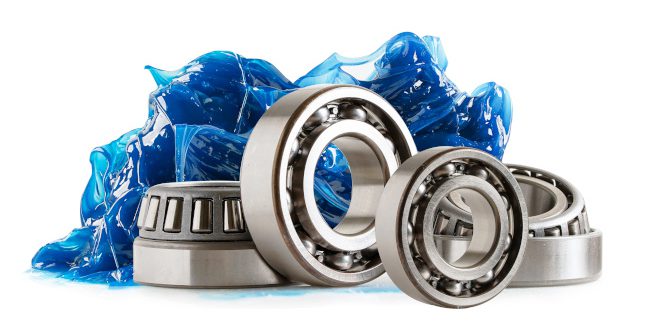
Lubrication technology is the invisible force that keeps machines running. It minimises friction and wear, improving the service life and efficiency of components. This article introduces lubrication technology, explains how lubricants work, and presents the different types of lubricants. It also outlines the key methods at a glance.
The Basics of Lubrication Technology: What Are Lubricants?
Lubricants are products that lubricate sliding or rolling elements, such as roller chains and sprockets. They reduce friction and wear on components, and they aid cooling. In addition, they provide sealing, cleaning, and corrosion protection.
Lubricants consist of base oils and additives. The base oils form the primary lubricating film between the moving surfaces of drive elements. The additives improve specific properties of the lubricant, such as wear protection, foam prevention, and extreme-pressure capability.
What Types of Lubricants Are There?
Lubricants fall into three broad types, based on how they are produced:
1. Mineral oils are refined from crude oil. Their low cost and wide availability make them the most commonly used lubricants.
2. Synthetic oils are chemically engineered lubricants developed for specific applications. They offer improved stability and performance under extreme conditions.
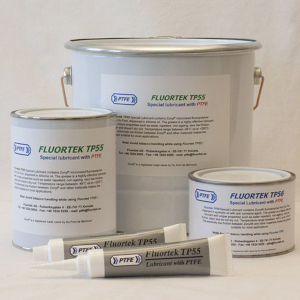
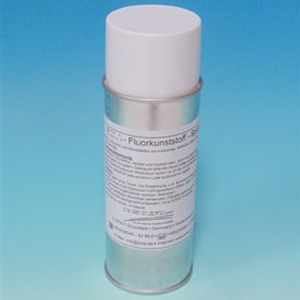
3. Greases are semi-solid lubricants. They consist of a carrier or base oil, a thickener, and additives. In lubrication technology, they suit applications that require adhesion to surfaces. PTFE greases, for example, work well as sliding greases and have earned a reputation as universal lubricants.
Properties of Lubricating Oils and Greases
Two of the most important properties of lubricants are viscosity and the viscosity index. Viscosity determines a lubricant’s resistance to flow. The viscosity index shows how well an oil holds its viscosity across a given temperature range.
Other important properties include:
- The pour point, the temperature at which an oil remains just barely able to flow under defined test conditions.
- The flash point, the lowest temperature at which a lubricant gives off flammable vapours.
- Oxidation stability, the resistance to chemical breakdown caused by reaction with atmospheric oxygen.
Lubricant manufacturers often use additives to boost overall functionality and performance. These include wear protection, extreme-pressure resistance, corrosion protection, and thermal stability.
What Technical Requirements Must Lubricants Meet?
Lubricants must offer numerous properties to ensure optimal operation.
Friction Reduction and Stability
A lubricant’s main function is to reduce friction between moving parts. It forms a smooth, flowing protective layer between the surfaces. This layer lets the surfaces glide almost without resistance.
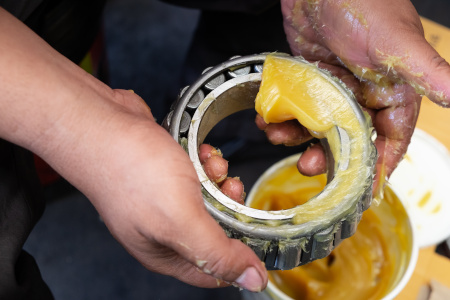
Lubricants must behave consistently throughout their entire expected service life.
Wear Prevention
Lubrication prevents wear on machine components by forming a protective barrier. This barrier reduces contact between the surfaces and extends their service life.
Heat Dissipation
Lubricants help carry away the heat generated during operation. This keeps the operating temperature within a suitable range and prevents overheating.
Durability and Protection Against Contamination
Lubricants guard against contaminants such as dust, dirt, and water. These contaminants can impair performance and cause premature wear.
Lubricants must also resist chemical reactions with surface substances and the surrounding air. In addition, they must not degrade with age.
Traditional Lubrication Methods
Grease lubrication is one of the oldest and most widespread methods in lubrication technology. Grease is a viscous lubricant made from a carrier oil and a thickener. The thickener makes the grease cling to component surfaces rather than run off. Engineers typically use grease lubrication on machines that work under harsh conditions. Grease protects well against water and dirt, and it stays effective at low temperatures. For sealing of all kinds and for stopping leaks, grease lubrication is the method of choice.
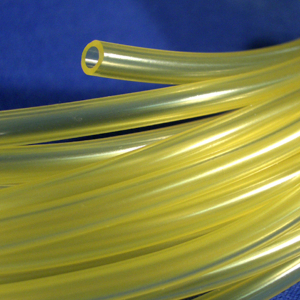
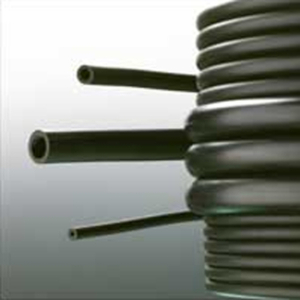
Oil lubrication is another common method in lubrication technology. Oil is a thin, free-flowing lubricant made from a carrier oil and additives. The additives improve the oil’s friction reduction, corrosion protection, and oxidation resistance. Engineers typically use oil lubrication on machines that operate under heavy loads. Oil protects well against friction and wear, and it stays effective at high temperatures.
Immersion lubrication dips the components into a lubricant reservoir to ensure thorough coating.
Operators can also apply lubricants at regular intervals with brushes, sprayers, or a compressed-air jet. Spray greases and spray products are common choices here.
For large-scale, often industrial applications, the lubrication system floods lubricant across the entire contact area for full coverage. This also improves heat removal and clears away dirt, wear debris, and contaminants.
Advanced Technologies in Lubrication Technology
In recent years, engineers have developed several new lube technologies that surpass traditional methods in some areas. These technologies offer a range of benefits.
- Improved performance: The new technologies reduce friction and wear further than traditional methods. As a result, machines and equipment run more efficiently and powerfully.
- Longer service life: The new technologies extend the service life of components. Machines and equipment then run longer without maintenance.
- Greater reliability: Lower friction losses make machines and equipment more reliable. They can then work under harsh conditions without failing.
Advanced Lubricants and Modern Lubrication Methods
Advanced methods such as hydrostatic lubrication press the lubricant between the surfaces at very high pressure. This creates a thin, even oil film that keeps friction to a minimum. The method stays highly reliable even under harsh conditions. In turn, it greatly extends the service life of components.
Ceramic lubrication coats the components with a thin layer of ceramic material. This layer forms a hard, smooth surface that further reduces friction. The process is durable and low-maintenance. It also resists wear, corrosion, and environmental influences well.
Particle lubrication mixes small particles into the lubricant. These particles fill the tiny irregularities on the surfaces and reduce friction. Particle lubrication resists wear strongly and can therefore extend component life.
Other advanced lube technologies include magnetic and ultrasonic lubrication. Magnetic lubrication holds the lubricant on the surfaces with magnets. Ultrasonic lubrication applies the lubricant to the surfaces using ultrasonic waves.
Ionic liquids are gaining importance in lubrication technology. Their appeal lies in their adjustable physico-chemical properties. Combining cationic and anionic components with different substituents achieves these properties. Thanks to their negligible vapour pressure and non-flammability, people often call them “green” or “sustainable” chemicals. They offer many ways to improve machines that rely on lubricants or operating fluids. They can make high-pressure processes more efficient and help lower the fuel consumption of combustion engines.
Greases and Lubricating Oils: An Essential Part of Machine Maintenance
Lubrication is an essential part of machine maintenance. It ensures smooth operation and a long service life for equipment.
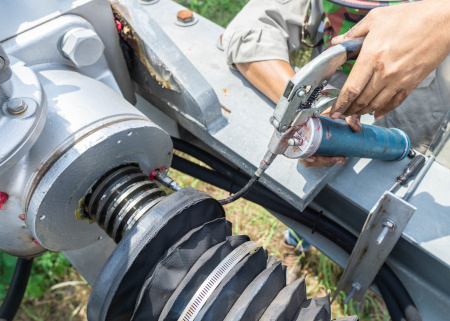
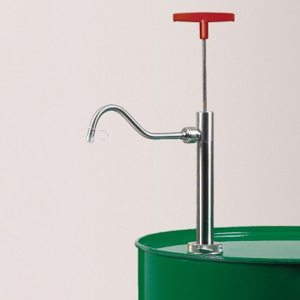
On a small scale, such as home and hobby work, a spatula and a few strokes usually suffice for greasing. Industrial-scale application calls for extra equipment, such as drum pumps and grease guns. Operators can fit these with hoses for precise delivery. The hoses also allow connection to existing grease nipples.
Lubrication technology has evolved over time. It now covers a range of lubricant types and additives. Together, they meet the core demands of friction reduction, wear protection, heat dissipation, and contamination control.
The field keeps advancing, from traditional methods to modern technologies. These include nanolubricants, solid lubricants, ionic liquids, and innovative additives. Together they improve efficiency, sustainability, and performance across many applications. A firm grasp of these lubrication fundamentals is vital. It lets you optimise machine performance and achieve peak results.
Image sources:
Header image | © manassanant - stock.adobe.com
Roller and ball bearings packed with grease | © bung - stock.adobe.com
Grease is applied using a hose and a grease gun | © Kampan - stock.adobe.com