 Reichelt Chemietechnik Magazine
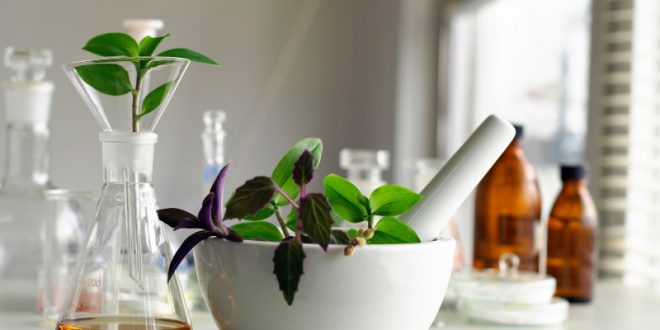
Look up the word „mortar“ and you find more than one meaning. In military terms, it once described an older type of gun. Today it often means a shell-launching mortar[1]. In chemistry and pharmacy, a laboratory mortar is a bowl-shaped grinding vessel with a club-shaped rod. This rod is called a pestle. Together they crush and grind substances into pastes or powders.
The word „mortar“ traces back to the Latin „mortarium“. The Romans used this term for a ceramic grinding bowl.
They mainly served to extract pigments from plants and minerals for paintings and cosmetics. Early mortars were simple stone blocks. People crushed minerals, nuts, seeds and grain in them again and again. Over time, this wore a hollow into the stone – the first mortar shape.
German pharmacy separates three forms: the Fanta dish, the grinding vessel and the laboratory mortar. English simply calls them all „mortars“. Today, pestles and mortars come in many materials, such as porcelain, stainless steel or melamine resin.
What Is a Fanta-type ointment motar?
The Fanta-type ointment motar, also called a paten, belongs to every pharmacy’s standard equipment. It takes its name from its inventor, the Czech pharmacist Max Fanta (1858–1925). He received a patent for this „new type of ointment mortar“ in 1903.
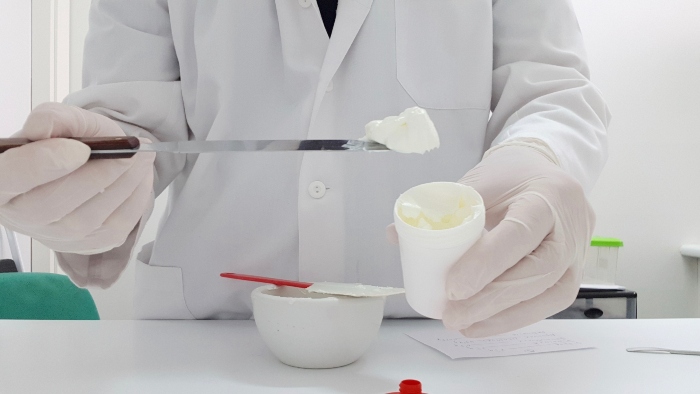
A Fanta-type modell has thin walls and a smooth inner surface. Pharmacists use it to make ointments, creams and gels.
Which Mortar Material Prevents Cross-Contamination?
The choice of material decides how safely the dish performs. Until 2014, pharmacies mainly used white ointment motar made of melamine resin. Melamine resin does not break easily. Repeated use, however, creates fine scratches and microcracks. Substances can lodge in these gaps. At the next use, the dish may release them again and cause cross-contamination. Melamine bowls also lack acid resistance. They withstand heat only up to about +70 °C (158 °F), so you cannot autoclave them.
For these reasons, Germany’s Association of Pharmacy Councils (APD) acted in 2014. The group demanded that pharmacies also keep stainless steel or glass Fanta-type motar and pestles.
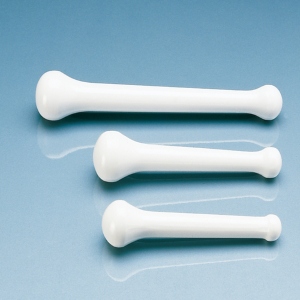
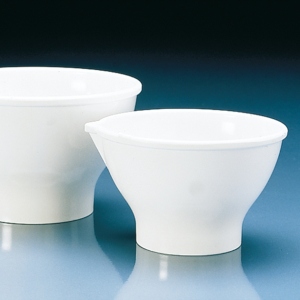
Glass and stainless steel weigh more than melamine resin, so they stand more firmly. Glass breaks more easily, yet it brings one clear benefit: it is transparent. This lets the user check the preparation by eye. Stainless steel bowls do not suit very hard substances such as bentonite. Bentonite is a mix of clay minerals and a common cosmetic ingredient. Grinding it can produce metal abrasion. Strongly oxidising acids also attack stainless steel. This rules it out for solutions that treat wart or acne scars and contain trichloroacetic acid.
Characteristics of Grinding Mortars
A grinding bowl has a rough inner surface. The grinding face of the pestle is rough as well.
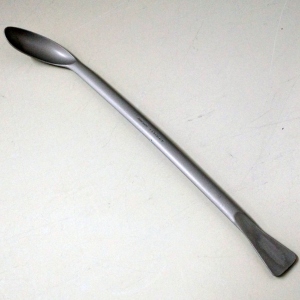
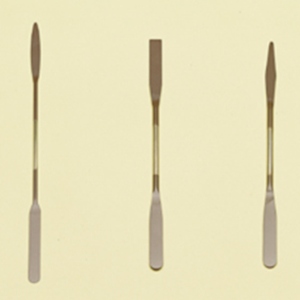
Grinding bowls are a fixed part of standard laboratory supplies. Labs use them to crush solid substances and can reach particle sizes down to 50 micrometres. Oily and greasy preparations suit them only partly. Such mixtures cling to the rough surface, clog the pores and contaminate the next preparation. Porcelain, borosilicate glass and stainless steel are the usual materials. Most have a spout. For easier removal, lab instruments such as scoops, spoons and spatulas help too.
Types of Lab Mortars
A lab mortar has thick walls and a smooth inner surface. The matching pestle has a smooth surface too. Materials include agate, porcelain, borosilicate glass, stainless steel, bronze and melamine resin.
Agate models are octagonal with a round, flat and smooth grinding surface. They are extremely hard and have no spout. Borosilicate glass and porcelain versions usually have a spout. Stainless steel designs rest on a base or non-slip feet. The cryo vessle is one special type of stainless steel model. It crushes a substance at very low temperatures. It hangs inside an insulated steel bowl. This bowl holds dry ice (-78 °C / -108 °F) or liquid nitrogen (-196 °C / -321 °F).
Rather than grinding by hand, labs often use a mortar grinder. This motorised version of the mortar delivers more precise, reproducible results. Pressure and friction crush the material against the mortar’s walls and base. The bowl rotates while the pestle presses down. Users can set the rotation speed, the pestle’s pressure and the grinding time. They can also match the mortar material to the sample. Friedrich Kurt Retsch invented the mortar grinder and patented it in 1923.
Where Laboratory Mortar is Used
Laboratory containers and laboratory mortars belong to every lab’s essential inventory. One key use is sample preparation for chemical or physical analysis, quality control and materials testing. The material may be soil, food, a pharmaceutical product or a building material. Either way, the single sample must represent the source. And the preparation must stay reproducible.
Sample preparation crushes and homogenises the substance to the required fineness. Cryo mortars handle temperature-sensitive, moist, sticky, fibrous or elastic materials like samples from the plastics and food industries. Cooling makes the material brittle, so it breaks and crushes more easily.
How Are Lab Mortars Used in Pharmaceutical Manufacturing?
Beyond analysis, the laboratory mortar plays a long-standing role in pharmacy. Pharmaceutical manufacturing is another important field. Grinding reduces the material to various particle sizes. Pharmacists distinguish “coarse” at up to 750 micrometres, “medium-fine” at 300 micrometres and “fine” at 150 micrometres. Grinding needs no special pharmaceutical knowledge. In the past, an assistant known as a “pounder” handled this task.
Grinding also sends powder into the air. For this reason, Prussia’s Pharmacy Operating Regulations of 1902 made a separate pounding room compulsory in pharmacies.
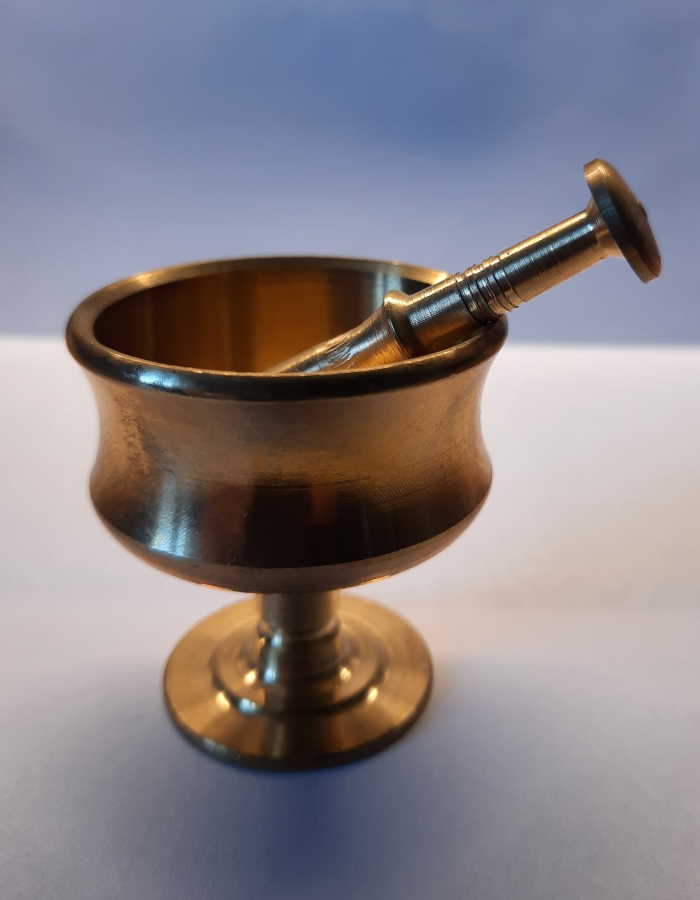
Then and now, makers have built laboratory mortars from bronze, brass, iron, hardwood and porcelain. Some even used ivory, precious metals or semi-precious stones. “The material had to match the medicinal substance. Rose petals, for instance, were crushed in alabaster mortars; pearls and corals were ground in white marble mortars”[2]. Depending on the task, models ranged from two millimetres across to an eight-litre capacity. In pharmaceutical manufacturing, grinding does more than crush. It also stirs and mixes powders and helps make ointments, creams and gels.
Can You Use a Mortar bowl in the Kitchen?
A mortar quickly prepares spice blends like Indian garam masala or pastes like Thai curry and pesto. It can crush any material softer than itself. For the kitchen, mortar bowls come in marble, wood, porcelain, ceramic, cast iron or granite.
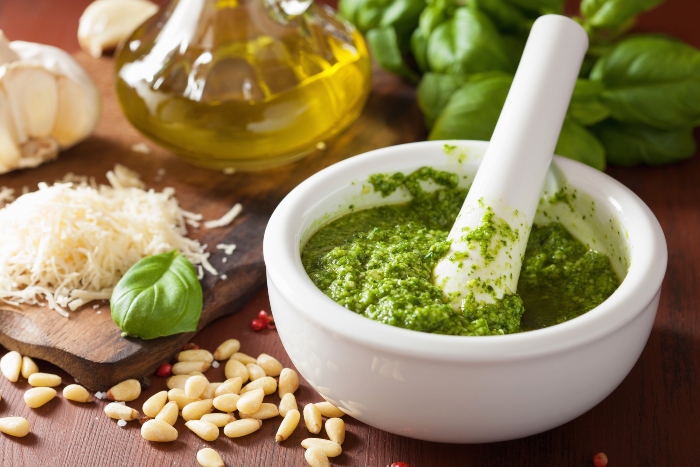
Note that marble is not acid-resistant. It reacts to vinegar or lemon. Wood looks attractive but absorbs moisture and lacks hardness. Over time it grows porous and takes on the aromas of the ingredients. Ceramic and porcelain chip easily, yet they grind herbs especially fine. Cast iron and granite models stand out for their stability. Their weight keeps them firmly in place on the worktop. They do not slip easily. Salts and acids, however, attack cast iron.
Cleaning depends on what you have ground. Dry material needs only a quick brush-out. For moist material, wipe with a cloth or sponge, but skip detergent. Detergent can settle in the pores and taint the next batch. If stains or odours linger, an old household trick helps. Grinding rice draws the leftover aromas out of the pores.
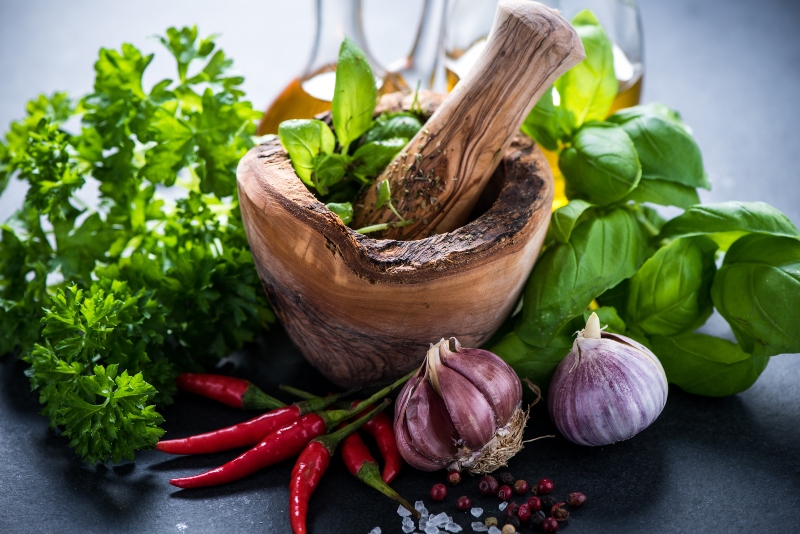
Kitchens, pharmacies and analytical labs all prize the mortar as an essential tool.
Sources:
[1] „Mortar.“ Britannica Dictionary, Encyclopædia Britannica, https://www.britannica.com/dictionary/mortar
[2] https://www.deutsche-apotheker-zeitung.de/daz-az/2011/daz-19-2011/moerser-und-waagen
Image sources:
Featured image | © Lemonade – stock.adobe.com
Making creams and ointments | © enriscapes – stock.adobe.com
Making pesto | © dusk – stock.adobe.com
Decorative wooden mortar | © marcin jucha – stock.adobe.com