 Reichelt Chemietechnik Magazine
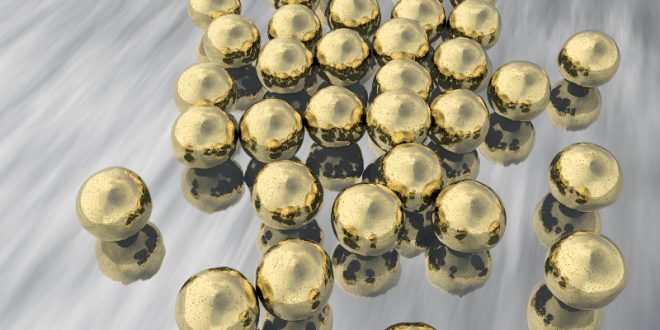
Everyone uses them, yet hardly anyone notices them: nanomaterials are found in car tyres, performance clothing and modern cancer therapies. They are tiny, but their impact is enormous. At the nanoscale, familiar substances suddenly behave quite differently: gold takes on a reddish shimmer and surfaces become more reactive. We explain what the term means, how nanomaterials are made, where they are used today and what risks these tiny all-rounders pose to people and the environment.
Many people have heard the term ‘nanoparticles’, but few have a clear idea of what it means. Yet nanomaterials are now found in or on almost everything we use every day: in the sunscreen that protects us from UV radiation, in the paint on our walls and even in toothpaste. Nanoparticles are also everywhere in nature. They form during volcanic eruptions and sandstorms, for example, or enter the atmosphere from combustion plants and diesel exhaust. Cigarette smoke contains nanoparticles too. And according to the German Environment Agency, fireworks release around 2,050 tonnes of particulate matter in Germany every year, most of it on New Year’s Eve.
Small in size, big in impact
The word ‘nanos’ (νᾶνος) comes from Greek and means dwarf. The invention of the scanning tunnelling microscope (STM) in 1981 opened the door to the nanoscale. One nanometre (nm) is one billionth of a metre. To put this into perspective: a nanometre is to a metre what a grapefruit is to the Earth. The technical specification DIN CEN ISO/TS 80004-2 defines nano-objects as materials with at least one external dimension – length, width or height – between 1 and 100 nanometres.

What sets nanoparticles apart from other nano-objects is that all three of their dimensions lie within the nanoscale. They consist of anything from a few to several thousand atoms or molecules. ‘Nanomaterial’ is therefore an umbrella term. It covers all substances and materials that are nano-objects themselves or that have an internal nanostructure or a nanostructured surface.
What makes nanomaterials special?
The nanoscale is defined as the size range between 1 and 100 nanometres. Within this range, substances usually have different physical and chemical properties from the same material in bulk form. These changes result from the extremely large surface area of nanoparticles in relation to their mass.
The smaller a particle, the greater the proportion of its atoms or molecules that sit on its surface.
As a result, surface and quantum effects become more important than the bulk properties of the material. Surface atoms have fewer bonding partners than atoms inside the particle, which makes them more reactive.
Medieval glassmakers exploited these properties long before anyone understood them. They coloured church windows by creating gold nanoparticles during glass production. When their diameter is less than 100 nm, these particles appear red rather than gold.

Synthetic production of nanomaterials
Chemical engineering offers two basic methods for producing nanomaterials: the top-down approach and the bottom-up approach.
The top-down approach breaks larger particles down to the nanoscale by mechanical or chemical processes such as milling or etching. The bottom-up approach works the other way round: it assembles atomic or molecular building blocks into nanomaterials. This kind of synthesis makes it possible to tailor nanomaterials to specific applications.
What are nanoscale materials used for?
Nanomaterials do more than fascinate scientists and explain certain natural phenomena: they also have great practical value. Today, they play a part in almost every area of our lives. Surfaces with special nanocoatings can protect against UV radiation, repel water or clean themselves.
This makes them ideal for glass façades and for car windscreens that ensure clear visibility in all weathers.
In hospitals and the food industry, nanocoatings of this kind make it easier to comply with hygiene regulations. They also improve safety, because equipment can be cleaned much more efficiently and reliably.
Carbon black is one of the most widely produced industrial nanomaterials today. More than 90% of it goes to the rubber industry. For more than 80 years, it has improved the physical properties of car tyres, increasing their abrasion resistance and grip on the road. Carbon black also serves as a filler and UV stabiliser in plastics. The fine carbon powder is found in many antistatic hoses too: in most cases, their electrical conductivity, with leakage resistances below 106 ohms, comes from their carbon content. In addition, carbon black is used as a black pigment in printing inks, paints, coatings and cosmetics such as mascara.


Clothing that always looks brand new and offers useful properties such as protection against UV radiation, environmental influences and rain is no longer wishful thinking. These materials stay odour-free and crease-resistant, even after prolonged use. Materials scientists have used modern methods to harness the properties of nanoparticles for the textile industry and create ‘functional’ clothing.
Sportswear manufacturers, for example, exploit the antibacterial effect of silver by treating fabrics with silver nanoparticles. Above all, this prevents sweat odour. However, silver in textiles is controversial: sweat can release both silver ions and silver nanoparticles from the fabric, which may lead to unacceptable levels of skin exposure.

Medicine, however, is probably where nanomaterials matter most. Among other things, nanoparticles help to restore blood cells in leukaemia therapy. Magnetic nanoparticles serve as contrast agents in medical imaging and enable targeted hyperthermia, a treatment that destroys cancer cells by heating them. What makes nanomaterial-based treatment special is that it spares the surrounding healthy tissue. Conventional radiotherapy, by contrast, also destroys healthy tissue and can cause hair loss and other side effects that affect quality of life. Overall, nanomaterials can significantly reduce the risk of such side effects.
Nanotechnology also holds promise for treating diseases that have so far been incurable, with targeted therapies tailored to the individual patient.
Risks and regulations
Nanomaterials may seem like all-rounders, but like any innovation, they are not entirely without risk. The Swiss-born physician and alchemist Paracelsus (1493 or 1494 – 1541) is credited with the words: ‘All things are poison, and nothing is without poison; only the dose makes a thing not a poison.’

In short: the dose makes the poison. This also applies to nanomaterials entering the human body – whether intentionally through medication or unintentionally, for example by inhaling fine and ultrafine dust. At some workplaces, such dust is unavoidable and can pose a health risk, for example where laser printers are in operation. Because they are so small, these particles can penetrate deep into the lungs, where they can cause inflammation and other diseases. From there, they can even cross the air-blood-barrier and enter the bloodstream.
The presence of nanomaterials in the air calls for in-depth research into their effects on our health and the environment. Since 2013, an EU regulation has required cosmetics to declare any nanomaterials on the label. Since 2014, this requirement has also applied to food. Friends of the Earth Germany (BUND) has set up ‘nanowatch’, an online product database where consumers can find out which products contain nanomaterials. This allows everyone to assess the risk for themselves.


There is no doubt, however, that the benefits nanotechnology brings to the production of a wide range of materials far outweigh its drawbacks. Nanotechnology is revolutionising many fields, and its potential is far from exhausted.
Image credits:
Featured image | © Kateryna_Kon – stock.adobe.com
Toothpaste | © Thegreenj – commons.wikimedia.org
Lycurgus Cup | © Johnbod – de.wikipedia.org