 Reichelt Chemietechnik Magazine
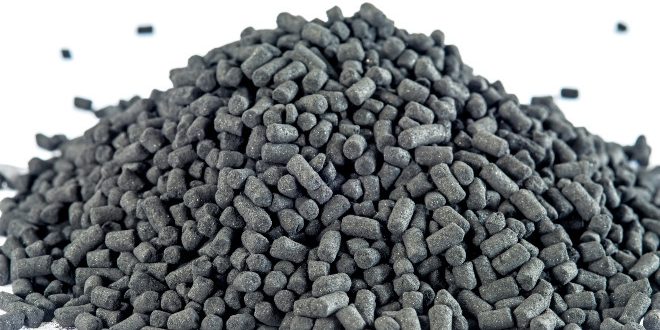
Whether it clarifies liquids, purifies air or detoxifies the body in medicine, activated carbon serves a remarkably broad range of applications. Cabin air filters in motor vehicles alone consume more than 5,000 tonnes of activated carbon worldwide each year. Drinking-water and process-water treatment forms another major field – a single waterworks can use several tonnes a day.
What Is Activated Carbon Made Of? Production and Properties
So what makes this material – almost entirely carbon – so special?
Production begins by decomposing the organic feedstock thermochemically in the absence of air, at up to +1000 °C (1832 °F). The resulting solid pyrolysis products consist mainly of elemental carbon and remain largely compact. Reaching the porosity an adsorbent needs takes a second step. Here, a stream of steam and air treats the products at +800 °C to +1000 °C (1472 °F to 1832 °F). With the right process control, part of the carbon converts to carbon monoxide and hydrogen – much like the water-gas process used in the chemical industry. As gas forms, the material loses carbon mass, and the internal pressures that build up widen and perforate the once-compact structure.
A second production route reacts the organic feedstock at +600 °C to +800 °C (1112 °F to 1472 °F) with dehydrating agents such as sulphuric or phosphoric acid. Zinc chloride works equally well. Water then washes out the chemicals, and the dehydrated solid carbon residue undergoes the same activation as the pyrolysis products.
Activated carbon in coarse granulate form contains up to ten per cent mineral admixtures – mainly silicates – depending on the feedstock quality and production method. These admixtures barely affect the material’s universal adsorption ability, yet they reduce its adsorption capacity.
A Little Physics: What Is Adsorption?
This effect is therefore also called physisorption. When the adsorbent surface is chemically reactive and forms a chemical bond with the substance, we speak of chemisorption. A similar effect occurs when a chemically reactive reagent coats the adsorbent surface. Adsorption then relies on the chemical bond at the coating, while the adsorbent merely supplies the large surface.
Adsorption should not be confused with absorption. The difference between the two lies in where the process takes place. In absorption, substances enter the free volume of a liquid or solid – the absorbent – and become enclosed within it. Dissolving a gas in a liquid illustrates this neatly. Sorption is the umbrella term for both processes.
Applications of Activated Carbon
This makes it very light, unlike mineral adsorbents such as zeolites with densities around 2.5 g/cm³. Its open-pored structure resembles that of a natural sponge. The outer pores measure between 2 and 50 nm. They open the way to deeper nanopores of 0.1 to 2 nm, where most of the adsorption takes place.
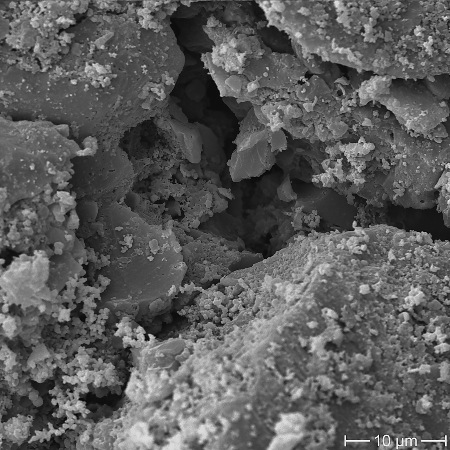
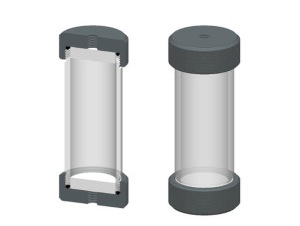
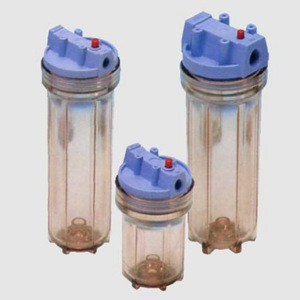
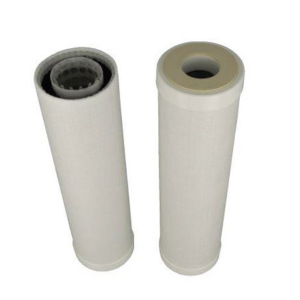
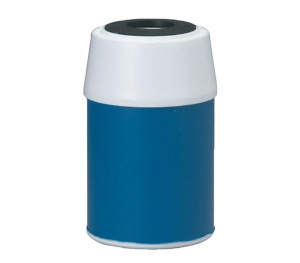
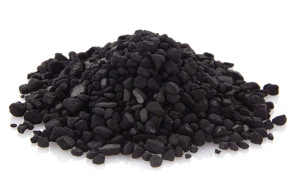
Because the carbon adsorbs non-selectively, it works as an almost universal sorbent – even for substances that resist precise chemical characterisation. It is essential for filtration and serves as a filter granulate. Filter housings and filter elements loaded with it, such as cartridges and adsorption filters, handle a wide range of filtration tasks.
Air Purification with Activated Carbon
In vehicle cabins, where air exchange with the outside is limited, pollutants inevitably build up. The same applies to department stores, open-plan offices and schools. Most pollutants come from paint, floor coverings or installed plastics. Viruses and other pathogens can also accumulate in the air we breathe. Odours add to the burden too – sweat, stale tobacco smoke and perfume. In everyday language, people then call it “stale air”.
Recirculation systems continuously pass the air of a given space through large-area carbon filters, cleaning it by physisorbing the pollutants. In the home, air flows in freely. Extractor hoods fitted with carbon filter mats usually suffice to remove kitchen odours by adsorption.
Drinking-Water Treatment
In Germany, the Drinking Water Ordinance (TrinkwV) – the “Ordinance on the Quality of Water for Human Consumption” – governs how waterworks treat water to drinking quality. The raw water they use is usually a blend of groundwater and surface water drawn from rivers and lakes.
Surface water in particular carries a greater or lesser load of chemicals from agriculture and industry. Household chemicals can end up in groundwater and surface water too – from carelessly disposed wastewater and from pesticides misused in allotment gardens.
By law, waterworks must remove such substances during their multi-stage purification. The trouble is that the chemical make-up of most contaminants remains unknown. They can therefore be recorded only as sum parameters, such as AOX (adsorbable organic halogens), DOC (dissolved organic carbon) and TOC (total organic carbon). Thanks to its non-specific adsorption, the carbon readily takes up such contaminants. Activated carbon filters are therefore an integral part of every drinking-water treatment plant.
Industrial Wastewater Treatment
Discharging industrial wastewater into the environment also faces strict rules. In-house pre-treatment steps are therefore essential, tailored to the contaminants, pollutants and offensive odours a given production expects. Activated carbon filters prove indispensable here too, precisely because it adsorbs with such low selectivity. Textile dye works, for example, decolourise their effluent through carbon filters before release, and hospitals pre-treat their wastewater – heavily laden with pharmaceuticals and their residues – the same way.
Activated Carbon in the Food Industry
Parts of the food industry use activated carbon filters to clarify liquid products. These include mineral waters, soft drinks and fermentation products such as vinegar. Activated carbon offers a real alternative in vegan production – vegan wine, for instance – where gelatine is off-limits as a fining agent for removing cloudiness. The grade used here comes exclusively from plant material processed at high temperatures, mostly coconut shells, which guarantees its particular quality.
“Black food” products increasingly line the shelves of specialist shops – baked goods, drinks and a host of “black smoothies”, all containing substantial amounts of it.
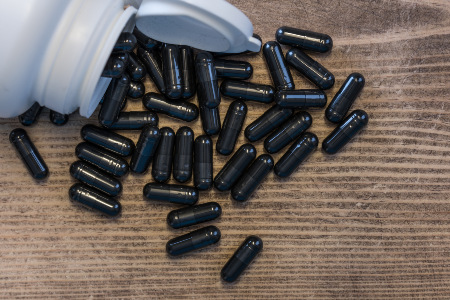
Consuming such products regularly remains highly controversial. As a non-selective adsorbent, it also strips vitamins and minerals from food, and thus from the body. It binds the active ingredients of medicines too, so that they can no longer take effect.
Cosmetics
As in food, activated carbon has found its way into cosmetics. “Black soaps” and exfoliating products – the so-called “black masks” – are credited with a deep-pore, antibacterial cleansing effect. Toothpastes with added activated carbon claim to bind bacteria in the mouth, and with them bad breath, but above all to whiten stained teeth.
So how much of this holds up? The carbon in soaps and exfoliants can of course remove deposits from the skin through mild abrasion.
No one disputes that the carbon in toothpaste adsorbs bacteria and binds odours. Yet it also acts as a harsh abrasive. Teeth may look brighter for a short while, but only at the cost of worn enamel. Dentists therefore advise against using such toothpastes long-term.
Medical Applications of Activated Carbon
Activated carbon’s high, non-specific adsorption also favours medical use. Known as “Carbo medicinalis”, this high-purity grade is licensed as a medicine and comes exclusively from plant material. It goes into wound-dressing pads for external injuries and after surgery, where it adsorbs germs, wound odours and exudates.
For diarrhoea, short-term self-medication with carbon tablets may be appropriate, since the carbon binds both bacteria and their already-formed toxins in the gut. Doctors also give medicinal activated carbon for mild poisoning by chemically toxic substances – but expressly not for corrosive ones.
Taking it is harmless, though large amounts can cause constipation. The reason is the rapid, substantial loss of water in the bowel, which thickens its contents and slows peristalsis. Like “black food” products, such tablets can also inactivate medicines, which are then excreted without effect, adsorbed onto the carbon.
Vacuum Technology
A less familiar field for activated carbon is vacuum technology. Standard vacuum pumps, such as rotary-vane and diaphragm pumps, reach vacuums down to 10-3 mmHg – roughly 0.1 Pa, or 10-6 bar. Downstream jet pumps, such as oil or mercury-vapour pumps, push this to 10-5 mmHg. Adsorbing residual gases onto the carbon improves the vacuum further. The effect is strongest for permanent gases such as atmospheric nitrogen and oxygen. Cooling the adsorbent with liquid nitrogen to -196 °C (-321 °F) raises its uptake still higher.
Sorption pumps build on this principle to cut residual gas even further in an already evacuated system. The loaded carbon sits in cold traps linked to the vacuum system through valves. The operator isolates it, regenerates it by heating separately, then reconnects it for another round of adsorption. Repeating these cycles several times reaches high vacuums down to 10-8 mmHg.
Reprocessing or Incinerating Activated Carbon?
Producing activated carbon is an energy-intensive process that consumes a great deal of material. Given the large quantities that air purification, drinking-water treatment and wastewater treatment demand, reprocessing spent carbon makes clear sense. Only carbon that can no longer be recycled – after many regeneration cycles, or contaminated with highly toxic substances – goes to thermal recovery in special plants with flue-gas cleaning.
The standard method for reprocessing spent carbon is stepwise heating in the absence of air, at up to +900 °C (1652 °F). Volatile adsorbate fractions burn off, while the non-volatile ones pyrolyse. The pre-treated recyclate is then reactivated. Chemical recycling routes have yet to catch on, because they inevitably leave residues that would need separate disposal as chemical waste.
Image Sources:
Featured image | © hjschneider – stock.adobe.com
Scanning electron micrograph of the granulate | © Mydriatic, CC BY-SA 3.0 <https://creativecommons.org/licenses/by-sa/3.0>, via Wikimedia Commons
Activated carbon tablets | © vegefox.com – stock.adobe.com