 Reichelt Chemietechnik Magazine
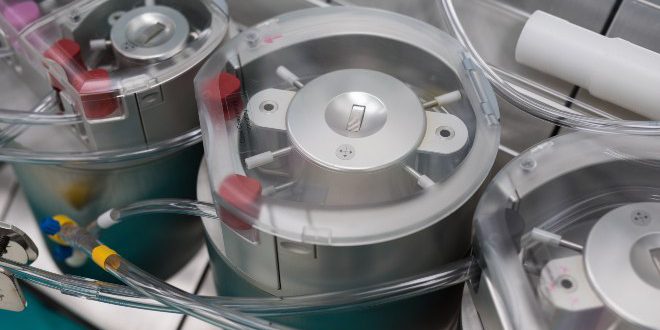
Peristaltic pumps work on the same principle that moves food through the oesophagus. Successive muscle contractions along the oesophagus push food forward into the stomach. In a peristaltic pump, a flexible length of tubing takes the place of the oesophagus. Mechanical pressure from outside squeezes the tubing and drives the medium through it. This article explains exactly how that works.
A Brief History of the Peristaltic Pump
In 1855, the American polymath Rufus Porter (1792–1884) secured the first peristaltic pump patent together with J.D. Bradly. Recorded under patent number US12753A, it entered history as a well pump. His compatriot Eugene Edward Allen followed in 1881, earning US patent no. 249285 for a peristaltic pump used in blood transfusion. The design still attracts strong interest today, and many publications explore its further development.
How Do Peristaltic Pumps Work?
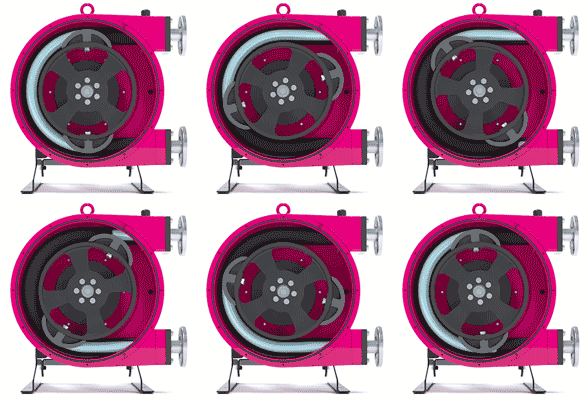
Peristaltic pumps belong to the family of positive displacement pumps. They also go by several other names: tube-squeeze pumps, roller pumps, or simply tubing pumps. Engineers use them to move liquids and suspensions. The medium travels through a length of tubing bent into a U-shape. In a typical design, the tubing sits against the outer pump housing, while rollers or sliding shoes on a rotor pinch it from the inside.
Once the pressure releases, restoring forces open the tubing and return it to its original shape. This creates a partial vacuum that draws in the medium. To be squeezed and spring back again, the tubing must stay soft and elastic. Peristaltic pumps therefore work only with flexible elastomer tubing (soft rubber).
Rollers or Sliding Shoes: Two Ways to Compress the Tubing
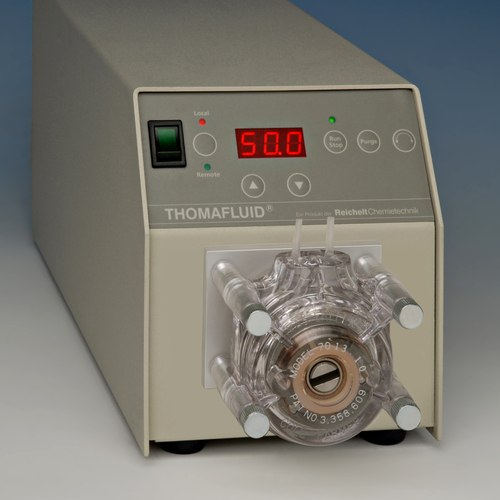
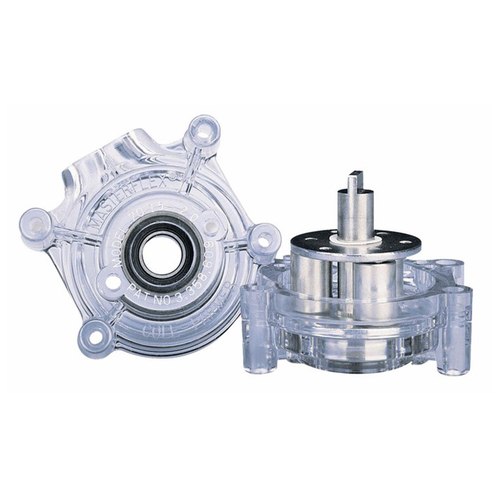
Roller designs create only a small contact area between roller and tubing. As a result, friction between the tubing wall and the roller stays very low. This design therefore needs no lubricant. The small contact area also limits these pumps to low pressures of around 2 bar. Changing the tubing, on the other hand, is quick and simple.
Sliding shoes press over a larger area than rollers, which suits applications that demand higher pressures. That larger contact area, however, raises friction between tubing and shoe. The added friction in turn increases both starting torque and tubing wear.
To counter this, the shoes run in a bath of lubricant. Changing the tubing then takes more effort, because you must drain the lubricant and remove the shoes.
Depending on the configuration, flow rates range from a few microlitres per minute in miniature pumps to several hundred litres per minute in industrial models.
Service Life: When Should You Replace Pump Tubing?
Higher rotor speeds place more strain on the pump tubing and shorten its life. Shoe pressure, the temperature of the medium and the tubing material all play a part too. With the right sizing, pump tubing typically lasts between 500 and 5,000 operating hours, depending on the conditions.
Advantages of Peristaltic Pumps
Peristaltic pumps use fewer mechanical parts than most other pumps, so maintenance comes down to a simple tubing change. This lean design keeps maintenance costs well below those of comparable pump types. The pumps need no valves or seals, which lowers the risk of leaks. In fact, leaks occur only when the tubing cracks or turns porous. Peristaltic pumps are self-priming and safe to run dry. Their direction reverses easily, so lines drain and flush without trouble.
Roller pumps run without any lubricant. A wide range of tubing materials is available – silicone, fluoroelastomer, and EPDM/PP (ethylene propylene diene rubber / polypropylene) – in many bore sizes and versions.
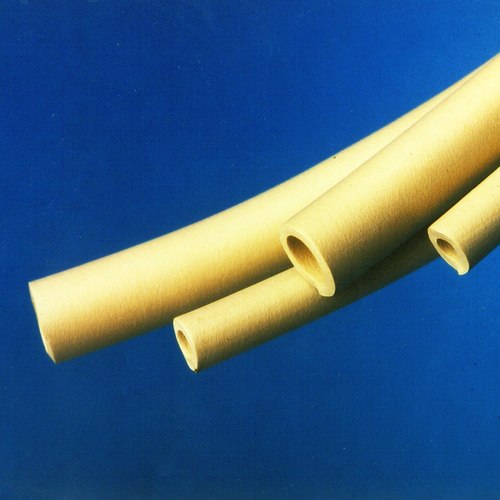
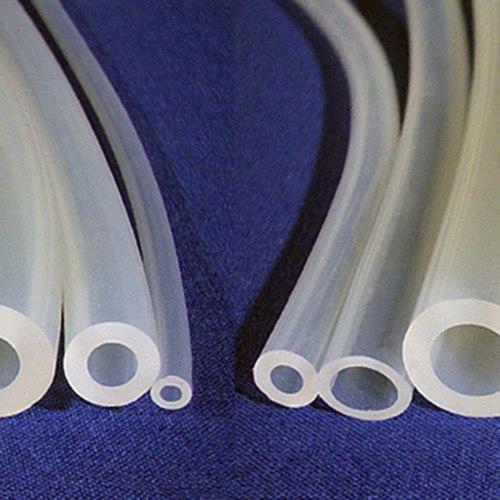
With the right pump tubing, these pumps handle chemicals, concrete, sludge, viscous or pasty foods, and sensitive media such as blood. That versatility makes peristaltic pumps especially well suited to laboratory and food applications.
Disadvantages of Peristaltic Pumps
Flexible pump tubing wears out over time. It can lose elasticity and develop cracks. Abrasion attacks the tubing wall and reduces its thickness. Both flow rate and delivery pressure suffer as a result.
A poor match between pump, medium, tubing diameter and tubing material can damage the tubing. Some applications must also account for an uneven flow inside the tubing. The pumping action can introduce a pulse into the volume flow.
Requirements for Pump Tubing
To work in a peristaltic pump, tubing must resist the medium it carries. It also needs good elasticity and strong elastic recovery. In other words, it should return to its original shape after each deformation. The better that recovery, the more precise the dosing.
High abrasion resistance matters too, since it extends the life of the tubing material. Good abrasion resistance also keeps the medium as free of shed particles as possible. The tubing should flex well, meaning it cracks little under load, and it should show low permeability – especially when pumping gases.
Which Pump Tubing Suits Peristaltic Pumps?
Their elasticity and strong recovery make elastomers and thermoplastic elastomers the materials of choice for pump tubing.
Viton® (FKM) Tubing for Aggressive Chemicals
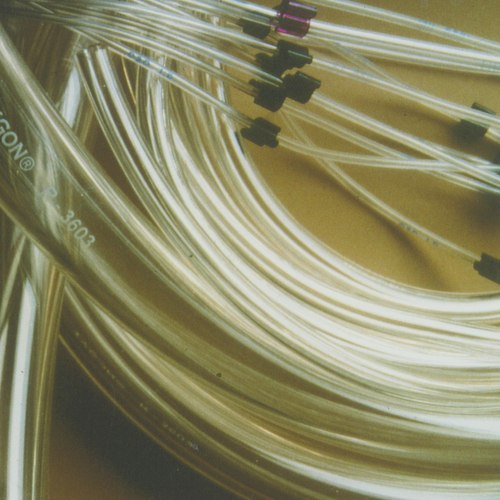
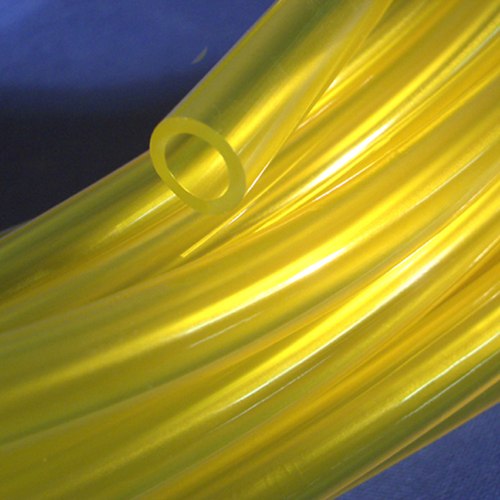
Laboratory peristaltic pumps often run on Viton® tubing made from fluoroelastomer (FKM, formerly FPM). This tubing handles acids, aliphatic, aromatic and halogenated hydrocarbons, fuels, oils, greases and hydraulic fluids. Fluoroelastomer stays thermally stable from -35 °C to +200 °C (-31 °F to 392 °F). Industry puts FKM tubing to work across many sectors. The chemical industry uses it for aggressive chemicals, while construction relies on it for concrete and sludge. Printing and coating firms pump inks and paints through it, and petrochemical plants use it for petroleum products.
Silicone Tubing for Food and Medical Use
Food-grade peristaltic pumps rely on silicone tubing for dilute acids and alkalis, alcohols, esters and ketones. This material works across a temperature range from -60 °C to +200 °C (-76 °F to 392 °F).
Silicone tubing meets the requirements of the US Food and Drug Administration (FDA) and the German Federal Institute for Risk Assessment (BfR). Medical applications add a further hurdle: the tubing must satisfy United States Pharmacopeia (USP) Class VI. Testing covers systemic toxicity through skin contact, inhalation and ingestion, plus intracutaneous reactivity on direct tissue contact.
A final test examines the response after implantation into the tissue of a living organism. Our magazine article USP Class VI Approval – What Does It Mean? explains the certification in more detail.
EPDM/PP Tubing for Pharmaceutical and Food Applications
EPDM/PP tubing, based on polypropylene (PP) and ethylene propylene diene rubber (EPDM), also performs well in peristaltic pumps. The material resists many acids, alkalis, ethers, esters, ketones and aldehydes, and works from -45 °C to +135 °C (-49 °F to 275 °F). Several EPDM/PP versions meet FDA guidelines, which suits them to medical technology as well as the pharmaceutical and food industries. High-pressure peristaltic pumps usually take fabric-reinforced tubing made from natural rubber (NR), acrylonitrile butadiene rubber (NBR) or polyvinyl chloride (PVC).
Where Peristaltic Pumps Are Used
Peristaltic pumps deliver and dose fluids of every kind – thin or highly viscous, delicate, neutral or aggressive. They suit any process where the medium must never touch the pump itself. For that reason, peristaltic pumps appear so often in the laboratory.
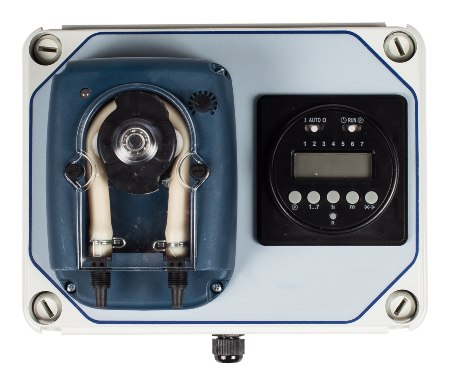
Peristaltic Pumps in Medicine, Food and Industry
In medicine, they serve as infusion pumps, as blood pumps in dialysis machines, and as the blood bypass in heart-lung machines. The food industry doses beverages in vending machines with peristaltic pumps. Dairies use them to convey and fill milk and milk products such as yoghurt or quark. Winemakers, too, rely on them for wine, must and mash.
Paint, printing and coating firms fill paints, varnishes and inks, then feed them into spray systems. Construction crews deploy the pumps for concrete and sludge, while petrochemical plants move petroleum products. Water and wastewater plants add milk of lime – an aqueous calcium hydroxide suspension – to adjust the pH value, and peristaltic pumps handle that dosing.
Instrumental analysis depends on them as well. Analysers dose sample solutions through tubing pumps in liquid chromatography, atomic absorption spectroscopy and optical emission spectroscopy. Everyday machines use them too: as condensate pumps in air-conditioning and heating systems, as dosing pumps in coffee machines, and in dishwashers for detergent and rinse aid.
Choosing the Right Tubing-Pump Combination
One feature sets peristaltic pumps apart: only the inner wall of the tubing ever touches the medium. The pump moves almost any medium, provided the tubing material and the fluid are compatible. Different designs cover a wide span of flow rates. For the longest service life, size the pump to the required flow rate and match the tubing-pump combination to the application.
Image sources:
Featured image | © chanawit – stock.adobe.com
Pumping action of a peristaltic pump | © Fluidity.nonstop, CC BY-SA 4.0 <https://creativecommons.org/licenses/by-sa/4.0>, via Wikimedia Commons
Peristaltic pump with integrated control module | © Nikita Rublev – stock.adobe.com
Sources:
Denkinger, Sandra Nicole: Modelle zur Simulation des Abfüllprozesses biologisch-pharmazeutischer Arzneimittel. - Bonn, 2010. - Dissertation, Rheinische Friedrich-Wilhelms-Universität Bonn
Stefan, Gerkens: Chip-integrierte Peristaltikpumpe für Mikrofluidiksysteme, - Bielefeld, 2006 – Diplomarbeit, Universität Bielefeld