 Reichelt Chemietechnik Magazine
Consumer safety sits at the heart of many certifications and approvals. For product safety – and fire safety in particular – Underwriters Laboratories Inc. (UL) has led the field since the late nineteenth century. It remains a globally recognised institution to this day. UL certification has now gained relevance for tubing too.
What Does Product Safety Actually Mean?
In Germany, product safety is enforced through the German Product Safety Act (ProdSG). This law replaced the earlier Equipment and Product Safety Act in 2011. The ProdSG is based on European Community (EC) standards. It applies to every product made available, displayed or first used in the course of a commercial activity.
Under the Product Safety Act, a product is deemed safe if it poses little or no risk to the consumer when used as intended.
Key Facts About Underwriters Laboratories
The Origins of Underwriters Laboratories
Underwriters Laboratories Inc. was founded more than a century ago, in 1894, by the American electrical engineer William Henry Merrill (1868–1923). Set up as an independent, non-profit organisation, it developed safety standards and testing procedures. Its earliest work centred on fire protection and electrical safety.
UL Certification in the USA and Canada
In the United States, the Occupational Safety and Health Administration (OSHA) accredits testing bodies, which may then call themselves Nationally Recognized Testing Laboratories (NRTLs). Among these, UL is arguably the most highly regarded in the country. In Canada, product safety is tested and certified by the Canadian Standards Association (CSA). Both UL and CSA, however, issue marks that satisfy the safety requirements of the USA and Canada alike, making them valid in both countries.
UL’s Global Reach and Business Fields
Today, UL operates worldwide and has a presence in 104 countries. Its portfolio has also expanded considerably.
UL is now active in fields such as sustainability, hazardous substances, water quality and food safety.
According to UL, the company is organised into five main business fields:
- Product Safety
- Environment
- Life & Health
- Knowledge Services
- Verification Services
Each year, around 20 billion products worldwide carry a UL safety mark.
A UL mark is particularly important for products intended for sale in the USA or Canada, since it signals compliance with the safety requirements of both countries.
UL Certification in Germany
UL also maintains four offices in Germany, with the Neu-Isenburg site near Frankfurt serving as the headquarters for Europe and Latin America. UL certification is not mandatory in Germany. Even so, it represents an important safety feature, and securing such approval can give a company a clear marketing advantage.
What Is UL Certification and How Do You Obtain It?
A UL listing comes at a cost. To obtain one, a product is tested against standards set – and in some cases written – by UL itself. Compliance is then verified through regular, unannounced audits. Any change to the product or its design requires a fresh assessment. Underwriters Laboratories issues several marks. The most widely used are the UL Listed Mark, the UL Recognized Component Mark and the UL Classification Mark.
1. The UL Listed Mark
This mark confirms that a representative sample has been tested and meets UL’s safety standards. It is awarded to a wide range of products. You will find it, for example, on small electrical appliances and safety items such as smoke detectors and bullet-resistant glass.
2. The UL Recognized Component Mark
Rather than covering complete devices, this mark applies to individual components. A part certified in this way can be built into – or used alongside – UL Listed equipment. Typical applications include fuses and control units.
3. The UL Classification Mark
This mark certifies products for which specific risks must be ruled out, and whose performance must be assured under defined conditions. It is used, for instance, on industrial equipment and fire doors.
What Distinguishes UL-Certified Plastic Tubing?
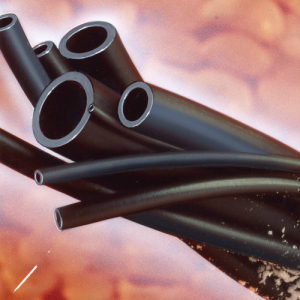
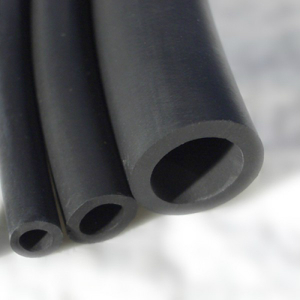
Plastic tubing is usually awarded the UL Recognized Component Mark, since it tends to be used only as part of a larger device or system. To ensure comparable test conditions, UL examines the material itself – or a test bar of that material – rather than the finished tubing. Using UL-certified base materials can speed up certification of the finished device, as separate testing of those materials is no longer required.
For plastic tubing, UL primarily tests and certifies flammability. The key standard here is UL 94, Tests for Flammability of Plastic Materials for Parts in Devices and Appliances.
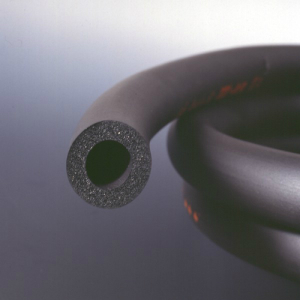
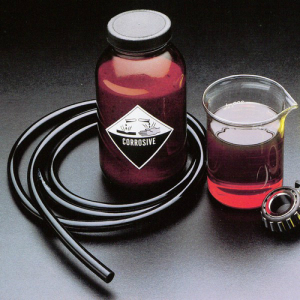
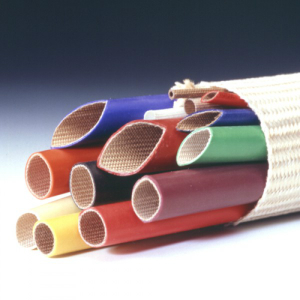
Because flammability matters most for insulating sleeves on power cables, these are usually UL-certified. Some chemical tubing and exhaust-air hoses – and the materials they are made from – are UL-listed too.
The UL 94 Flammability Standard
The content of UL 94 has also been incorporated into the standards IEC/DIN EN 60695-11-10 and -20. The standard distinguishes between a horizontal burning test (HB) and a vertical burning test. In the HB test, the specimen (measuring 125 × 13 × S mm, where S is the thickness, kept as small as the intended application allows) is clamped horizontally.
UL more commonly specifies the vertical arrangement, however, so it is worth examining in more detail. Here, the lower end of the specimen is exposed to a Bunsen burner for two 10-second applications, after which the material is assigned to a class according to the table below. The test set-up – including the flame characteristics of the Bunsen burner – is precisely defined.
Classification of the various UL 94 classes.[1]
| Class | Max. afterflame time, both applications per specimen [s] | Max. total afterflame time, all specimens [s] | Max. afterglow time [s] | Dripping of flaming material |
| 94 V-0 | 10 | 50 | 30 | Not permitted |
| 94 V-1 | 30 | 250 | 60 | Not permitted |
| 94 V-2 | 30 | 250 | 60 | Permitted |
Other UL standards, such as UL 224 or UL 1581, are sometimes cited for UL tubing. As a rule, these specify vertical burning tests similar to those in UL 94.
The UL Yellow Card for Plastics
For plastics, UL maintains a Yellow Card setting out the key test results and the UL classification.
The Yellow Card can be viewed publicly in UL’s databases at UL iQ or UL Prospector (as of 31 July 2018). For the user, it guarantees that the material’s safety has been tested and that the material continues to undergo regular checks.
Alongside UL 94 flammability, the Yellow Card may list the following properties:[2]
- Ignition and burning behaviour from thermal and electrical sources
- Electrical, physical and mechanical properties
- The effects of exposure to elevated temperatures, cold, water, UV radiation, chemical liquids and so on
Further important certificates can also be added to the Yellow Card – compliance with the RoHS Directive, for example – which makes material selection easier still for the user.
UL Certification for Tubing: Essential Only in Select Cases
For many applications, UL certification of tubing is of limited interest to the user. The exceptions are tubing applications that carry a real fire risk, or where the gases or liquids being conveyed make ignition especially hazardous. Exhaust-air hoses and tubing for conveying solvents fall into this category. Although UL certification is not a legal requirement in Germany, the listing of different plastics in the Yellow Cards can be an extremely useful selection tool for manufacturers of industrial tubing.
Sources:
[1] Brandverhalten nach UL, Koch Kabel AG, 2018
[2] UL Yellow Card for Plastics, UL LLC, 2018