 Reichelt Chemietechnik Magazine
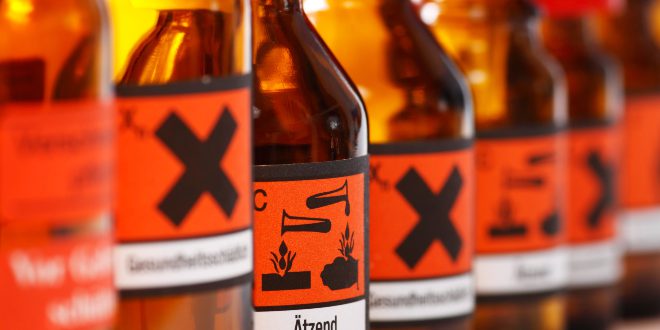
In the laboratory, handling chemicals is a science in its own right. Long before an experiment starts or a synthesis begins, you need a great deal of expertise to work safely with toxic chemicals. Setting aside all the regulations, labelling rules, hazard classes and occupational safety provisions, one thing comes first: the greatest possible care. That is probably why good chemists have a reputation for keeping a tidy workplace, and not only once the working day is over. We show you how to store and dispose of chemicals correctly in the laboratory.
First Things First: Safety and the Signs That Point to It
Not every white powder is soda ash, and not every white crystal is table salt. Most chemicals do not reveal their hazards at first glance. Some are corrosive or otherwise harmful to the human body even at low concentrations.
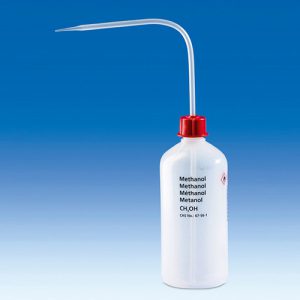
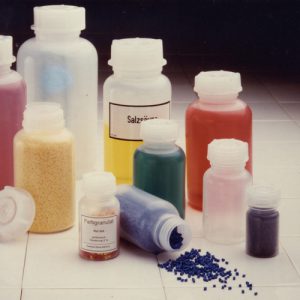
It almost goes without saying that you must never store solvents, acids, bases and similar substances in open or unlabelled vessels. Quite the opposite: glass bottle, canister, drum or plastic container – every laboratory storage container carries a detailed label. A label is complete when it gives the name and concentration of the chemical, shows the hazardous substance symbols, includes the safety instructions and makes the hazard pictogram impossible to miss.
Which Chemicals Are Dangerous? The Hazard Categories
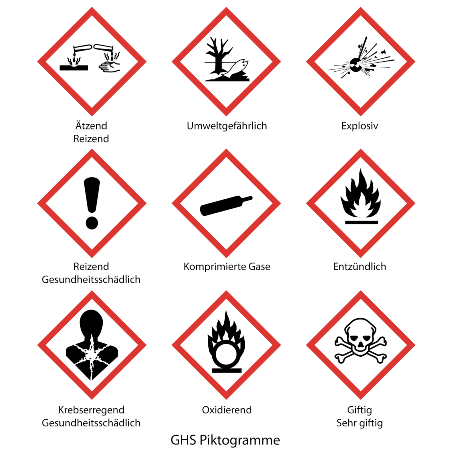
The most striking features are the pictograms that mark hazardous substances. And symbol no. 6 with its skull and crossbones is not the only one that makes it unmistakably clear that many substances are no laughing matter.
To let you see at a glance how dangerous a substance is, the German Hazardous Substances Ordinance (GefStoffV) lists hazardous substance classes. These classes also indicate how the substance in question should or must be stored.
From explosive to corrosive: the lower the number, the more dangerous the chemical.
The GefStoffV essentially distinguishes nine hazard categories.
- Explosives: substances and mixtures that can explode.
- Gases: flammable, toxic, oxidising, asphyxiant or pressurised gases.
- Flammable liquids: liquids that ignite easily and can catch fire.
- Flammable solids: solids that ignite easily and can catch fire.
- Oxidising substances: substances that can easily ignite other substances.
- Toxic substances: substances that can enter the body through inhalation, ingestion or the skin and can damage health.
- Corrosive substances: substances that can attack the skin, eyes and mucous membranes.
- Harmful substances: substances that can enter the body through inhalation, ingestion or the skin and can damage health.
- Substances hazardous to the environment: substances that can harm the environment.
Each category has its own hazard pictogram. Whether it shows an explosion or a dead fish, the imagery could not be clearer.
Plan Chemical Storage Properly and Carry It Out Carefully
Carelessness can come back to haunt you, either through contaminated products or even through accidents. Hydrofluoric acid (HF), for example, should never be kept in a glass bottle. Hydrofluoric acid attacks glass and dissolves it, even more so than strong alkalis or concentrated sulphuric acid. That damages more than the bottle. The dissolved material also contaminates the chemical.
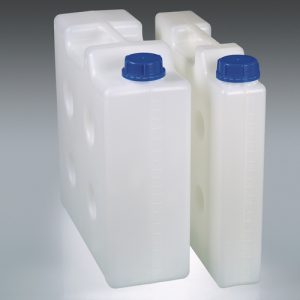
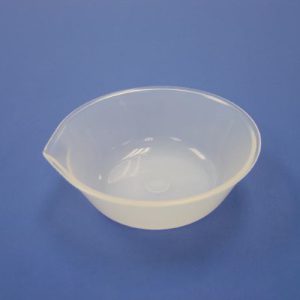
That leaves chemically resistant plastics as practically the only option for hydrofluoric acid, preferably fluorinated grades. Containers, bottles, carboys and canisters made of polytetrafluoroethylene (PTFE) are one suitable choice. The same applies to evaporating dishes, crucibles, dilution bottles and other laboratory supplies, right through to disposal. Collect laboratory waste contaminated with hydrofluoric acid in separate containers until you dispose of it.
If you are unsure how to keep and store a chemical, look at the safety data sheet (SDS). These information sheets state the properties of a substance and how you should best store it. The SDS is the “identity document” of a substance or mixture. The supplier is responsible for it and must provide it in the local language. It covers everything from physical, chemical and toxicological properties to first aid, firefighting and disposal.
Everything Neatly Regulated: Nationally, in Europe and Worldwide
Countries around the world classify hazardous substances in the same way.
This database is known as the CLP inventory and holds information on hazardous substances and mixtures. CLP stands for Classification, Labelling and Packaging. The CLP Regulation is the European counterpart to the national Hazardous Substances Ordinance. It currently lists no fewer than 147,500 substances.
So no one can know every fact about chemicals. Researching regulations and databases is part of working with substances in the laboratory, the workshop and the factory, and so is researching how to dispose of chemicals. The Technical Rules for Hazardous Substances (TRGS) bring together the largely technical aspects of chemicals, such as transport, storage and classification. The Committee on Hazardous Substances (AGS) draws them up, and the Federal Ministry of Labour and Social Affairs (BMAS) publishes them in the Federal Labour Gazette (BArbBl).
Disposing of Laboratory Waste and Chemicals Safely
Keeping track of disposal is probably even harder than buying and storing chemicals. Dusts drawn off by extraction systems, reaction products, laboratory utensils waiting to be cleaned: it is not always clear what cocktail has settled there.
Waste can be explosive or pyrophoric, and some of it reacts violently on contact with water, as alkali metals do. Waste containers carry a high risk of unwanted reactions, and therefore a high risk of accidents.
The composition therefore determines how dangerous a laboratory waste is and how you have to dispose of it. With mixtures, the concentration of the individual components can determine the hazard. The German Waste Catalogue Ordinance (AVV) decides whether a substance or a laboratory waste counts as hazardous. The Federal Ministry for the Environment, Nature Conservation, Nuclear Safety and Consumer Protection (BMUV) issues it. Substances marked with an asterisk in the AVV count as hazardous.

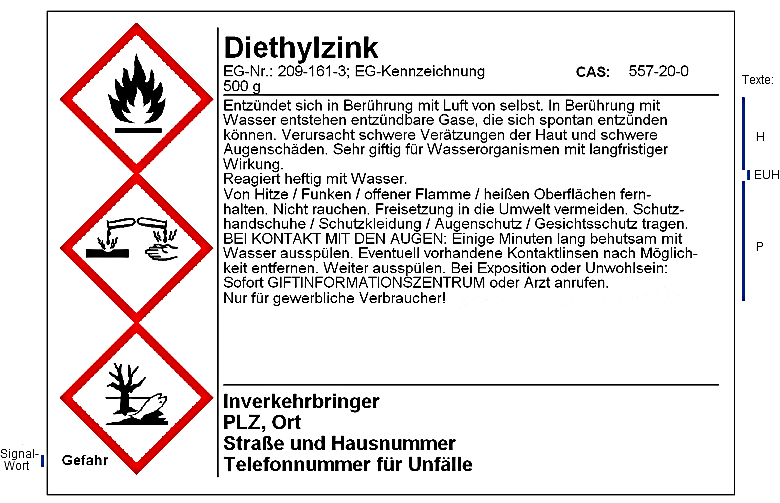
Fifteen so-called HP hazardous properties serve as the criteria. Here H stands for “hazard statements” and names the dangerous properties of a substance or mixture. P stands for “precautionary statements”. These are the safety instructions for handling a substance or mixture. The HP classes are:
- Explosive properties
- Flammability
- Oxidising properties
- Toxicity
- Health hazard
- Corrosivity
- Environmental hazard
- Carcinogenicity
- Germ cell mutagenicity
- Reproductive toxicity
- Aspiration hazard
- Sensitisation by inhalation
- Sensitisation by skin contact
- Specific target organ toxicity after single exposure
- Specific target organ toxicity after repeated exposure
A substance counts as hazardous as soon as it meets just one of the criteria. Mixtures can meet several criteria at once. The Federal/Länder Working Group on Waste (LAGA) provides tables that help you assess the hazard posed by mixtures.
Pack waste separately in small quantities in plastic bags or plastic containers. Only then add it to the larger laboratory waste containers. This reduces the risk of uncontrolled reactions. The same applies to the disposal of laboratory waste such as filters or foils.
You can neutralise strong acids or bases while monitoring the pH value. Inorganic salts and their solutions belong in separate waste containers according to the metal they contain. The contents of a laboratory waste container count as heavy-metal contaminated as soon as they contain compounds of antimony, arsenic, cadmium, chromium (VI), copper, lead, mercury, nickel, selenium, tellurium, thallium or tin.
Disposing of Chemicals Does Not Always Mean Permanent Storage
The Federal Statistical Office reports a recycling rate of more than 50 % even for waste from production and commercial operations that is classified as hazardous. Waste batches segregated by type offer the chance of an even higher recycling rate.
Plastics in particular can largely be reused through recycling processes, and so can metals. A large share of steel scrap goes back into recycling, for instance. According to the German Association for Secondary Raw Materials and Waste Management (BVSE), recycling 94 million tonnes of steel scrap saved 157 million tonnes of CO2 as far back as 2018. That equals the CO2 emissions of the vehicle fleets of France, the United Kingdom and Belgium, the association says.
To keep the sheer variety of chemical disposal manageable, many waste management companies work with categories for waste from laboratories and production. This means that laboratories should keep residues and waste separate at the end of the process, including solvents, organic solids, halogenated organic solvents, toxic flammable substances and mercury. Only then will disposal companies take them. Non-toxic alternatives have now replaced mercury in many applications such as thermometers and fluorescent tubes, yet the disposal problem will remain for years to come.
The German Environment Agency estimates that more than 10,000 tonnes of mercury will need to be disposed of over the next three decades. Heavy metal and its compounds count as highly toxic. The aim is therefore to remove the element from the environment as far as possible by placing it in underground repositories.
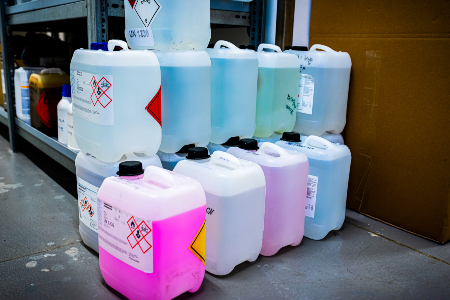
Containers for laboratory waste and for chemical disposal need unambiguous labels, just as stored substances do. The labels point to the hazards and to correct handling, and they include the hazard pictograms.
Chemicals and Their Disposal Are a National Issue
According to the German Environment Agency, almost half a million people work in the chemical and pharmaceutical industry in Germany. The sector is one of the country’s most important branches of the economy. It produces medicines, plant protection products, paints, detergents and cleaning agents, fragrances and much more.
To do so, companies manufacture, deliver, store and dispose of tens of thousands of tonnes of chemicals. Every stage calls for the same care. Because chemicals never sleep. Some of them never break down once they reach the environment, and they turn up even in the deep sea.
Careful handling of chemicals starts at home, though. Sewage treatment plants sometimes have great difficulty filtering fragrances and dyes out of wastewater. The AVV also counts everyday substances such as wood dust, petrol, diesel exhaust and ozone among hazardous substances. Handling substances carefully and prudently therefore protects health and the environment. At home and at work.
Image credits:
Featured image | © A_Bruno – stock.adobe.com
GHS pictograms | © bilderzwerg – stock.adobe.com
Hazardous substance label for diethylzinc in accordance with GHS | © Dr.cueppers, CC BY-SA 3.0 <https://creativecommons.org/licenses/by-sa/3.0>, via Wikimedia Commons
Waste containers for various chemicals | © Forance – stock.adobe.com