 Reichelt Chemietechnik Magazine
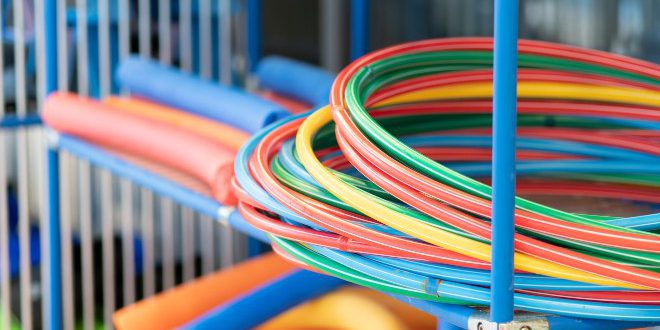
What do ski boots, household sponges, mattresses, and insulation panels have in common? All of these products contain the plastic polyurethane.
Who Developed PUR?
Polyurethane was developed in 1937 by Otto Bayer (1902–1982) at the BAYER dye works in Leverkusen by reacting 1,4-butanediol with octane-1,8-diisocyanate. Industrial production began in 1940. However, during the Second World War, production stalled due to a shortage of raw materials. Nevertheless, Otto Bayer succeeded in developing a process for manufacturing foamed polyurethanes. When work resumed at the BAYER plants after the war, interest in polyurethane technology quickly returned.
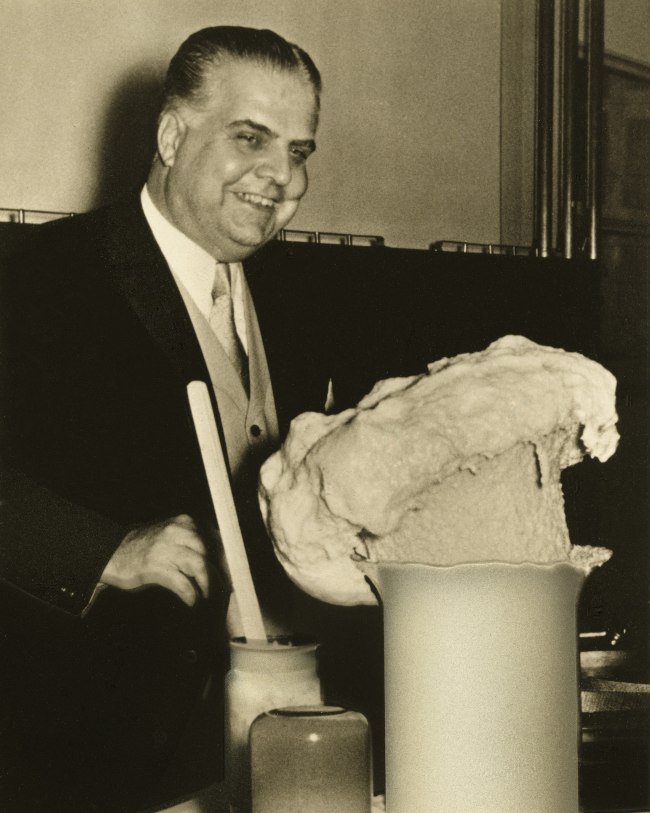
By using different raw materials, it became possible to develop polyurethane plastics with a wide variety of properties.
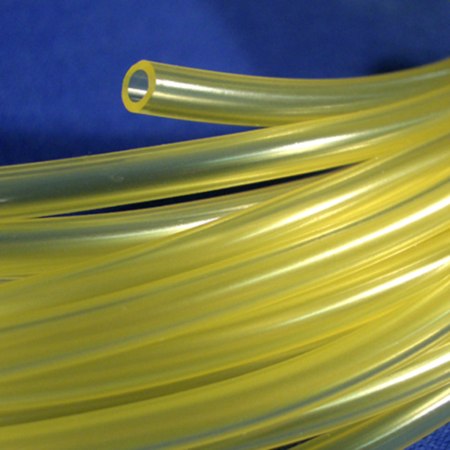
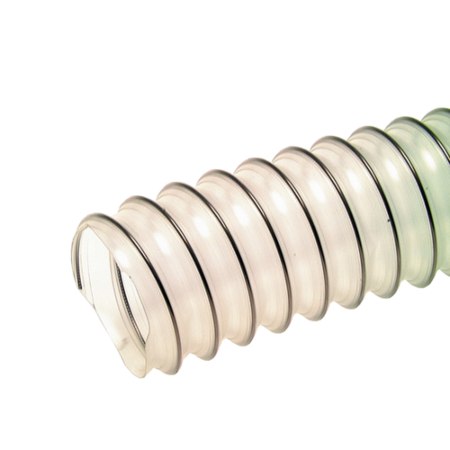
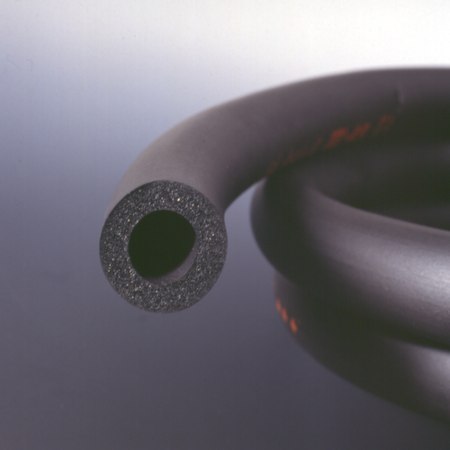
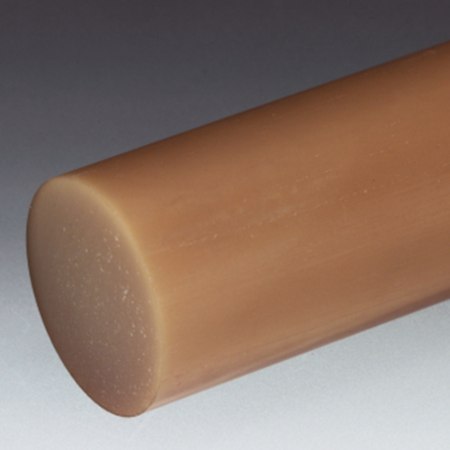
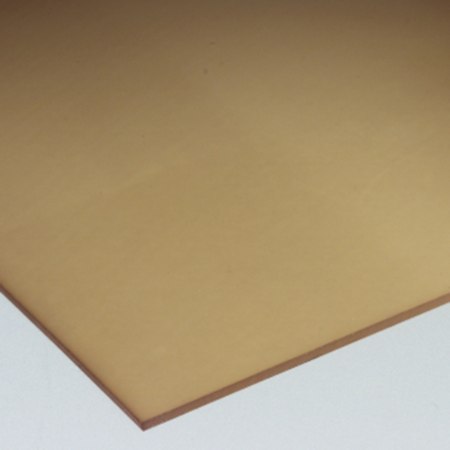
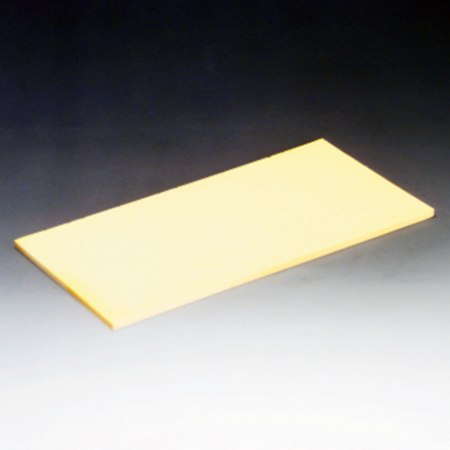
This enabled the production of “tailor-made plastics” ranging from hard and brittle to soft and elastic, and from thin liquids to highly viscous compounds. The abbreviation for these plastics is PUR, although the term PU is often used colloquially. In industrial applications, polyurethane is used to manufacture PUR tubing, rubber plates, semi-finished products, and foam sheets.
What Is Polyurethane?
Polyurethanes are plastics that contain urethane groups. They are formed by the polyaddition reaction of polyfunctional alcohols with polyisocyanates.
Polyfunctional alcohols are organic molecules with at least two hydroxyl (–OH) groups. If the molecule contains two hydroxyl groups, it is called a diol; three groups make it a triol. If there are more than three, the compounds are referred to as polyols. Polyisocyanates are organic compounds with at least two isocyanate groups (–NCO).
Synthesis of PUR
The “simplest” polyurethanes are composed of diols and diisocyanates. This illustration shows how these plastics are formed:
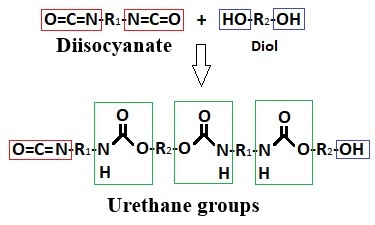
The isocyanate group (red) binds to the diol (blue) via a rearrangement, forming a urethane group (green). It is this urethane group that gives the plastic its name, unlike many other polymers, which are named after their monomers. The letter R represents the organic remainder of the diisocyanate (R1) or the diol (R2), respectively.
When only diols and diisocyanates are used, the result is a linear, non-crosslinked plastic known as thermoplastic polyurethane, or TPU. If monomers with more than two functional groups are used, the result is a crosslinked polyurethane classified as a thermoset.
Only a few diisocyanates are typically used in polyurethane production. These include the aliphatic hexamethylene diisocyanate (HDI), the cycloaliphatic isophorone diisocyanate (IPDI), 4,4′-diisocyanato dicyclohexylmethane (H12MDI), and the aromatic compounds methylene diphenyl diisocyanate (MDI) and naphthylene diisocyanate (NDI).
The properties of polyurethanes are primarily influenced by the choice of polyols. These can be linear or branched, aliphatic or aromatic, and may also contain additional functional groups such as ether or ester groups. Due to the wide variety of polyols and formulations, polyurethane properties can be precisely adjusted. This includes elastomeric plastics such as Vulkollan® and thermoplastics such as Desmopan®.
The isocyanate group reacts with water, releasing carbon dioxide (CO₂), which acts as the blowing agent. Both soft and rigid foams can be produced this way.
Applications of PUR Plastics – What Are the Industrial Uses of Polyurethane?
Polyurethanes are available in many forms, including foams, casting resins, coatings, adhesives, and semi-finished products such as foils, rods, blocks, round rods, and profiles.
Both soft and rigid foams are manufactured. Soft PUR foams have long chains with fewer branches than rigid foams. They are open-celled and elastically deformable. Available in various densities and hardness grades, they feature large, open pores that ensure excellent airflow. These foams are used in cushions, mattresses, cleaning sponges, medical dressings, packaging, and filtration materials. A specialty PUR foam can absorb up to 100 times its own weight in oil and is used for oil removal from lakes or groundwater. After the oil is pressed out, the foam can be reused.

Rigid PUR foams have shorter polymer chains and more branching than soft foams. They also contain closed cells that prevent the ingress of air and water. These materials are commonly used to produce semi-finished products for thermal insulation. Applications include insulation for refrigerators, heat and cold storage systems, and pipe cladding. In construction, PUR panels are used for insulating roofs, floors, and walls.
One- and two-component foams—also known as assembly foams—are supplied in compressed cartridges. During use, the foam expands and cures through ambient humidity. It is used for installing windows and doors, sealing joints in concrete before grouting, and stabilizing foundations.
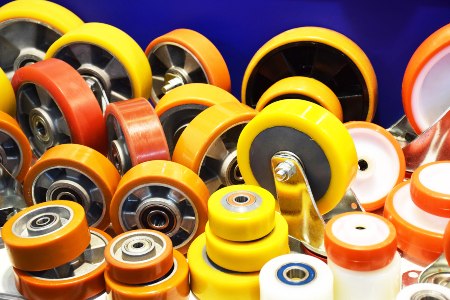
PUR is also widely used as a casting resin. Elastic PUR casting resins are valued for their high elasticity across a wide hardness range, their flexibility across a broad temperature spectrum, their resistance to weathering, oils, greases, and many solvents, as well as their excellent wear resistance and mechanical damping properties. These resins are used for rollers, casters, coatings, shock-absorbing and drive elements, wear parts, seals, and wipers. They also serve as floor coatings in residential and commercial buildings and for renovating flat roofs. Rigid PUR casting resins are used mainly in the electrical industry for potting cables and electronic components, insulators, bushings, and switchgear applications.
PU adhesives offer excellent weather and aging resistance, along with high impact and shear strength. They are suitable for bonding various surfaces over large areas, both indoors and outdoors. PU adhesives can be used with metal, wood, plastics, natural stone, gypsum fiberboards, and drywall panels.
Elastane is a key component in swimwear, stretch jeans, tights, cycling shorts, and shapewear. Rainwear and functional jackets benefit from PU coatings that provide breathability and comfortable wear. PU-coated rubber boots offer better cold insulation than those made from PVC. In shoe soles, PU ensures a non-slip grip and supports ergonomic, joint-friendly walking.
Polyurethane has also made its way into sports equipment. In modern ski boots, the inner liner is made of soft PUR foam, while the outer shell is made of rigid, elastic PUR. This construction makes the boots waterproof, scratch-resistant, and flexible even at –25 °C. Other PUR-based products include helmets, bicycle saddles, snowboards, roller skate wheels, running shoe soles, footballs, and the outer shell of bowling balls.
Polyurethanes are also indispensable in the automotive sector. They are used in dashboards, headliners, door panels, seats, armrests, tailgates, and underhood fiber mats.
PUR tubing is gaining importance as well. These tubes are used as highly flexible chemical hoses, pressure hoses, and industrial hoses, replacing rubber tubing and natural rubber alternatives. They offer excellent wear and tear resistance, elasticity at temperatures down to –40 °C, good ozone and weather resistance, and strong resistance to gasoline. Special-grade PUR hoses that meet the stringent requirements of the U.S. Food and Drug Administration (FDA) and the German Federal Institute for Risk Assessment (BfR) are suitable for use in the pharmaceutical, food, and medical sectors.
Thanks to their customizable properties, polyurethane plastics meet the demands of many applications, offering low density, strength, durability, moisture resistance, and aesthetics—making them indispensable in a wide range of industries.
Image sources:
Cover image | © Ilya – stock.adobe.com
Otto Bayer presenting polyurethane | © Bayer AG, Public domain, via Wikimedia Commons
PUR rigid foam panels as insulation material in the construction industry | © bilanol – stock.adobe.com
Heavy-duty casters with PU coating | © Iris_AN – stock.adobe.com