 Reichelt Chemietechnik Magazine
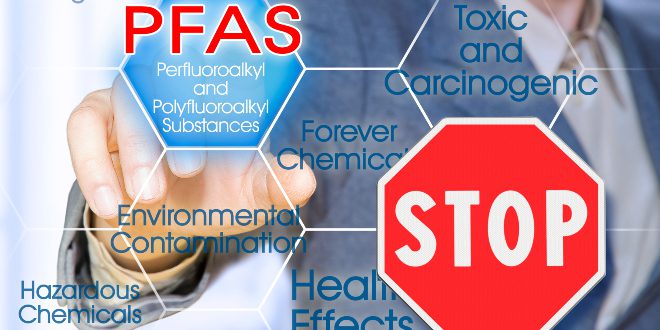
In the past, per- and polyfluoroalkyl substances were grouped under various terms such as per- and polyfluorinated chemicals, perfluorinated organic compounds, or highly fluorinated substances. In polyfluorinated alkyl substances, hydrogen atoms are partially replaced by fluorine atoms; in perfluorinated alkyl substances, they are completely replaced. To ensure consistent communication, the Organisation for Economic Co-operation and Development (OECD) redefined the term per- and polyfluoroalkyl substances (PFAS) in 2011.
Definition: What Are PFAS?
But what exactly are PFAS? What can be understood by per- and polyfluoroalkyl substances?
This definition covers approximately 10,000 per- and polyfluorinated alkyl substances.
Classification of Per- and Polyfluorinated Alkyl Substances
A distinction is made between polymeric and non-polymeric PFAS. Polymeric compounds include fluoropolymers, polymers with fluorinated side chains, and perfluoropolyethers (PFPE). The most commonly used fluoropolymers are polytetrafluoroethylene (PTFE), polyvinylidene fluoride (PVDF), fluorinated ethylene propylene (FEP), and perfluoroalkoxy polymers (PFA). Polymers with fluorinated side chains include fluorinated polyurethanes, polyoxetanes, and polymethyl methacrylates.
The group of non-polymeric PFAS comprises four subgroups:
- Perfluoroalkyl acids (PFAA),
- Perfluoroalkane sulfonyl fluorides (PASF),
- Perfluoroalkyl iodides (PFAI),
- Perfluoroalkyl ether-based derivatives
Perfluoroalkyl acids (PFAA) are further divided into perfluoroalkyl carboxylic acids (PFCA) and perfluoroalkyl sulfonic acids (PFSA).
Properties of These Industrial Chemicals
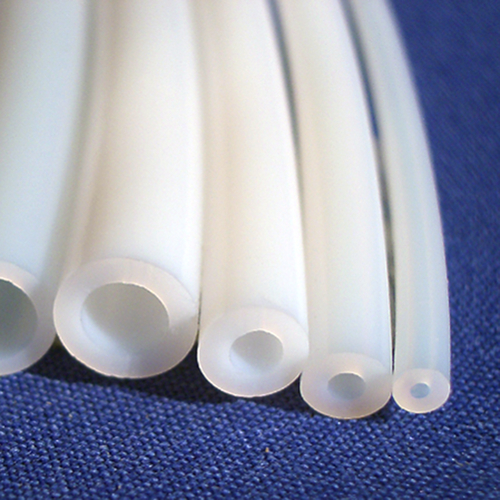
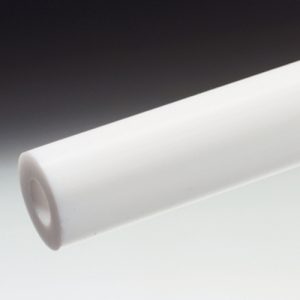
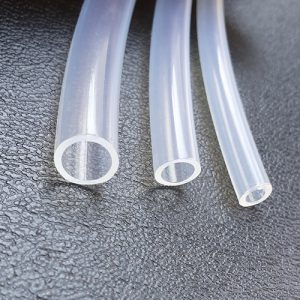
Per- and polyfluorinated alkyl substances are characterized by outstanding resistance to temperature, pressure, and chemicals. They are biocompatible, water-, oil-, and dirt-repellent, and excellent electrical and thermal insulators. In addition, they offer good sterilizability, UV resistance, and low friction properties. They are typically used where other plastics fail. For example, rigid plastic hoses made of PTFE, PFA, or FEP are considered the material of choice for conveying highly aggressive chemicals. Depending on the design, they can be used across a very wide temperature range from -260 to +260 °C.

However, under environmental conditions these compounds do not degrade or only degrade over very long periods, which is why they are often referred to as “forever chemicals.” Some of these chemicals are also suspected of being carcinogenic.
PFAS can enter the human body via the food chain and drinking water and may accumulate in blood and organ tissues. Elimination occurs only very slowly.
Which Products Contain PFAS?
Due to their unique properties, these compounds are indispensable in industrial manufacturing, in the energy and mobility transition, and especially in high-tech industries such as semiconductor manufacturing and medical technology.
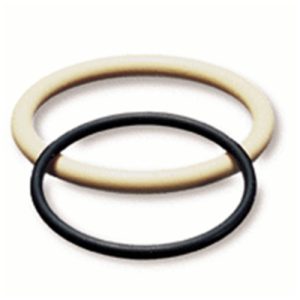
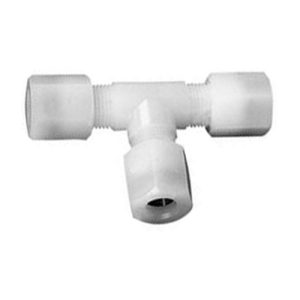
These industrial chemicals are used to manufacture hoses, pipes, seals, pumps, containers and tank linings, hose connectors, taps and valves, and filter membranes. Especially in ultra-pure environments such as cleanrooms, components made of these materials are essential to enable chemically demanding processes, extend component service life, and prevent contamination.
Many medical devices such as implants, catheters, surgical drapes, sutures, surgical instruments such as endoscopes with wire loops for tissue sample removal, medical equipment such as incubators, dialysis machines, heart-lung machines, or ventilators would not exist without these chemicals or would be less efficient and reliable.
In the energy sector, solar cells, towers, and rotor blades of wind turbines are coated and painted with fluoroplastics, making them more weather-resistant and increasing their service life. They are also essential components in energy storage systems such as lithium-ion batteries and polymer electrolyte membrane fuel cells. Fluoropolymer membranes are used for the efficient production of hydrogen. In heat pumps, they are used as refrigerants and in seals, bearings, and electronic components.
For firefighting of Class B fires—fires involving flammable liquids and melting solids—perfluorooctanoic acid (PFOA) and perfluorooctane sulfonic acid (PFOS) are used in aqueous film-forming foams (AFFF). These agents form a film over liquid hydrocarbons such as oils, fuels, or solvents, thereby depriving the flame of oxygen.

In the textile industry, they are used to impregnate textiles and carpets and as membranes in outdoor clothing and hiking shoes. In households, frying pans, baking trays, and waffle irons are equipped with fluorinated non-stick coatings. Paper and cardboard used for food packaging are coated with PFAS to repel water and grease.
Will a PFAS Ban Be Introduced in the EU?
The proposed ban was developed under the EU chemicals regulation REACH (“Registration, Evaluation, Authorisation and Restriction of Chemicals”) by regulatory experts from Germany, the Netherlands, Denmark, Norway, and Sweden, with the aim of drastically reducing PFAS emissions into the environment. Depending on the industry sector, transitional periods ranging from 18 months to thirteen and a half years are being discussed.
On 22 March 2023, a six-month public consultation was launched during which affected companies could raise concerns and submit justified exemption requests. A decision by the European Commission on this proposal is expected in 2025.

As of 1 January 2023, the European Food Safety Authority (EFSA) has further lowered the maximum levels for perfluorooctanoic acid (PFOA), perfluorooctane sulfonic acid (PFOS), perfluorononanoic acid (PFNA), and perfluorohexane sulfonic acid (PFHxS) in food.
Significance of a PFAS Ban in the EU: What Would Be the Consequences for the European Industry?
PFAS are to be banned because of their persistence and durability; however, these very properties are the reason for their widespread use. Substitute materials would need to offer similar characteristics and could therefore present comparable challenges.
In industrial manufacturing, seals and components made of PFAS are used due to their temperature and chemical resistance, tightness, and low friction. In the event of a general ban, these products would no longer be available, as they could neither be produced within Europe nor imported from outside the EU. For some facilities, this could result in production shutdowns.
PFAS are indispensable for many process steps in the production of electronic components such as microprocessors and memory chips. A ban would therefore affect numerous industries. The implementation of the energy transition, electromobility, and the establishment of a European semiconductor industry would be called into question.
In medical technology, PFAS cannot be replaced within a short period. Alternative materials would need to be developed, tested for biocompatibility and biostability, subjected to clinical trials, and approved in accordance with the Medical Device Regulation (MDR). The market introduction of new medical devices could take longer than the transitional period. Implant materials intended to remain in the body for more than 20 years cannot be sufficiently tested within such timeframes. Medical devices produced outside Europe could no longer be imported. European-developed substitutes would also need to meet FDA approval requirements to remain competitive on the U.S. market, resulting in additional costs.
In some sectors, a PFAS ban may be reasonable. In outdoor clothing, water-repellent materials based on paraffin, silicone, dendrimers, polymer coatings, or polyurethane-based membranes are already being used. Iron or enamel pans offer viable alternatives to PTFE-coated cookware and are more scratch-resistant. Reusable tableware can replace coated disposable paper cups. In impregnating agents, fats and waxes can serve as substitutes.
A Blanket Ban on All PFAS Compounds Is Not Appropriate
The proposed ban does not differentiate between the many different poly- and perfluorinated compounds. According to OECD criteria, fluoropolymers are classified as “products of low concern” (PLC). Materials such as polytetrafluoroethylene (PTFE) or perfluoroalkoxy polymers (PFA) are not only chemically resistant but also physiologically inert, with approvals according to FDA or USP Class VI. Products made from these materials, such as PFA hoses or plastic hose connectors, are indispensable in medical technology, chemical engineering, the food industry, semiconductor manufacturing, and the pharmaceutical industry. Alternatives with equivalent properties are not available.
Protecting the environment and human health requires careful handling of hazardous chemicals. However, a well-founded assessment of risks and benefits, as well as a differentiated classification and regulatory approach, should not be disregarded.
Sources:
[1]: https://pubs.acs.org/doi/10.1021/acs.est.1c06896
[2]: https://www.bfr.bund.de/cm/343/per-und-polyfluorierte-alkylsubstanzen-pfas-veroeffentlichung-des-vorschlags-zur-beschraenkung-nach-der-reach-verordnung-bei-der-europaeischen-chemikalienbehoerde.pdf
Image Sources:
Header image | © Francesco Scatena – stock.adobe.com
Use of PFOS foam extinguishing agent for firefighting | © Peter Togel – stock.adobe.com
Pan with PTFE coating | © kardaska – stock.adobe.com