 Reichelt Chemietechnik Magazine
Stainless steel is a standard material in chemical processing. With hydrochloric acid and many chloride-containing media, however, it reaches its limits. Manufacturers therefore often line pipes, valves and fittings for such media with fluoropolymers such as PTFE or PFA. This raises an obvious question: why not make the entire component from plastic? This comparison shows where plastic is the better choice and where stainless steel keeps its strengths. The article covers chemical resistance, temperature limits, manufacturing, sterilisability and food contact approvals.
Not All Plastics Are Alike
Today, plastics fall into three main groups: thermoplastics, thermosets and elastomers. Thermoplastics such as PE and PP consist of long linear or branched molecular chains. Good formability is one of their strengths, but standard thermoplastics have limited heat resistance. Thermosets such as crosslinked PU behave differently: they do not melt when heated, but decompose. They are also much harder and more brittle than thermoplastics. Elastomers include all types of crosslinked rubber, such as FKM. Even low tensile or compressive loads deform them elastically.
Plastic and Stainless Steel Compared
Temperature Resistance and Manufacturing Methods
Compared with metals, plastics have a number of unusual properties. Unlike standard plastics, high-performance plastics retain their strength and stiffness even at elevated temperatures. Shaping stainless steel by casting or machining is costly, and casting moulds restrict the possible geometries. Injection moulding, by contrast, turns thermoplastics into complex parts with comparatively little effort. Fitters can also assemble and dismantle plastic components with ease.
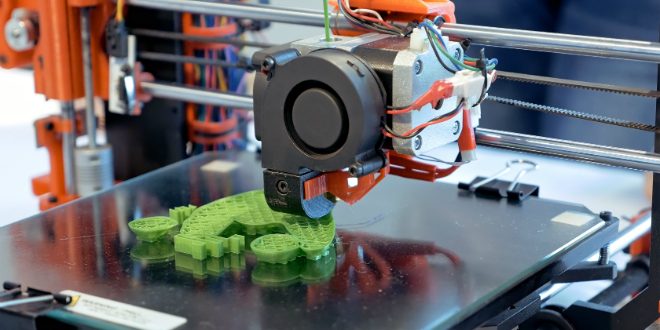
Today, 3D printing also makes plastic prototypes and mould inserts simpler and more flexible to produce. Once the drawing is loaded, the printer software calculates the exact print time. Prototypes can therefore print overnight and go straight into use the next morning. High-resolution printers also work with great precision, building layers just 0.016 mm thick. For very small batches in particular, manufacturers can now print inserts for injection moulds.
Multi-component injection moulding goes on to combine several plastics with different properties in a targeted way. For example, the process can embed an elastomer in a rigid plastic part to form an integrated O-ring. Manufacturers can also mould a soft grip onto knurled knobs. This combines the hardness of the plastic with the flexibility of rubber. Stainless steel, by comparison, usually requires mechanical joining methods such as crimping.
What makes stainless steel products harder to manufacture becomes an advantage in use. Stainless steel is far more heat-resistant than plastics and remains load-bearing at temperatures no plastic can withstand. Across the entire value chain, however, weight also counts. Stainless steel is much heavier than plastic, which drives up transport costs, among other things. For plastic products, these costs remain comparatively low.
Chemical Resistance and Conductivity
High-performance plastics stand out above all for their resistance to many aggressive chemicals. As non-metals, plastics are not subject to electrochemical corrosion. Many of them therefore resist inorganic media such as mineral acids, alkalis and aqueous salt solutions.
Even with highly aggressive chemicals, the right plastic delivers long-term, corrosion-free service. Plastic ball valves, for example, have proven themselves in practice with service lives of 35 years.
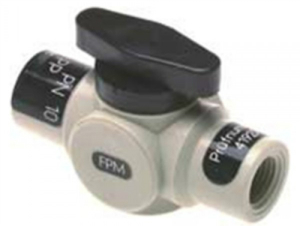
Unlike metals, however, some plastics are sensitive to organic solvents such as alcohols, acetone or petrol. Even so, material developers have created plastics that resist these media as well.
Potentially explosive atmospheres call for electrically conductive plastics wherever aggressive media are involved. Typical examples are conductive grades of PP, PVDF or PTFE. Manufacturers fill these materials with electrically conductive particles to prevent static charge build-up. For outdoor applications, fluoropolymers such as PTFE are well suited because they resist UV radiation.
Plastics Perform Well in Sterilisation and Cleaning
Many plastics can be sterilised by several methods and withstand frequent cleaning. PVDF and PFA tolerate high heat and pressure. This makes them suitable for steam sterilisation, and both can be autoclaved at 134 °C (273 °F). PVDF can also be sterilised with gamma radiation at typical doses of 25 to 50 kGy. Its mechanical properties remain intact. Within its service temperature range up to 150 °C (302 °F), PVDF is physiologically safe. Its surface behaves much like glass and offers no breeding ground for microorganisms. In this respect, too, plastics can match stainless steel.

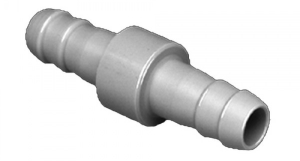
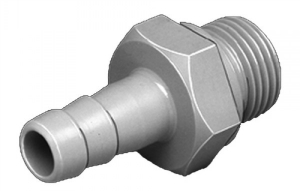
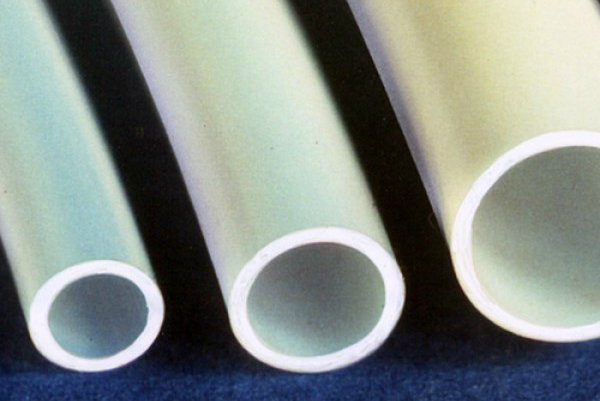
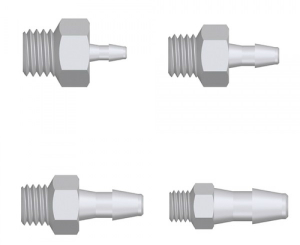
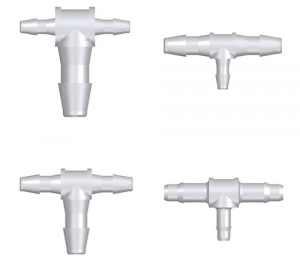
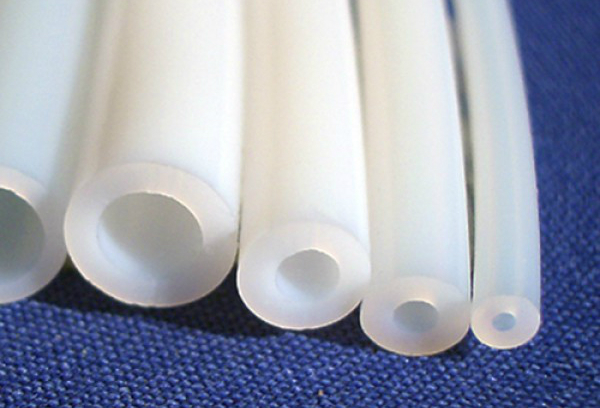
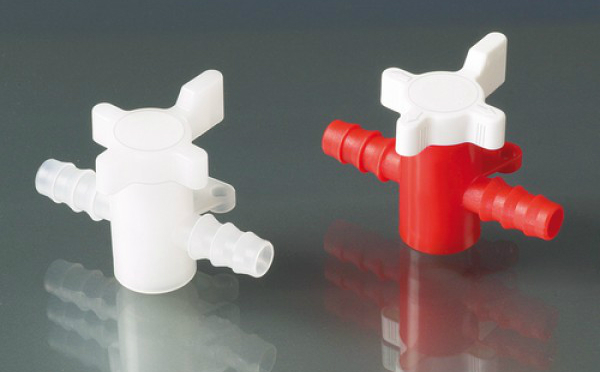
With their material properties, high-performance plastics make a major contribution to safety in chemical processing. Tube and hose connectors, plastic tubing and flow meters serve in a wide range of applications. Cleaning processes such as cleaning in place (CIP) and sterilisation in place (SIP) are one example. Here, these components safely supply and remove cleaning chemicals and concentrates. In disinfection systems, operators fit check valves together with tube and hose connectors. This stops media from flowing back out of the system.
FDA Compliance and Food Contact Suitability of Plastics
In drinking water treatment, the products withstand ozone, chlorine, chlorine dioxide and electrochemically activated (ECA) water. Most of them also resist UV radiation. The products must meet the standards and approvals of the respective industry. Components in contact with drinking water are subject to specific EU and national requirements. In Germany, these include the assessment criteria of the German Environment Agency (UBA). In food applications, compliance with FDA requirements and Regulation (EC) No 1935/2004 is essential.
The US Food and Drug Administration (FDA) is the US federal agency for food safety and drug approval. It oversees the safety and efficacy of human and veterinary drugs, biological products and medical devices. It also regulates food and radiation-emitting products. Its remit covers products made in the USA and imported products alike.
Regulation (EC) No 1935/2004 sets harmonised rules for materials and articles in direct or indirect contact with food, including packaging. It protects human health and consumer interests and ensures that these products can be sold throughout the EU. Many plastic grades also meet additional standards and approvals.
Depending on the manufacturer, PVDF and PFA meet biocompatibility requirements for medical and pharmaceutical products (USP Class VI). Many materials, such as ECTFE, bio-based PA or PVDF, are ADI-free and contain no animal-derived ingredients. In production processes, this prevents the material from introducing animal-derived contaminants such as BSE prions.
In many applications, plastic can compete with stainless steel and has long outgrown its role as a mere substitute. Its many positive properties make it a strong choice, above all in chemical processing.