 Reichelt Chemietechnik Magazine
Releasing What Was Once Firmly Bonded
“They stick together like pitch and sulphur” – this well-known saying describes the behaviour of many industrial, plastic and polymer adhesives: the aim is to create the strongest possible permanent bond. But what happens when an adhesive bond needs to be released again? This is where reversible adhesives come into play. They enable detachable adhesive bonds and open up new possibilities in joining and fastening technology. The following article shows how snails, geckos and mussels demonstrate this principle in nature – and how even a metal can function as an adhesive.
The Influence of Temperature
A specific field of application for adhesives based on polymers is dentistry and dental technology. In this area, the reversibility of adhesive bonds in crowns, clasps and prostheses is often highly desirable. For the gentle release of adhesive bonds in patients’ oral cavities, Germany’s Karlsruhe Institute of Technology (KIT) developed a special adhesive and, almost incidentally, discovered a new thermolabile polymer adhesive for many additional applications.
The major advantage of this adhesive is the precise, temperature-dependent release of the adhesive effect. The underlying principle is known as “debonding on demand”. When heated, the complex polymer structures that are stable at room temperature break apart, allowing the adhesive bond to detach again. This is caused by predetermined breaking points in the molecule, whose number and required breaking temperature can be adapted to individual applications – even for temperatures well below 100 °C (212 °F). In this sense, reversible adhesives can be designed for defined thermal release profiles.
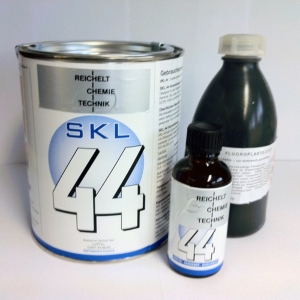
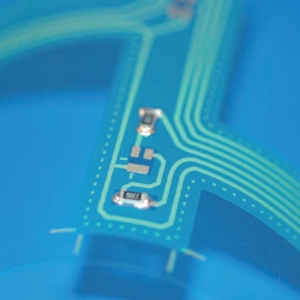
If such reversible plastics were also used in the electronics industry in the future, the recycling of discarded electronic devices would become far more effective. Repairs to smartphones and tablets would also become more feasible with such reversible plastics, and some devices would not become scrap in the first place – batteries being a prime example – because components that are currently still firmly embedded in non-detachable potting compounds would become accessible and replaceable. Reversible adhesives therefore offer a potential route towards easier disassembly and improved repairability.
A Metal as an Adhesive?
Compared with other joining and fastening technologies, adhesive bonding can be implemented with relatively little technical effort. It is therefore increasingly replacing conventional industrial joining methods such as riveting, screwing or welding, which also add weight. However, releasing adhesive bonds is usually not possible, as reversible adhesives are rarely used.

Gallium (Ga), a metal discovered in 1875 by the French chemist Paul Émile Lecoq de Boisbaudran (1838-1912), is non-toxic and chemically similar to aluminium. With a density of 5.9 g/cm3, however, it is more than twice as heavy as aluminium. Gallium provides a simple way to solve the problem of separating joints and fastenings again with minimal effort.
Its low melting point of around 30 °C (86 °F) makes this possible, and handling is straightforward. In its liquid state, at temperatures above 30 °C (86 °F), the metal is applied in a thin layer to the preheated surfaces to be bonded. These surfaces are then joined together, as in conventional adhesive bonding. Once cooled below the melting point, a firm bond is formed between the two material parts. The “bonding” process is also possible in humid conditions.
If the temperature is raised above 30 °C (86 °F), the metal liquefies again and releases the bonded parts without leaving residues. Gallium can also be used successfully to secure screw connections by “lubricating” the heated thread with liquefied metal, which solidifies after cooling and prevents the screw connection from loosening.
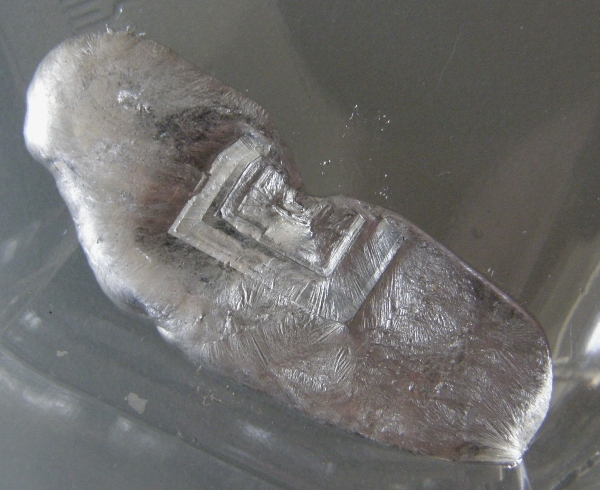
Although gallium is a relatively rare and therefore expensive metal, and is particularly important in semiconductor production, it can be used successfully wherever especially gentle adhesion is required and the operating temperature of the bonded parts always remains below 30 °C (86 °F). One significant advantage of the metal is that the “adhesive” is reversible and can be recovered and used repeatedly. This makes gallium an unusual but technically relevant example within the broader field of reversible adhesives.
Of Snails, Mussels and Geckos
There are remarkable images of geckos remaining on smooth glass walls and even hanging upside down from ceilings for hours. Underwater, mussels manage to adhere to rock faces and even ship hulls for years. Scientists have succeeded in uncovering the mechanisms behind these forms of adhesion and combining the two different adhesion principles in a single adhesive. Because of its animal models, it is known as GECKEL, GECKO or MUSSEL adhesive.

Rod-shaped structures in the nanometre range on the feet of geckos enable dry adhesion based on van der Waals forces. If these structures are formed from polymers based on mussel adhesive proteins, adhesion can be achieved on both dry and moist substrates. Such adhesives based on nanostructures are already used in biomedicine for wound closure and may in future also be used for bonding bone fractures. For medical and technical applications alike, reversible adhesives based on biological principles are attracting increasing attention.
However, adhesives based on nanostructures have the decisive disadvantage that their adhesion is not particularly strong. The polymer gel pHEMA, chemically poly(2-hydroxyethyl methacrylate) and based on snail slime, can provide a remedy here. In its moist state, the gel spreads across surfaces particularly well, much like natural snail slime. After drying, it assumes a glass-like structure that holds components together extremely effectively. If the bonding area is subsequently moistened again, the adhesive bond can be released and the components separated from one another. This effect of the detachable adhesive works on both smooth and rough surfaces – although such a reversible glue would be ineffective under permanently moist conditions. This mechanism also shows how reversible adhesives can be controlled by moisture rather than temperature.
Nevertheless, this “high-tech adhesive” can bond both very heavy materials and fine mesh structures in filters. Its cross-linked polymer structures and high molecular weight provide particularly strong adhesive properties and firm adhesive bonds. The future will show to what extent pHEMA can actually find its way into joining and fastening technology as a reversible adhesive.
Is There One “Super Adhesive”?
Many components in industry are already bonded today instead of being joined by riveting, screws or welding, because bonding technologies are much easier and therefore more cost-effective to implement. In addition, bonding barely increases weight. In some cases, adhesives also perform additional functions. They can reduce the transmission of mechanical vibrations and act as electrical and thermal insulation. The concept of recycling also plays an important role in considerations regarding their use in adhesive technology. In this context, reversible adhesives are becoming increasingly relevant for technical design, maintenance and material recovery.

Whether the “one” super adhesive will ever be found – one that works on all surfaces, provides strong adhesion and is also reversible – remains an open question. Reversible adhesives already demonstrate that detachable bonding is technically possible in very different ways, but no universal solution has yet emerged. To answer this question, it is not enough to remain stuck in the past; it is necessary to keep looking more closely at nature – because nature is the true adhesion expert, and there is certainly still much to learn from it.
Image Sources:
Liquid gallium | © Tmv23 & Dblay – commons.wikimedia.org
Blue mussels | © Darkone – de.wikipedia.org