 Reichelt Chemietechnik Magazine
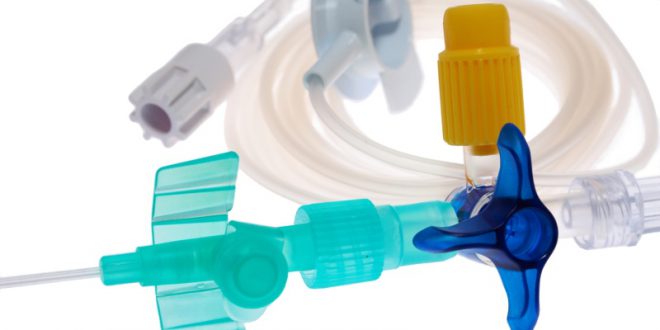
Anyone who has spent a longer period of time being treated in a hospital has most likely come into contact with the Luer/Lock system – for example during an infusion or when medication is administered by syringe. The system plays a major role particularly in medical technology because it is easy to use and offers a range of advantages. For these reasons, it is used worldwide.
However, it is also suitable for other applications, e.g. for connecting or sealing micro hoses in the laboratory.
What Are Luer/Lock Connectors?
The Luer system was developed by the German instrument maker Hermann Wülfing Luer (1836–1910) and is basically available in two versions: as a Luer/Lock system with an additional anti-rotational lock, or as a Luer/Slip system without it. Both modifications are registered trademarks of Becton Dickinson and are therefore protected.
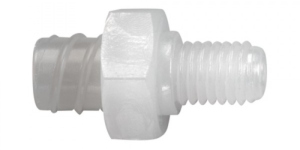
The Luer system is comparable to the ground joint system used in chemistry, consisting of a stopper and a matching socket. Here, too, there are two corresponding parts that can be combined to form a closed connection. In order to ensure a tight seal, one component has a conical design known as the Luer taper. To distinguish between the two connections, they are classified as male and female, or m and f. The inner cone is the female part, and the outer cone is the male part.
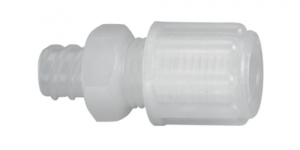
If the male taper additionally has a screw thread, this is referred to as a Luer/Lock closure, because the seal can be secured by turning the connection. If there is no thread, it is the Luer/Slip version. This is also referred to as Luer push-fit or Luer slip-on.
In contrast to the ground joint system in chemistry, the Luer system is available in only one size, which is also standardized (DIN EN 80369-7).
This offers the advantage that all components are compatible with one another, and thanks to its widespread use, this applies across national borders as well. This means the system can be used easily and safely almost anywhere.
From the Cannula in the Hospital to the Micro Hose in the Laboratory
This system is especially important for medical applications. Because numerous different components can be connected via micro hoses, it offers a high degree of variation and therefore a wide range of possible uses. For example, catheters and infusions as well as cannulas and syringes are used with this system. By using three-way stopcocks, even more complex setups can be realized in order to meet specific requirements. Since the system is standardized, all parts can be combined freely, even if they come from different countries. This plays a major role in international relief missions where medical care is needed. Here, helpers can combine parts from different supplies and provide first aid quickly.

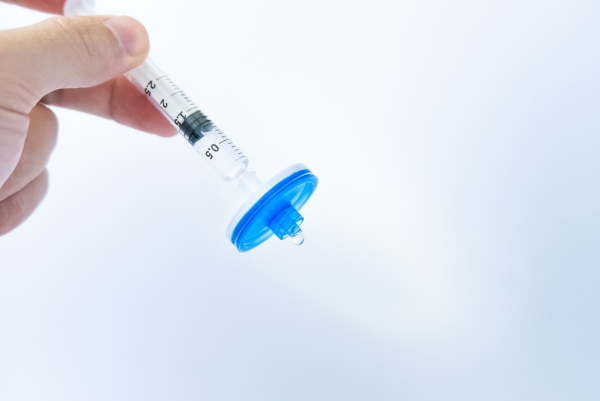
In addition to medical use, the Luer/Lock system can of course also be used in other fields. For laboratory setups that are built and operated on a very small scale, micro hoses and cannulas provide an effective way to handle small volumes efficiently. These connectors can also be used for microfiltration and gas analysis, as hoses and cannulas enable the safe transport of sample material. Luer/Lock connectors offer a major advantage for such applications because the locking feature keeps the connection secure even during transport or under mechanical stress.
A Simple Closure – Yet There Are Still a Few Things to Consider
The Luer system offers many advantages, but there are also a few points that must be considered to ensure safe use.
As mentioned, one of the key advantages is standardization and the fact that there is only one size and all parts are mutually compatible. Because this system has also become established worldwide, it can be used universally and is easy to handle – simply push the parts together and you are done. The Luer/Lock system also provides the added benefit that the connection can be secured with a half turn, ensuring a reliable hold even under load. No tools are required for assembly; all parts can be connected by hand and secured if needed.
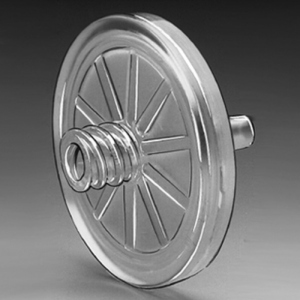
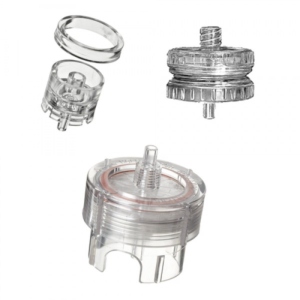
Of course, as with any application, certain aspects must be taken into account in order to avoid operating errors that can have unpredictable consequences, especially in medical environments. Since all components are compatible with one another, mix-ups can occur easily. For example, there are different connectors intended for use with respiratory pathways, veins and arteries, or as feeding tubes. A moment of inattention can quickly result in medication being administered incorrectly because the wrong connection was used.
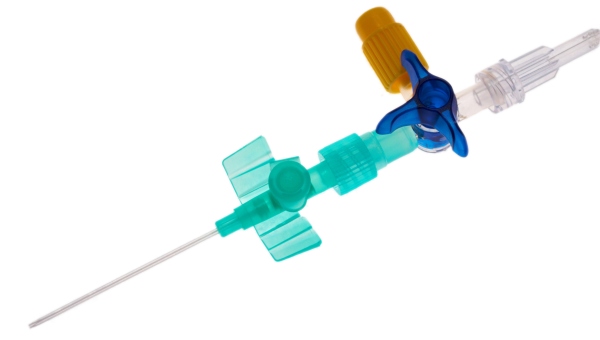
With Luer/Lock closures in particular, it is important to ensure that the thread is in perfect condition. Wear or manufacturing defects can cause the closure to fail to seal securely and open unexpectedly. As one can easily imagine, this can have serious consequences during an ongoing infusion. Since these connections are still tightened by hand, they can of course also be loosened just as easily by anyone. Regular inspection is therefore essential.
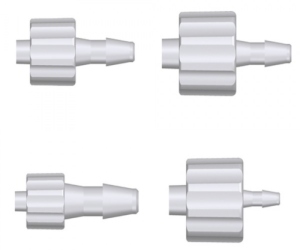
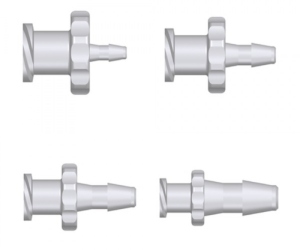
The issue of leaking or defective closures must also be considered in other applications. In chemical analysis, contaminants can enter the micro hoses and the system, potentially distorting results. When transporting chemicals, leakages can occur and pose a risk to people and the environment.
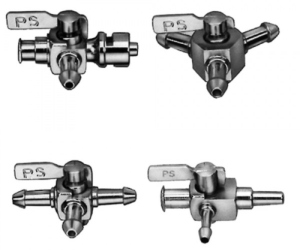
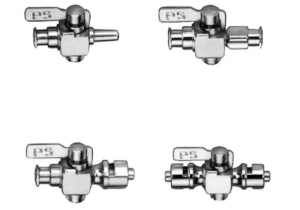
If you keep these points in mind, the Luer system provides a simple and versatile solution for a wide variety of applications.
The Ideal Connector for Every Application
The Luer system stands out for its versatility and ease of use. Whether as a Luer/Slip with a simple push-fit connection, or as a Luer/Lock closure with additional locking – medical, technical, or chemical applications can be implemented easily and safely, whether it is setting up an infusion or connecting micro hoses.
With careful handling, potential sources of risk can be minimized easily, enabling worry-free use.