 Reichelt Chemietechnik Magazine
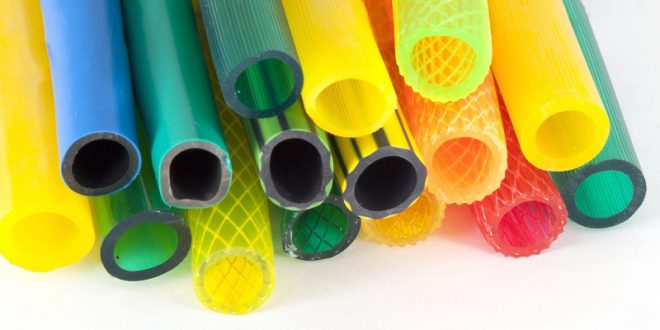
Many commercially available plastics are, by nature, hard and brittle at room temperature. Only the addition of special additives, known as plasticizers, enables their processing and use for everyday consumer products. They are most widely used in products for the construction industry such as floor coverings, pipes, sealing compounds, wallpapers, cable sheathing, adhesives, paints and coatings. They are also found in packaging, toys, sports and leisure articles, as well as in the medical field in hoses, catheters, gloves, contact lenses, blood bags, urine bags, infusion bags, dialysis bags, gastric tubes and as excipients in pharmaceuticals to make capsules more flexible. The typical new car smell can often be attributed to the emission of plasticizers from interior fittings, and they are even used in textile finishing.
In most cases, these are materials made of polyvinyl chloride (PVC), but they are also often present in polystyrene (PS), rubber, nitrile rubber (NBR), styrene butadiene rubber (SBR), polychloroprene (CR), polyvinyl alcohol (PVA) or thermoplastic polyurethane (TPU).
Consumer protection organisations particularly warn against substances that are hazardous to health in baby products, children’s toys and drinking bottles. According to a German environmental health study on children (GerES 2003–2006), increased concentrations of various plasticizer metabolites were detected in the urine of minors.
Young children are particularly affected, as they are exposed to higher concentrations of pollutants when playing on the floor and may put everyday objects containing plasticizers into their mouths. In addition, they have a faster metabolism than adults and inhale more air in relation to their body weight.
Which plasticizers are used?
To achieve desired material properties, many criteria must be considered, which is why industry relies on a wide variety of different plasticizers. Since their addition, unlike many other additives, can account for up to 50 percent by weight of the formulation, plasticizers have a significant influence on the heat distortion resistance, cold brittleness temperature, elongation and tensile strength of plastics. Chemical resistance, hydrolysis resistance and UV resistance, as well as dielectric strength and electrical breakdown resistance, can also be drastically affected.
According to the industry association ECPI (European Council for Plasticisers and Intermediates), annual production in Western Europe amounts to around one million tonnes, 90 percent of which are used as plasticizers in materials made of flexible PVC. In addition to their broad compatibility during incorporation into plastics and their very good resistance to water and oils, they exhibit many other positive properties.
Another prominent candidate is bisphenol A (BPA), which has been used since the 1960s in the production of polycarbonates, epoxies, polyesters and other synthetic resins or as a plasticizer. Due to its favourable chemical and physical properties, it is widely used in plastic articles of all kinds and even in coatings for the inner surfaces of beverage and food cans.
Plasticizers that are less problematic from a health perspective, but significantly more expensive, include adipic acid esters, which are known for their high UV resistance, or trimellitic acid esters, which are preferred for use in vehicle interiors due to their low volatility.
For food packaging, medical devices, cosmetics and children’s toys, biobased substances such as citrates, epoxidised soybean oil (ESBO) and fatty acid esters are becoming increasingly popular. Also worth mentioning are chlorinated paraffins, phosphoric acid esters, hydroxycarboxylic acid esters and polyesters.
How do plasticizers enter the human body and what are the health effects?
Plasticizers are predominantly low-molecular-weight substances that insert themselves between the individual polymer chains of the plastic and loosen their three-dimensional structure, making them soft. This leads to a reduction in the glass transition temperature and thus gives plastics greater flexibility. However, precisely because of their small size and the fact that they are not chemically bound to the polymer matrix, plasticizers migrate from the plastic into the environment.
Interestingly, substance release occurs almost exclusively during use and not during the manufacture or processing of the materials. Ultimately, plasticizers enter the human body through skin contact, ingestion via contaminated food or inhalation of particle-laden air. Even though plasticizers are hardly used anymore in food packaging, undesirable substance transfer can still occur during processing, filling and transport due to contact with containers, machine components, cooking utensils or hoses.

Interaction with the human organism can lead to long-term disruption of the natural immune and hormonal systems, potentially resulting in serious diseases such as impaired sexual development, breast cancer, allergies, asthma, diabetes or infertility. Impairment of child development in the womb is also possible.
Regulatory requirements for plasticizers
EU chemicals regulation (EC) No. 1907/2006 (REACH) has governed the registration, evaluation, authorisation and restriction of chemical substances within the EU member states since 2007. According to this regulation, the placing of chemical substances on the market is only permitted after prior registration. Substances that are classified as particularly hazardous during subsequent evaluation are placed on a candidate list, also known as the S.I.N. list (substitute it now).
With the help of the SINimilarity Tool, it is possible to quickly and easily check online whether a substance is included in this list or is structurally very similar to an already listed chemical compound. If a substance of very high concern or SVHC is subsequently included in the list of substances subject to authorisation under Annex XIV of the REACH regulation, it becomes subject to mandatory authorisation.

As a result, manufacture, placing on the market and use are prohibited and must be applied for and, if applicable, approved through a separate authorisation procedure. However, an SVHC may also be subject to a restriction procedure under Annex XVII, which only provides for a ban on certain applications.
These candidates include di(2-ethylhexyl) phthalate (DEHP), dibutyl phthalate (DBP) and benzylbutyl phthalate (BBP). Annex XIV Article 67 in conjunction with Annex XVII entry 51 prohibits their use throughout Europe in baby products and toys at concentrations of 0.1 percent by weight or more. Alternatives include the phthalates listed under Annex XVII entry 52, which are considered less critical for human health, namely diisononyl phthalate (DINP), diisodecyl phthalate (DIDP), diisobutyl phthalate (DIBP) and di-n-octyl phthalate (DNOP). Dermal uptake in humans plays a less significant role for these longer-chain derivatives. Therefore, their use is only prohibited in toys and baby products where there is a risk that children may put them into their mouths.
The amendment regulations (EU) No. 2020/1149 and (EU) No. 2018/2005, which have now entered into force, extend this ban to use in other products with skin contact and also include DIBP. According to the RoHS directive RL No. 2011/65/EU, the phthalates DEHP, BBP, DBP and DIBP are additionally no longer permitted in electronic devices at concentrations of 0.1 percent by weight or more.

In view of its reproductive toxic and hormonal effects on humans and environmental organisms, the European Chemicals Agency (ECHA) has also listed bisphenol A as a substance of very high concern on its SVHC candidate list since 2017 in accordance with Article 59 paragraph 10. It is also suspected of promoting the growth of certain tumours and having damaging effects on the liver, kidneys and mammary glands.
How can consumers protect themselves and what are the alternatives?
In many cases, consumers find it difficult to determine whether a product or plastic contains substances hazardous to health, as there is often no labelling requirement on the part of the manufacturer. However, if an article contains at least one SVHC at a concentration of 0.1 percent by weight or more, there is an obligation to provide information to private consumers upon request under Article 33 of the REACH regulation. Support is provided by the German Environment Agency on its website or via the Scan4Chem smartphone app. In addition to the European Commission’s announcement that the use of SVHCs will be monitored and restricted even more closely, since January 2021 articles containing more than 0.1 percent by weight of an SVHC must also be registered in the SCIP database of the European Chemicals Agency (ECHA).
Plasticizers play virtually no role, for example, in products made of polyethylene (PE), polypropylene (PP) or polyethylene terephthalate (PET). Instead of plastic floor coverings, wooden floors or tiles could be used. Furthermore, unknown materials should not be used in contact with food. In this case, it is worth taking a look at EU regulations (EC) No. 1935/2004 and (EU) 10/2011 of the European Food Safety Authority (EFSA).
Another option is the use of copolymers to achieve the desired elasticity. Since no plasticizers can migrate here, flexibility would also be retained over long periods of time. However, synthesis is significantly more expensive than simply adding an additive. Although the biobased raw materials mentioned above are very appealing, financial aspects are often a reason why they are only used to a limited extent as alternatives.
The still widely used but controversial DEHP is now often replaced by diisononyl cyclohexane-1,2-dicarboxylate (DINCH). However, this is not entirely without risk, as for DINCH, as well as for many other alternative substances, there is usually only limited toxicological data available for risk assessment.
Image sources:
Feature image | © 79mtk – stock.adobe.com
Toy train | © Andrea Arnold – stock.adobe.com
Brittle plastic cable sheathing | © Dale Mahalko, CC BY-SA 3.0, https://commons.wikimedia.org/w/index.php?curid=15651762