Consumer safety sits at the heart of many certifications and approvals. For product safety – and fire safety in particular – Underwriters Laboratories Inc. (UL) has led the field since …
Read more »Dr. Karl-Heinz Heise
The Maximum Flow Coefficient of 3-Way Valves Explained
Valves are part of our everyday life – in water taps, bicycle valves, or as 3-way mixing valves in heating systems. The latter regulate the flow rates of liquids or …
Read more »Silicone: The Versatile, All-Purpose Plastic
Among plastics, silicones are exceptional performers, combining chemical resistance to a wide range of substances with high temperature stability and flexibility – even at very low temperatures down to -100 …
Read more »Biocompatibility
Prostheses, implants and suture materials all have one requirement in common: they should cause as little adverse effect as possible on the surrounding tissue and on the human body as …
Read more »Laboratory Pipettes and Pipetting Aids: Modern Liquid Handling in the Lab
Anyone who has worked in a lab knows that pipettes are indispensable for handling liquids. Depending on the design, they either transfer liquids simply or dispense them with precision. Laboratory …
Read more »What Are Viscosity and Viscoelasticity?
Honey, water, ketchup and a starch solution represent four liquids with four very different flow behaviours. Honey flows slowly and thickly, but it can be made thinner by gentle heating. …
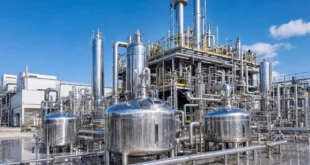
Read more »What Is a Chemical Plant? Structure & Function
Chemical products have become indispensable to everyday life. Plastic household items, medicines, detergents and specialised chemicals inside high-tech goods all make our lives easier, more comfortable and more liveable. Both …
Read more »Plastics and Their Coefficient of Friction
In plant and mechanical engineering, in drive technology, or in precision mechanics, information on the friction behavior of the materials used is essential, with the coefficient of friction being a …
Read more »USP Class VI approval – What Does it Mean?
Plastics used in medical technology and pharmaceuticals are classified into six biocompatibility classes in the United States Pharmacopeia (USP), the US pharmacopoeia. To assign elastomers and other polymeric materials to …
Read more »Sintering – How It Works and Where It Is Used
Sintering is a manufacturing process that has been known and widely used for a very long time. The production of ceramics – such as firing kaolin or shaping clay into …
Read more »
Reichelt Chemietechnik Magazine