 Reichelt Chemietechnik Magazine
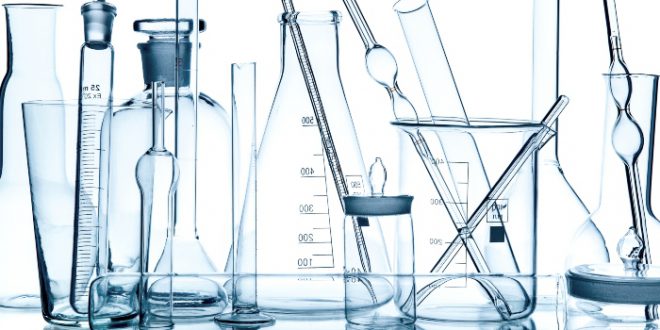
When hearing the term glass, most people first think of drinking glasses or window panes. But what kind of material is it actually? Glass is an amorphous solid that is thermodynamically described as a frozen, supercooled liquid. What does amorphous mean? In chemistry and physics, amorphous materials are those in which atoms are arranged regularly only in the short range, a structure referred to as short-range order. As in liquids, there is no regular atomic arrangement beyond this short range, known as long-range order. Long-range order is characteristic of crystal lattices. Due to the absence of a crystalline structure, the material appears transparent. However, through doping—the addition of further materials—colors can be produced and both chemical and physical properties can be altered.
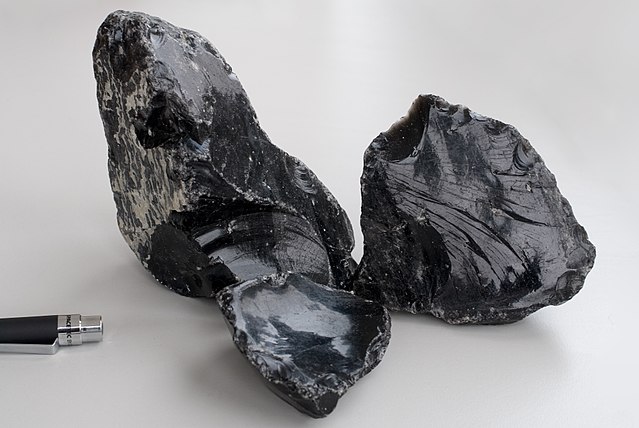
As early as prehistoric times, obsidian, a natural volcanic glass, was used as a blade, scraper, or wedge due to its high hardness and sharp edges. The first objects made of glass were glass beads. Around 1450 BC, the first glass vessels were produced in Egypt and Mesopotamia. In Europe, the oldest windows date back to around 1000 AD.
Structure And Properties
The main component of most types of glass is silicon dioxide (SiO2). It is produced by melting its components, followed by rapid cooling. During solidification of the melt, crystallization nuclei are formed; however, the rapid cooling prevents the crystallization process from proceeding. As a result, no crystal lattice is formed, but rather a network structure. Bond angles and bond lengths are irregular, and the SiO2 tetrahedra are distorted. Glass exhibits short-range order in the form of tetrahedra but lacks crystalline long-range order. The transition from melt to solid is referred to as the transformation range, which for many types of glass lies at approximately +600 °C.
Light transmission in the visible wavelength range from 380 nm to 780 nm is particularly important for many applications. By adding further materials, this property can be specifically modified. For example, the addition of cobalt oxide produces a blue coloration. Gold ruby glass, produced by adding gold purple—a pigment consisting of finely dispersed gold—is also well known.
In chemistry, the excellent chemical resistance to acids, dilute alkalis, and organic compounds is of major importance. Many types of glass are attacked only by hydrofluoric acid or concentrated alkalis.
The material has a low coefficient of thermal expansion, especially compared to metals. For example, aluminum with 24 * 10-6 K-1 has a coefficient of thermal expansion approximately eight times higher than borosilicate glass at approx. 3 * 10-6 K-1. Additional properties of glass include low thermal and electrical conductivity.
Types of glass can be classified according to their natural or synthetic origin, their composition, their application, or the production process.
Classification Of Glass Types By Composition
The most common types are inorganic, oxidic glasses. The main component of these glasses is silicon dioxide. If the glass consists of pure SiO2, referred to as fused quartz or silica glass, it is known as a single-component glass.
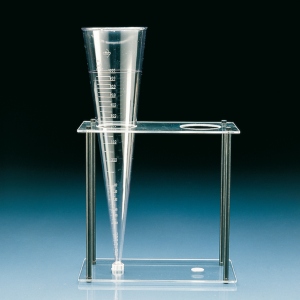
By adding further oxides, two- or three-component glasses are obtained. The oxide with the highest proportion by weight after SiO2 determines the classification. Examples of two-component glasses include alkali silicate glasses, borosilicate glasses, lead silicate glasses, and aluminosilicate glasses. Soda-lime glass, which belongs to the group of alkali-alkaline earth silicate glasses, is a representative of three-component glasses.
The properties of inorganic, oxidic glasses can be influenced by adding further oxides: aluminum oxide increases fracture strength, boron trioxide improves chemical and thermal properties, barium oxide or lead oxide increase the refractive index, and cerium oxide is added when infrared radiation is to be absorbed.
Representatives of organic glasses include amber, acrylic glass, and polycarbonate. Due to their low density, they are used as base materials for optical lenses. By comparison, silicate glasses have a density of 2.5 g/cm³, approximately twice as high as that of polycarbonate at 1.2 g/cm³.
Inorganic, non-oxidic glasses contain halides or chalcogenides as anions and are therefore referred to as halide or chalcogenide glasses. Although these types of glass possess a crystal lattice and are not amorphous, they are nevertheless assigned to the group of glasses.
Classification Of Glass Types By Application
A suitable type of glass is available for almost every application. When selecting the appropriate glass type, criteria such as chemical and thermal resistance, optical transmission range, coefficient of thermal expansion, working temperature, mechanical fracture strength, and not least cost must be considered. According to their application, a distinction is made between technical glass, industrial glass, and optical glass.
Technical Glasses
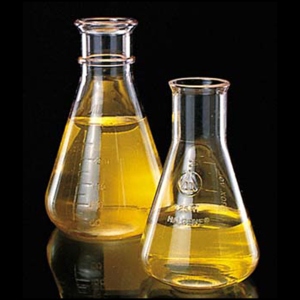
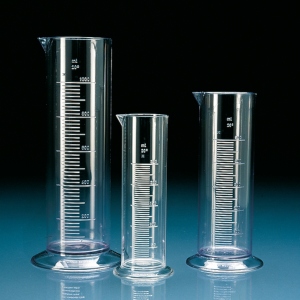
The group of technical glasses includes apparatus or laboratory glasses. In 1881, Otto Schott (1851–1935) developed his “borate glass” in Jena (Germany) for optical purposes. There was also a demand in chemistry for a new type of glass. The soda-lime and lead glasses previously used were attacked by acids and alkalis and did not offer sufficient temperature resistance.
Due to its high resistance to acids, alkalis, salt solutions, and organic compounds, as well as its high resistance to thermal shock, this type is ideally suited for use in chemical laboratories. In addition to silicon dioxide, borosilicate glasses contain 7% to 13% boron trioxide. Well-known trade names for laboratory glassware include Jenaer Glas®, Duran®, and Pyrex®.
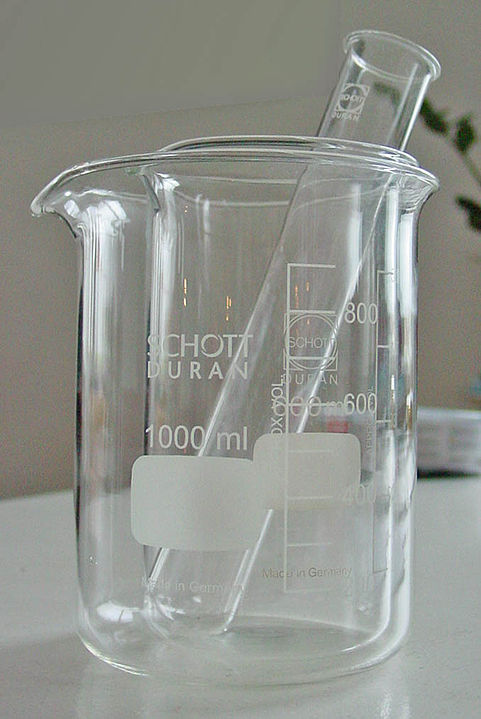
In households, it is found in baking and casserole dishes. Furthermore, sight glass fittings, lamp envelopes, and pharmaceutical glassware such as ampoules are made of borosilicate glass.
Other technical glasses include display panels made of borosilicate or aluminosilicate glass. Display panels with integrated switching and touch elements are used in information displays, gaming machines, vending machines, and industrial automation.
Industrial Glasses
The group of industrial glasses includes architectural or building glass. Depending on further processing of the melt, a distinction is made between float glass (pouring and floating), cast glass (casting and rolling), and pressed glass (casting and pressing). In construction, soda-lime silicate glass is primarily used as the base material. In addition to light transmission, fracture strength is of decisive importance for this application.
For this purpose, the glass pane is heated to a temperature approximately 100 °C above the transformation temperature. It is then rapidly cooled by blowing cold air over the surface. The surface would now contract, but this is prevented by the still-hot core. As a result, tensile stress forms on the surface and compressive stress in the core. If the initial temperature was selected high enough, the tensile stress can be relieved. Otherwise, the occurring tensile stresses may lead to breakage of the pane.
Tempered glass exhibits significantly increased fracture strength, greater resistance to thermal shock, and shatters into small pieces with blunt edges when broken. Applications include glass façades, doors, partitions, windows of cars, rail vehicles, and construction machinery, as well as protective and sight glasses in mechanical engineering.
Optical Glasses
Optical glasses are used in optical components such as lenses, prisms, mirrors, or windows in microscopes, objectives, or spectroscopes. This category includes fused quartz, lead glass, borosilicate glass, as well as halide and chalcogenide glasses. For their use, wavelength-dependent light transmission is decisive. The wavelength range of visible light extends from 380 nm to 780 nm, while infrared radiation ranges from 780 nm to 1 mm. Light transmission ranges are approximately 170 nm to 5 µm for fused quartz, 350 nm to 2.5 µm for borosilicate glass, 200 nm to 6 µm for calcium fluoride, and 600 nm to 21 µm for zinc selenide.
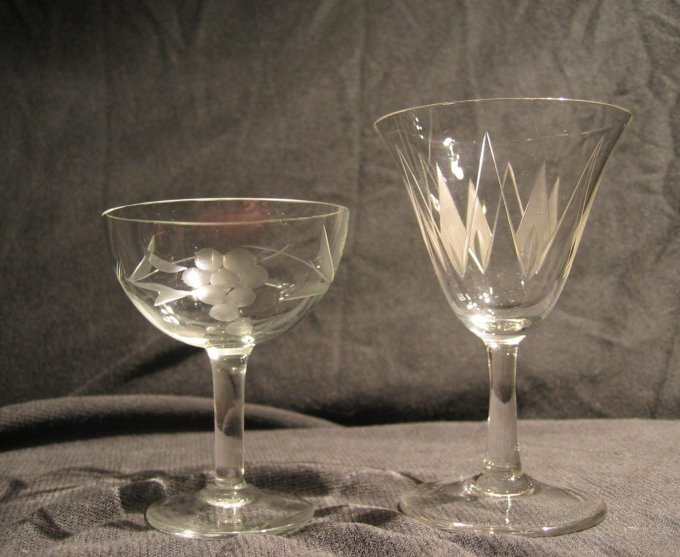
Lead glasses contain at least 18% lead(II) oxide. They are characterized by a high refractive index, high dispersion, and high density. Today, lead glass is used for shielding radiation sources in radiology and nuclear medicine, as well as for detectors in nuclear and particle physics. It is also used for decorative glassware and gemstone imitations.
Due to the large number of different glass types and the wide range of possibilities in shaping and coloring, this versatile material is used extensively in many technical, medical, chemical, and everyday applications. The possibility of recycling is another important criterion for the use of this material, particularly at a time when environmental protection is becoming increasingly significant.
Image Sources:
Feature image | © tankist276 – stock.adobe.com
Obsidian | © ArnoWinter, CC BY-SA 3.0, https://commons.wikimedia.org/w/index.php?curid=23798470
Glasses Made Of Smooth Lead Glass | © Pismire, CC BY-SA 3.0, https://commons.wikimedia.org/w/index.php?curid=20402654