 Reichelt Chemietechnik Magazine
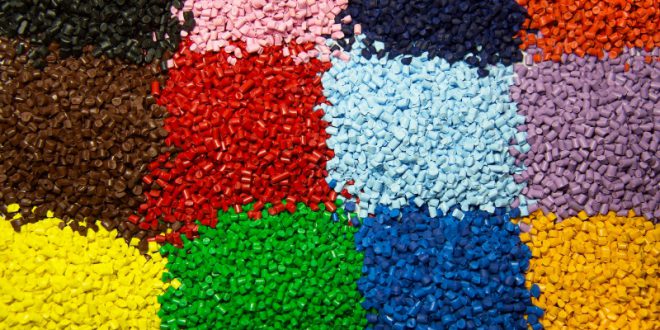
In everyday life, we encounter many different types of plastics: polymeric materials that are colloquially referred to as plastic or rubber. But what exactly are plastics? Plastics are organic materials that are synthetically produced from organic molecules. Chemical reactions create linear, branched, or cross-linked macromolecules.
The First Plastics Made From Naturally Occurring Raw Materials
The history of plastics began in 1531 with Wolfgang Seidel, a Benedictine monk from Augsburg. He discovered that lean cheese, when repeatedly heated and cooled, forms a material “as hard as bone and wonderfully easy to cut”[1]. This artificial horn, or casein – also known by the old trade name Galalith – could be dyed and was used to make molds, tableware, and jewelry. It took nearly 200 more years before the Frenchman Charles-Marie de La Condamine (1701–1774) brought natural rubber back from his journey to South America in 1745.
Cellulose nitrate, also called guncotton, was discovered in 1846 independently by three chemists: Christian Friedrich Schönbein (1799–1868), Rudolf Christian Böttger (1806–1881), and Friedrich Julius Otto (1809–1870). The Englishman Alexander Parkes (1813–1890) further developed cellulose nitrate into a material that could be molded when heated and retained its shape after cooling – the first thermoplastic. He presented it under the name Parkesine at the 1862 World’s Fair in London. However, he was unable to commercialize it and sold the patent to the American chemist John Wesley Hyatt (1837–1920).
A few years later, Hyatt developed celluloid from cellulose nitrate and camphor, with the goal of finding a substitute for ivory, which was used to make billiard balls. Other products such as combs, kitchen utensils, buttons, and toys were also made from celluloid. However, the material’s breakthrough came as a photographic film base, thanks to American inventor Hannibal W. Goodwin (1822–1900), who received a patent for it in 1887. The disadvantage of celluloid, however, is its high flammability, which was significantly reduced by replacing cellulose nitrate with cellulose acetate – a discovery made by chemist Arthur Eichengrün (1867–1949).
In 1884, the Frenchman Hilaire de Chardonnet (1839–1924) patented the first artificial fiber, which he produced from mulberry leaves, sulfuric acid, and nitric acid. The fibers are used to make a fabric called “Chardonnet silk” – a precursor to rayon as well as polyamide and polyester fibers.
The First Fully Synthetic Plastics
A milestone in the history of plastics was the production of plastics from purely synthetic raw materials. In 1907, the Belgian chemist Leo Hendrik Baekeland (1863–1944) developed a process for producing and processing a phenolic resin.

He named this material Bakelite, and it became the first plastic to be industrially manufactured in large quantities.
However, large-scale production did not begin until 1938. Plastic household goods and toys became part of everyday life, and plastic was considered modern, clean, and stylish. Plastics increasingly replaced rare and expensive natural materials to avoid shortages, especially during World War II.
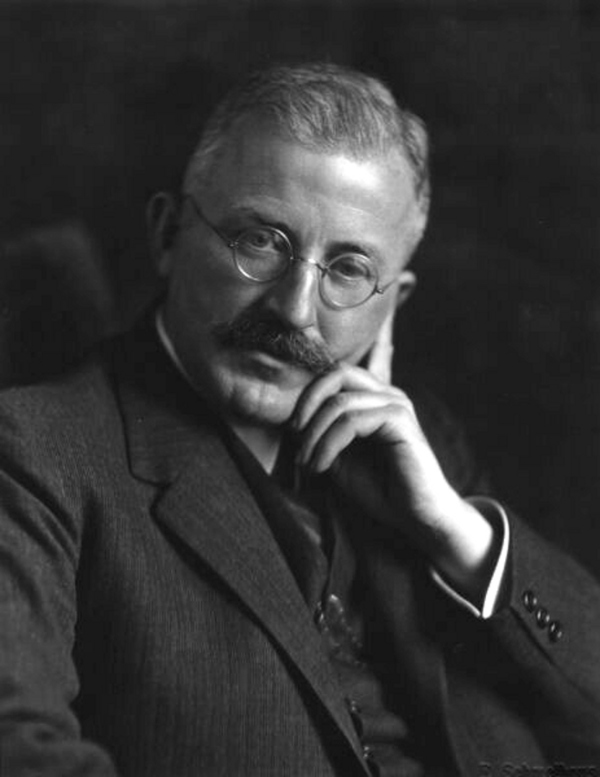
Hermann Staudinger – The Father of Polymer Chemistry
A milestone in the history of plastics was the development of a theory on the structure of macromolecular substances by German chemist Hermann Staudinger (1881–1965). In 1922, he coined the term macromolecule and demonstrated that small molecules, called monomers, can combine to form larger molecules, known as polymers. His research on elucidating the reaction mechanisms involved in polymer formation paved the way for the synthesis of “new” polymers. Depending on which monomers are combined, macromolecules with different properties can be obtained. For his work in the field of macromolecular chemistry, he was awarded the Nobel Prize in Chemistry in 1953.
Machines and Processing Methods
In addition to understanding the structure of polymers and the reaction mechanisms involved in their formation, as well as the development of catalysts, the processing of various types of plastics was also necessary for the production of plastic products – another milestone in the history of plastics.
In the 1930s, several processes and machines for manufacturing plastic products were developed. Hans Gastrow designed a “fully automatic” injection molding machine, which went into series production in 1933. In 1934, the German company Berstorff GmbH in Hanover built the first calender, a roller system for producing plastic films. In 1935, the first blow molding machines – used to manufacture hollow plastic bodies – were put into operation. In the same year, the first extruder was built: an electrically heated plastic screw press.
Important Polymers
Once the foundations for production were laid, rapid development of many types of plastics began. In 1930, polystyrene (PS) was produced on an industrial scale by the German chemical conglomerate IG Farben in Ludwigshafen. In the same year, the development of polyester fibers from polyethylene terephthalate (PET) succeeded – these became known under trade names such as Trevira® and Diolen®. In 1928, Otto Röhm developed polymethyl methacrylate (PMMA), which was marketed in 1933 by the German company Röhm & Haas AG under the name Plexiglas®.
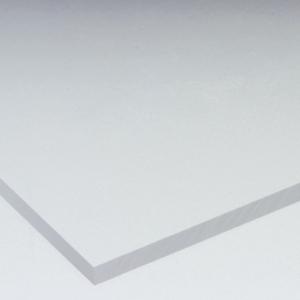
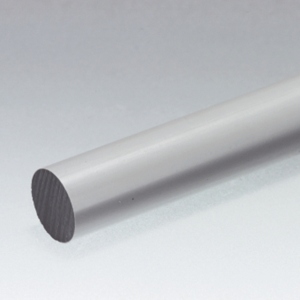
Also in 1933, polyethylene (PE) was produced for the first time under high pressure and at high temperatures. It took another seven years to make PE production economically viable. Twenty years later, new catalysts – the so-called Ziegler-Natta catalysts – made it possible to produce PE at low pressure and low temperatures, thus more cost-effectively.
In 1935, the first polyamides (PA) were developed and patented in 1938, including Nylon® (PA 6.6) and Perlon® (PA 6).
When DuPont launched the first nylon stockings in 1939, six million pairs were sold in just four days. From 1942 onward, nylon was reserved exclusively for parachutes and military purposes. In 1935, German chemist Otto Bayer (1902–1982) developed the so-called addition process, which enabled the production of polyurethanes (PUR) for the first time. They became commercially available in 1941.
Polytetrafluoroethylene (PTFE) was developed at DuPont in 1938 and launched on the market in 1946 under the name Teflon®. In 1953, polycarbonate was developed at the German chemical company Bayer in Leverkusen and was produced on an industrial scale from 1958 under the trade name Makrolon®.
In 1957, the Italian company Montedison in Ferrara began producing polypropylene (PP) on an industrial scale, and a year later, polyacetal (POM) came to market. In 1965, the aramid fiber Kevlar® was developed, and two polymers – polysulfone (PSU) and polybutylene terephthalate (PBT) – were introduced to the market.
High-Performance Plastics, Functional Polymers, and Conductive Plastics
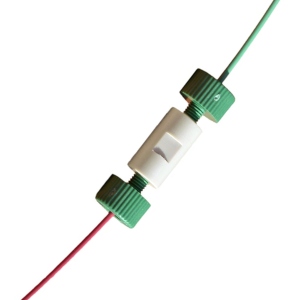
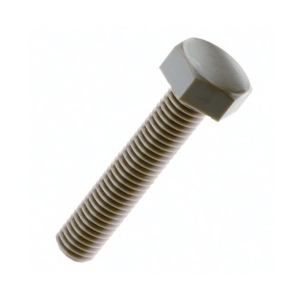
Just one year later, Kraton®, one of the first thermoplastic elastomers, became commercially available. In the 1970s, the development and production of high-performance plastics such as polyetheretherketone (PEEK), polyetherimide (PEI), and polyphenylene sulfide (PPS) began. Fasteners such as screws and nuts, as well as PEEK tubing, are used for particularly demanding applications. They are known for their mechanical strength, temperature resistance, and chemical stability.
In 1977, a new class of plastics – conductive polymers – was developed by three chemists: Hideki Shirakawa (born 1936), Alan Heeger (born 1936), and Alan MacDiarmid (1927–2007), who were awarded the Nobel Prize in Chemistry in 2000 for this achievement. Conductive polymers occupy a special position because, unlike all other types of plastics, they are electrically conductive. The simplest conductive polymer is polyacetylene (PAC). Other examples include polypyrrole (PPy), polyaniline (PANI), polythiophene (PT), and polyparaphenylene (PPP).
Since the 1980s, the focus in developing new polymers has shifted from creating novel monomers to designing tailor-made polymers for specific requirements and applications through advances in synthesis and processing. More recent developments focus on so-called smart or functional polymers.
These types of polymers reversibly change their chemical or physical properties when exposed to changes such as temperature, light, pH, or electric or magnetic fields, enabling further areas of application. However, as with conventional polymers, it will still take some time from development to market readiness.
What Are Commodity Plastics, Engineering Plastics, and High-Performance Plastics?
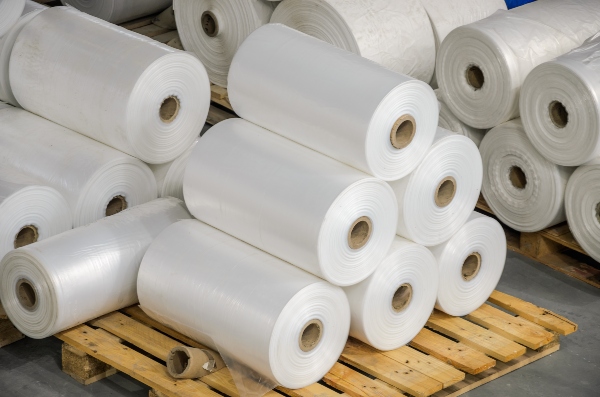
Commodity plastics are produced very inexpensively and account for about 80% of global production. This group includes, in order of market share: polyethylene (PE), polypropylene (PP), polyvinyl chloride (PVC), polystyrene (PS), polyurethane (PU), and polyethylene terephthalate (PET).
Engineering plastics exceed the properties of standard plastics in areas such as impact strength and elastic modulus, which is also reflected in their price. They can be used at temperatures up to +130°C and exhibit high durability, good viscosity and damping properties, and are easy to process. Their market share is approximately 20%. Engineering plastics include polyamide (PA), polycarbonate (PC), polymethyl methacrylate (PMMA), polylactide (PLA), and polyoxymethylene (POM).
High-performance plastics have properties that are significantly optimized for specific applications. They can be used at temperatures above +150°C. Some are characterized by high resistance to chemicals, radioactive radiation, and environmental influences; others are extremely wear-resistant, highly pure, particularly electrically insulating, or can be used at temperatures below -200°C. Due to their special properties, high-performance plastics are in the upper price segment at around 20 euros per kilogram, and their market share is only about 0.2%. High-performance plastics include polyetheretherketone (PEEK) and polytetrafluoroethylene (PTFE), among others.
It seems there is a suitable plastic for every purpose. However, environmental and raw material issues make new and sustainable solutions necessary.
Sources:
[1] https://sinplastic.com/geschichte-der-kunststoffe/
Image Sources:
Title Image | © raeva – stock.adobe.com
1930s Radio | © CC BY-SA 3.0, https://commons.wikimedia.org/w/index.php?curid=843610
Hermann Staudinger | © Hermann_Staudinger_ETH-Bib_Portr_14419.jpg: Fr. Schmelhaus / ETH Zürichderivative work: Regi51 (talk) - Hermann_Staudinger_ETH-Bib_Portr_14419.jpg, CC BY-SA 3.0, https://commons.wikimedia.org/w/index.php?curid=15574519
Commodity Plastic Polyethylene | © nikirov – stock.adobe.com