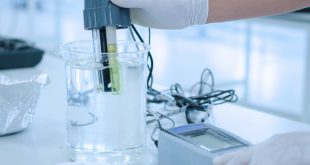
Sum parameters play an important role in the analysis of water samples from drinking water, surface water, groundwater, and wastewater, as well as sewage sludge. When determining sum parameters, a …
Read more »Alle Beiträge
The Concept of Tolerance in Engineering and Manufacturing
The term “tolerance” originates from the Latin word “tolerare”, meaning to endure, withstand, or bear. In everyday language, it often describes the acceptance of different beliefs, religions, cultures, worldviews, or …
Read more »Plastics in Medicine and Medical Technology
The share of plastics used in the medical sector accounts for only around 2 percent of the total volume of plastics produced worldwide. Despite this comparatively low proportion of overall …
Read more »Silicon: Properties and Applications
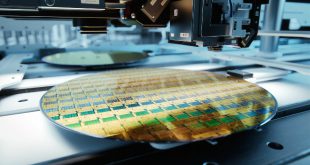
Without silicon, our modern daily life would look entirely different. It is found in every microchip but also in baking moulds, lubricants, cosmetics, and plastics: the element silicon. Silicon – …
Read more »Polyolefins – Properties, Differences and Applications
The term polyolefins refers to polymers produced from alkenes such as ethene, propene, butene, 2-methylpropene, and 4-methyl-1-pentene. Polyolefins are saturated hydrocarbons characterized by low density, good chemical resistance, low water …
Read more »Deionised and Ultrapure Water: Production and Use
Fully demineralised water, also known as deionised, demi-water, demineralised, distilled, or ultrapure water — all look just like regular tap or spring water but contain very few or no foreign …
Read more »Natural Rubber – What Is It?
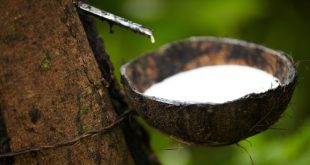
Rubber was already known to the Maya, who used it to produce waterproof containers and elastic balls and to bond shoes. It is obtained by tapping the rubber tree, which …
Read more »Plasticizers in Everyday Life and Their Health Effects
Many commercially available plastics are, by nature, hard and brittle at room temperature. Only the addition of special additives, known as plasticizers, enables their processing and use for everyday consumer …
Read more »The POP List: Persistent Organic Pollutants
Persistent Organic Pollutants (POPs) are organic compounds that are harmful to humans and animals and degrade only very slowly in the environment. They contaminate air, soil and water and can …
Read more »What is corrosion and how does it occur?
Corrosion is a global problem. Steel structures in particular are affected, such as bridges and load-bearing structures, but also industrial plants, railway tracks, pipelines, vehicles, and machinery. In 2009, the …
Read more »
Reichelt Chemietechnik Magazine