 Reichelt Chemietechnik Magazine

The convergence of several events led to a plastic shortage and a sharp increase in prices. This affected not only plastics, but also other raw materials such as metals, wood and building materials. One of the triggers for this shortage was the COVID-19 pandemic in 2020. It highlighted the global economy’s dependence on international supply chains.
Sharp price increase for plastics
Whether plastic tubings, semi-finished products, valves or hose connectors: prices of products made from engineering plastics and fluoropolymers have risen significantly over the past two years. Some high-performance plastics, such as PVDF (polyvinylidene fluoride) or PCTFE (polychlorotrifluoroethylene), were at times unavailable altogether. But what are the underlying causes?

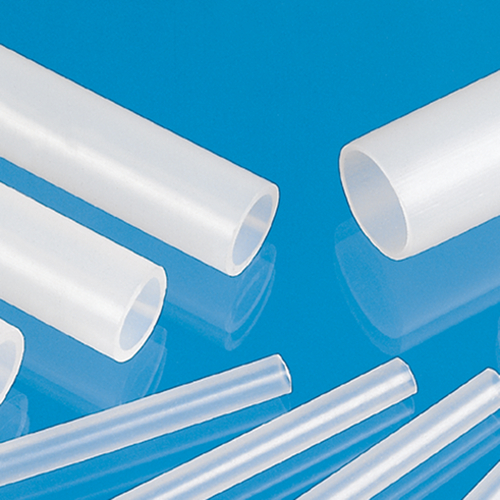
Due to the outbreak of the pandemic and the associated lockdowns, fewer raw materials were extracted, and production was reduced or even completely halted in many places. Some companies used the production downtime for extensive maintenance work lasting several weeks or even months. Following the initial recovery phase, demand for raw materials such as oil, natural gas, metals, wood and semiconductors rose sharply and could not be met in full.
Problems in Transport Logistics
Global supply chains were also disrupted by the pandemic. Following COVID-19 outbreaks at China’s fourth-largest port, Yantian, in June 2021 and its second-largest port, Ningbo, in October 2022, operations were scaled down or partially suspended for several weeks. In Yantian, around 500,000 containers were awaiting clearance. The container ship “Ever Given”, which ran aground in the Suez Canal in March 2021, also contributed to disruptions in global supply chains.
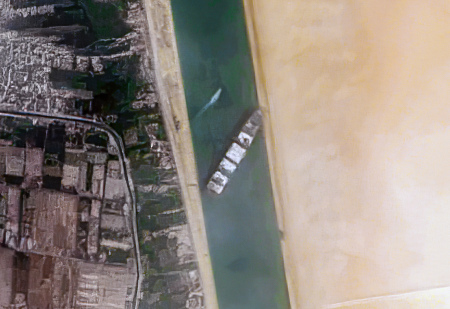
The slow handling of containers led to shortages and increased costs. While the price of a container was around USD 1,600 in 2020, it rose to USD 2,500 in 2021.
Political Factors for Increasing Prices
The war in Ukraine also contributed to the shortage of plastics. Following Russia’s invasion of Ukraine, crude oil imports to Germany from Russia fell by 99.9% as a result of the EU oil embargo, according to Germany’s Federal Statistical Office.
While 2.8 million tonnes of crude oil were still imported into Germany from Russia in January 2022, this figure dropped to just 3,500 tonnes by January 2023. Demand for crude oil – the most important raw material for the plastics-producing industry – is now being met through additional imports from Norway, the United Kingdom and Kazakhstan. At the same time, the average annual crude oil price increased from USD 41.5 per barrel in 2020 to USD 100 per barrel in 2022 due to the pandemic and the war in Ukraine.
Energy costs have also risen sharply since Russia’s attack on Ukraine, as imports of fossil fuels from Russia have been significantly reduced due to sanctions. According to Germany’s Federal Statistical Office, natural gas in Germany was 50.7% more expensive in January 2023 than in January 2022, while electricity prices rose by 27.3%.
Impact of Weather Events
In addition, a weather event also contributed to the shortage of plastics. In mid-February 2021, a sudden cold snap in Texas caused widespread power outages lasting several days. Houston, Texas, is home to the largest petrochemical complex in the United States.

Approximately 90 companies there produce commodity plastics such as polyethylene, polypropylene, polystyrene and polyvinyl chloride, accounting for around 42% of total US petrochemical production capacity. The power outages led to supply bottlenecks and disruptions that also affected Europe and in some cases persisted until June 2021.
Exploding Prices Due to Plastic Shortages
Plastic prices depend on several factors, including the prices of petrochemical intermediates, production capacities and costs, demand in the respective markets, and newly introduced CO2 pricing. Rising crude oil prices also affect the prices of plastic intermediates such as ethylene, propylene, 1,3-butadiene and ethylbenzene, which are produced through thermal cracking of naphtha.
The first significant price increase of around 70% was recorded in the first half of 2021, followed by a second increase in summer 2022, reaching up to 130% for PS compared to prices in May 2019. Prices for recycled PP, PE-LD and PS also rose by more than 50% in 2021. Although plastic prices declined again in 2023, prices for commodity plastics still remain between 20% and 30% above 2019 levels.
Price Trends for Engineering Plastics
Engineering plastics used in structural and mechanical applications, which offer higher temperature resistance and improved mechanical properties compared to commodity plastics for general use, have also become significantly more expensive. Prices began to rise sharply at the end of 2020 or the beginning of 2021. The highest increases in the first half of the year ranged from 56% for PA to 130% for ABS. Compared to May 2019, ABS and PC recorded the lowest increase at around 30% by March 2023, while PA 6.6 and POM became between 60% and 70% more expensive.
Fluoroplastics: The Most Severe Shortages
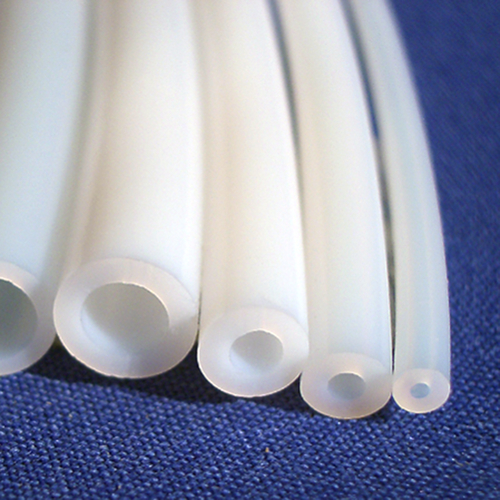
In the production of fluoroplastics, raw material shortages have an even more pronounced impact on pricing. Fluoropolymers such as polytetrafluoroethylene (PTFE), perfluoroelastomer (FFKM), polyvinylidene fluoride (PVDF) and perfluoroalkoxy copolymer (PFA) are among the high-performance plastics used where other plastics fail. PTFE tubings and O-rings made from FFKM are considered indispensable materials in fluid handling and sealing technology.

One of the raw materials required for the production of fluoroplastics is fluorspar (calcium fluoride, CaF2). In Europe, this mineral is now only available in limited quantities and must be imported, as domestic deposits are largely depleted. The main supplier is China, with 5.4 million tonnes in 2020, followed by Mexico with 915,000 tonnes. As China prioritised its domestic market, export volumes for European industry declined. As a result, fluoroplastics have been affected by significantly greater shortages than other types of plastics.
The stronger price increase for fluoroplastics is clearly evident when comparing fluoroelastomers with other elastomers. Prices for NBR, HNBR and EPDM also rose continuously, although increases ranged between 60% and 90%.
Recycling of Plastics and the Use of Renewable Energy
Due to the shortage of plastics, plastic recycling has gained importance. However, the use of recycled materials is currently limited due to regulatory safety requirements, technical challenges and high quality standards. In addition, recyclates are not available in sufficient quantities or consistent quality. Price increases are also observed for recycled materials, similar to virgin materials.
There is, however, a positive aspect to high energy costs and raw material shortages: both consumers and industry have initiated a shift in thinking. High energy costs are driving efforts to reduce energy consumption, while dependence on fossil fuels is decreasing with the increasing use of renewable energy. Both developments benefit the environment.
In industry, perspectives on sourcing, raw material storage and supplier diversification are evolving. Clear labelling of plastics to enable proper sorting can increase the share of recyclates and improve the circular economy for plastics. Reducing overall plastic consumption, particularly of non-recyclable polymer blends, also contributes to mitigating plastics shortages in the long term.
Image Sources:
Cover image | © aykuterd – stock.adobe.com
"Ever Given" blocks the Suez Canal | © Contains modified Copernicus Sentinel data 2021, CC BY 2.0 <https://creativecommons.org/licenses/by/2.0>, via Wikimedia Commons