 Reichelt Chemietechnik Magazine
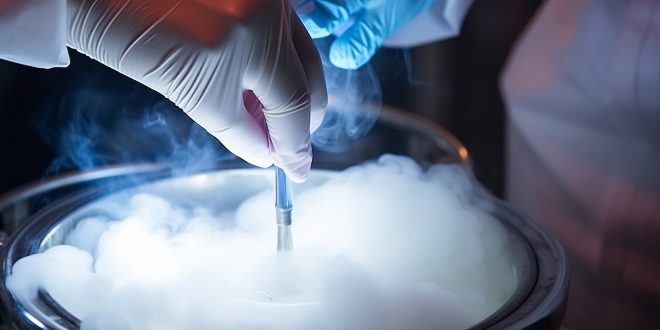
Nitrogen makes up approximately 78% of the atmosphere. Liquid nitrogen is less commonly encountered in everyday life, yet it is a proven coolant with many advantages. It is relatively inexpensive, reacts only minimally with other substances, and produces no waste products. These properties make it particularly suitable for applications in the chemical industry, the food industry, and medical technology. Read our safety guidelines for handling liquid nitrogen.
What is liquid nitrogen?
Liquid nitrogen is commonly abbreviated as LN or LN2. Cryogenic liquid nitrogen extracts heat from the material being cooled and evaporates. Under transport regulations, the substance is classified as dangerous goods.
Production of the liquefied gas
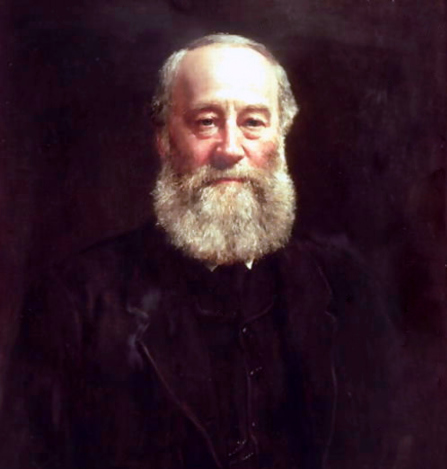
To produce liquid nitrogen, air is compressed to 200 bar and the resulting heat is removed. When the pressurized gas is rapidly expanded, its temperature decreases. This phenomenon is known as the Joule–Thomson effect, named after its discoverers James Prescott Joule (1818-1889) and William Thomson (1824-1907). Repeating cycles of compression and expansion in the so-called Linde process result in liquid air. Through subsequent fractional distillation, liquid nitrogen as well as liquid oxygen and liquid argon can be obtained.
What must be considered when working with liquid nitrogen?
During evaporating, the liquefied gas expands significantly. Its volume increases by a factor of about 700 during the phase change. Therefore, when handling and storing liquid nitrogen, pressure equalization with the surrounding atmosphere must be ensured at all times.
Since the boiling point of nitrogen is lower than that of oxygen, oxygen from the air can condense on LN2 lines and drip into open containers filled with cryogenic liquid nitrogen. Oxygen concentrations above 5% can already trigger an explosion upon contact with oxidizable substances.
Improper handling of liquid nitrogen can cause frostbite due to its extremely low boiling point. Suitable protective equipment should therefore be worn when working with this coolant, including gloves, an apron, and face protection. Only trained personnel should carry out such work.
Which nitrogen containers are suitable for which purpose?
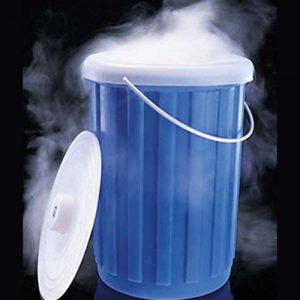
Deeply cryogenic liquefied nitrogen is transported and stored in nitrogen tanks, cryogenic containers, or Dewar vessels. Requirements for nitrogen containers are defined in various standards and regulations, depending on whether they are stationary or mobile and on their volume. They must comply with the Pressure Equipment Directive (PED) and, if intended for transport, also with the Transportable Pressure Equipment Directive (TPED).
Nitrogen Storage Tanks
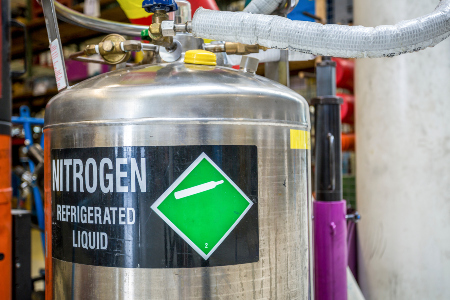
Nitrogen storage tanks are typically stationary, cylindrical, vacuum-insulated, double-walled pressure vessels. The inner cylinder is made of low-temperature-resistant steel specifically developed for cryogenic applications. The outer cylinder consists of carbon steel coated for corrosion protection.
Nitrogen storage tanks are available in sizes ranging from 3,000 to 80,000 liters. A 3,000-liter tank typically has a height between 3.5 and 6 meters and a diameter between 1.5 and 2 meters. An 80,000-liter tank reaches heights of 10.5 to 12 meters and diameters of 3 to 3.5 meters. If required, liquefied nitrogen is delivered by specialized tanker trucks and pumped into the storage tank.
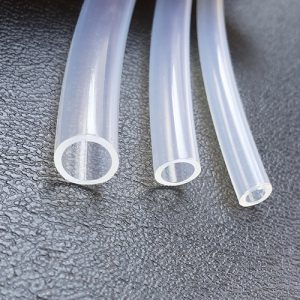
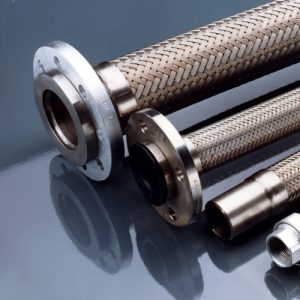
The storage tank usually features multiple withdrawal points, allowing nitrogen to be extracted either as a liquid or as a gas. Hose systems are essential for further transport. Combined with pressure hoses or liquefied gas hoses, nitrogen can be conveyed in either phase to the point of use. For this purpose, plastic hoses and corrugated PFA tubing with a temperature resistance of -260 to +260 °C (-436 to +500 °F) are particularly suitable. Stainless steel corrugated hoses are also appropriate and are available pre-assembled with fittings in various nominal diameters and lengths.
Cryogenic Containers
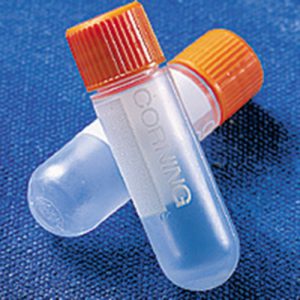
Cryogenic containers are double-walled vessels made of stainless steel or aluminum with evacuated interspaces. Their volumes range from 100 to 1,000 liters. They can be stationary or mobile. Mobile cryogenic containers are typically equipped with a protective transport frame, castors, pressure and level indicators, and an integrated safety device at the container neck. Cryogenic vessels are also available in the form of small tubes. These small laboratory containers made of PP can store liquefied gases and biological liquids at temperatures down to -196 °C (-321 °F) and can be kept in special racks.
Dewar Vessels
Dewar vessels are double-walled, evacuated containers with reflective inner surfaces made of glass or stainless steel. For safety and occupational protection, they are equipped with an outer protective casing made of stainless steel, aluminum, or sheet metal. The evacuated walls reduce heat transfer by convection, while the mirrored surfaces minimize heat transfer by radiation.
Dewar vessels are used as nitrogen containers in laboratories. They are available in sizes ranging from 0.5 to 10 liters and in designs with handles or carrying frames, with or without lids, and with narrow or wide neck openings. Containers with narrow openings are better suited for transferring nitrogen, while those with wide openings are preferred for immersing objects.
Applications of liquid nitrogen
Nitrogen in medical technology
In medicine, liquid nitrogen is used to store and transport blood, egg cells, sperm, cells, and vaccines. In dermatology, it is used to freeze warts and treat skin lesions. Alongside liquid helium, liquid nitrogen is also used to cool magnets in magnetic resonance imaging (MRI).
Soil stabilization in civil engineering
In civil engineering, liquid nitrogen is used to freeze soil. By introducing the coolant, the water in the ground freezes, stabilizing the soil and making it impermeable to water. This increases the stability of excavation pits and protects them from water ingress.
Precision-fit components in mechanical engineering
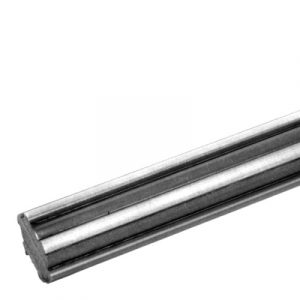
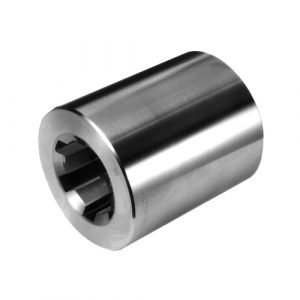
In its cryogenic state, the substance is a proven coolant for shrink fitting and cold expansion processes. In these methods, two metal components, such as a shaft and a ring, are joined together. The inner component is cooled, causing it to contract by a few micrometers, after which the outer component is fitted over it. Upon reheating, the cooled part expands again, creating a tight interference fit between the drive components. Shrink fitting is used in mechanical engineering as well as in the automotive, aerospace, and aviation industries.
Cryogenic freezing of food
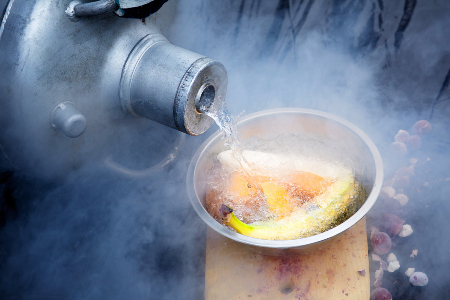
Cryogenic freezing with liquid nitrogen is an established method for freezing fruit, vegetables, or cakes. Rapid cooling forms very small ice crystals, preserving flavor, nutritional value, and color. In contrast, slow freezing produces large ice crystals that damage the cell structure of fruits and vegetables.
Liquid nitrogen has also found its way into “modern cuisine.” It can be used to prepare sorbets and ice cream within seconds. However, so-called “Smoke Pops” (nitrogen-infused corn snacks) have attracted media attention. When consumed, they create the so-called “Dragon Breath” effect: the nitrogen evaporates upon contact with the warm mouth, making the breath resemble that of a dragon. Germany’s Federal Institute for Risk Assessment (BfR; Bundesinstitut für Risikobewertung) warns that consuming such products may cause frostbite injuries to the tongue and oral mucosa, as well as potential dental damage.
High-temperature superconductors
High-temperature superconductors are cooled with this cryogenic liquid to the temperature at which superconductivity occurs. Superconductivity is used to generate strong magnetic fields, for example in MRI systems for medical diagnostics or in particle accelerators for fundamental research.
Other applications
Liquid nitrogen is also used in the cryogenic treatment of metallic components and tools. By slowly cooling with the liquefied gas (1-2 °C/min; approx. 2-4 °F/min) and reheating at a similarly slow rate, the metallic microstructure changes and bound carbon is redistributed more evenly within microstructure. This improves wear resistance and reduces internal stresses. This process is used for cutting, punching, bending, embossing, and forming tools. In the cryogenic treatment of wind instruments, musicians have reported improved sound quality, better response, and more stable pitch.
Liquid nitrogen is also used in cold traps to separate condensable gases from gas mixtures. This protects pumps from moisture or corrosive gases. In the chemical industry, cold traps are used to separate solvents from gas streams, reducing emissions into the atmosphere while allowing the solvent to be recovered and reused. In vacuum technology, cold traps are used to condense residual gases, thereby improving the vacuum in the system. Another application is the cooling of infrared sensors to increase their sensitivity.
Liquid nitrogen is a safe and widly used coolant across many industrial sectors, as well as in research and medicine – provided that safety guidelines for transport and storage are followed.
Image sources: Cover image | © Valeriia – stock.adobe.com
Portrait of James Prescott Joule | © John Collier, Public domain, via Wikimedia Commons
Liquid nitrogen supply tank | © malajscy – stock.adobe.com
Cryogenic freezing with liquid nitrogen | © Aleksey Telesh – stock.adobe.com