 Reichelt Chemietechnik Magazine
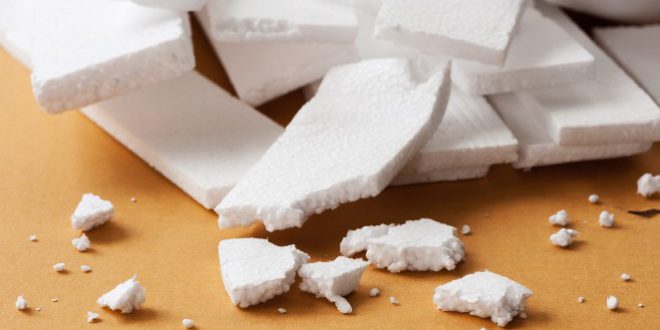
Polystyrene, PS, Styrofoam or styrene plastic – this material is as versatile as its many names. The thermoplastic made up around 5.2%[1] of the world’s plastic production in 2023. It was first developed for other purposes, but today PS is best known as an insulating material. So what makes it so special? And what is polystyrene used to make? This article answers these questions and shows why polystyrene still matters today.
History of Polystyrene
Polystyrene’s rise began in the 1930s. That was when the German conglomerate IG Farben, then Europe’s largest industrial group, started large-scale technical production.
In its early days, PS was used to insulate cables, for example. Then, in 1949, the German-Austrian BASF chemist Fritz Stastny (1908–1985) developed a way to foam polystyrene. He had discovered the process by chance and patented it under the well-known name Styropor. Since then, PS has become one of the most widely used plastics in the world.
Because PS is so common, it is having a growing impact on the environment. The material is not always disposed of or recycled properly. Some companies are already working on modern methods. Their aim is to feed PS back into a recycling loop – or avoid it altogether.
What Is Polystyrene and How Is It Made?
Polystyrene belongs to the plastomers, which makes it a thermoplastic polymer. Thermoplastic means that PS becomes mouldable at certain temperatures. As the name suggests, polystyrene is made up of many styrene monomers. Styrene – more precisely called phenylethene – consists of a vinyl group and a phenyl group. This is why it is also known as vinylbenzene.
Styrene is produced in one of two ways: by dehydrogenating ethylbenzene or by alkylating benzene with ethene. Ethylbenzene is a direct by-product of crude oil refining and is distilled from pyrolysis gasoline. The ethylbenzene is then catalytically dehydrogenated at high pressures and temperatures. This step uses an aluminium oxide or iron oxide catalyst.
Polystyrene forms through a free-radical polymerisation reaction. Here, styrene monomers are heated together with added initiator compounds such as benzoyl peroxide or azo compounds. These initiators create radicals. The radicals trigger the styrene monomers to link together and form polystyrene molecules.
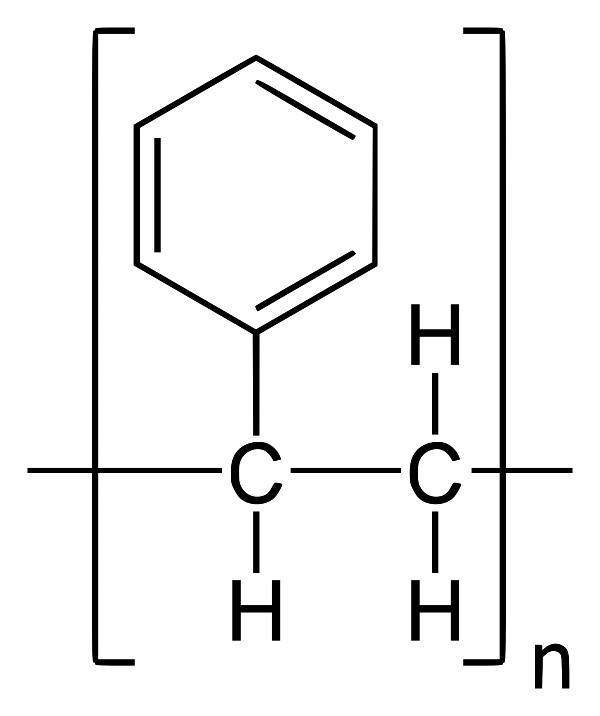
The polymerisation is exothermic and releases around 74.5 kJ/mol of heat energy. The mixture of monomers and polymers is then freed of excess styrene in a degasser at about +230 °C (+446 °F). This achieves a conversion rate of roughly 90% PS.
The resulting polystyrene can be transported and processed further as pellets or granules. PS appears as a transparent or slightly cloudy plastic with a smooth surface and a glass-like texture. Polystyrene occurs in a crystalline (hard) and an amorphous (glassy) form.
How Is Expanded Polystyrene (EPS) Made?
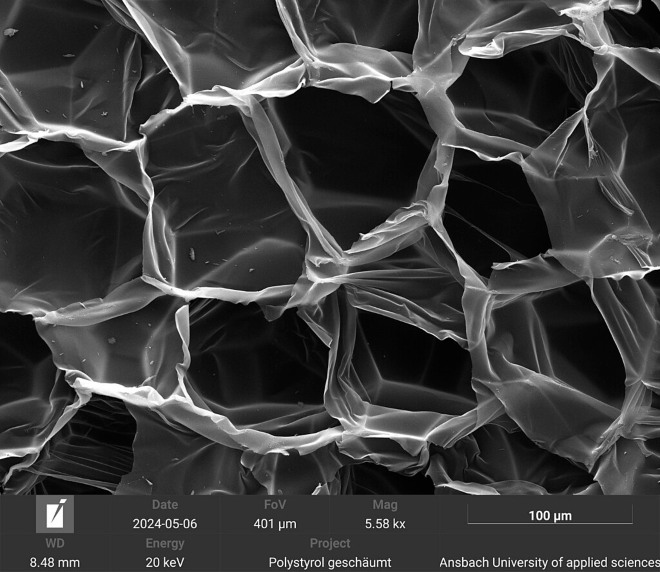
Expanded polystyrene (EPS) – also known by the brand name Styrofoam – is made in a multi-step process. First, beads of polystyrene resin are pre-foamed at around +90 °C (+194 °F) using steam. During this stage, air enters the beads. As a result, the thermoplastic expands to 20 to 50 times its original volume and forms open cell structures.
The expanded polystyrene foam is then cooled. This lets it harden and stabilises the cell structures. The degree of expansion determines the density of the foam boards produced later, which ranges from 10 to 35 kg/m³. Finally, the plastic boards are cut to size with mechanical or thermal saws.
Extrusion is another way to make polystyrene foam. The foam produced this way is called extruded polystyrene (XPS). Molten polystyrene resin is pressed through a heated nozzle and expanded by pressure and heat. A blowing agent such as pentane or carbon dioxide is used during the process. It foams up the liquid material under heat.
Uses of Styrene Plastic
Today, polystyrene is found in many products, including packaging, containers, tableware, foams and insulation. Thanks to its high transparency, the polymer also works well for optical applications such as microscopy and fluorescence measurements.
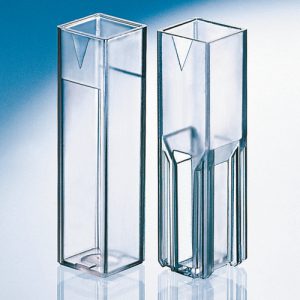
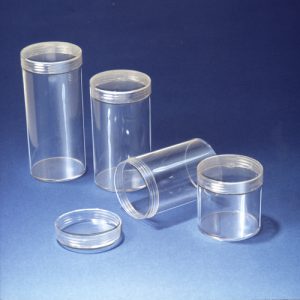
PS is often used for consumables in laboratory analysis, such as lab tubes and cuvettes. Many lab bottles, dishes and crucibles, pipettes, and handles for scalpels and knives are also made from this material. Even semi-finished products like plastic sheets benefit from the properties of polystyrene – and so do flow meters and filtration elements.
Styrofoam as an Insulating and Packaging Material
As a foam, PS is used in helmets, where it absorbs impacts and protects the wearer’s head from injury. Because of its special properties, using polystyrene as a foam calls for extra care. In construction, for example, PS insulation boards are built into floors, walls and roofs. The trapped air makes XPS and EPS suitable as insulating materials. XPS, in particular, can be used for insulation with especially high demands.
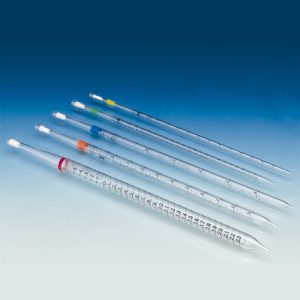
EPS and XPS are remarkably pressure-resistant, lightweight and versatile. They are even used in insulating systems such as fridges and freezers, helping them cool with less energy. Beyond insulation, their impact resistance makes them ideal packaging for sensitive products like electronics. Polystyrene foam can also block sound, and EPS is especially good for this. XPS, in turn, is ideal for model-making and prototyping, where its light weight and mouldability are a real advantage.
In general, rigid PS foam – both XPS and EPS – is a highly flammable insulating material that releases harmful gases in a fire. When building homes, you therefore need precautions to ensure fire safety. Brominated flame retardants (BFRs) are an especially important group of flame-retardant substances used with XPS and EPS. BFRs help flames spread more slowly and reduce the toxic gases formed in a fire. Unfortunately, BFRs are very problematic for the environment. For this reason, they are banned or only permitted to a limited extent in the EU.
Persistence, Reusability and Recycling
As with other plastics, the question of recycling and reusing PS products is not fully resolved. The general approach to cutting plastic waste follows a clear order of priority: reduce, reuse, recycle. Around the world, there are various efforts to bring PS and polystyrene foams into a circular economy, and most of these are based on recycling.
In mechanical recycling of expanded polystyrene, clean, single-type PS waste is ground into granules. These are added to products such as insulation boards or lightweight concrete, where they act as a pore-forming agent. Solvent-based recycling such as BASF’s ChemCycling aims to dissolve PS products completely. The resulting pyrolysis oil is then turned into high-quality new plastic material.
Alternatives to Polystyrene
There are many alternatives to PS foams. Sheets of cellular rubber, sponge rubber and silicone foam, for instance, can be used where EPS and XPS would fail, thanks to their heat resistance. Their flexible, compressible nature also makes silicone foams attractive in the construction industry, for sealing joints and gaps. Foamed silicones are used as protective and insulating hoses for thermal insulation, too.
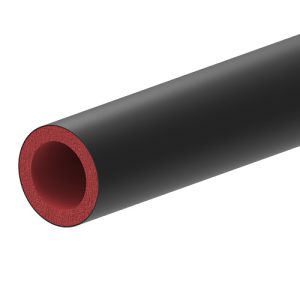
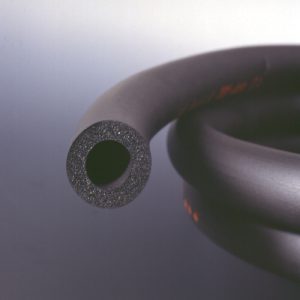
Foam boards made of polyether urethane (PEUR) are used where high elasticity, abrasion resistance and shock absorption are needed. EPS and XPS tend to be stiffer and not very abrasion-resistant. In such cases, they can be replaced by PEUR foam boards.
In other areas, researchers are working on avoiding plastic altogether. Packaging made from mycelium – the “roots” of fungi – is one sustainable and promising option. Mycelium can be moulded into almost any shape, is impact-resistant and fully recyclable. However, researchers are still fine-tuning many details. So it is hard to say if and when mycelium packaging will replace the plastic-based versions.
Sources:
[1]: https://plasticseurope.org/wp-content/uploads/2023/10/Plasticsthefastfacts2023-1.pdf
Image sources:
Featured image | © NorGal - stock.adobe.com
Expanded polystyrene under the scanning electron microscope | By HaefnerP - Own work, CC BY-SA 4.0, https://commons.wikimedia.org/w/index.php?curid=149092438