 Reichelt Chemietechnik Magazine
Prostheses, implants and suture materials all have one requirement in common: they should cause as little adverse effect as possible on the surrounding tissue and on the human body as …
Read more »Biocompatibility
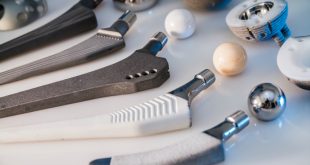


Prostheses, implants and suture materials all have one requirement in common: they should cause as little adverse effect as possible on the surrounding tissue and on the human body as …
Read more »
Any substance that is not a pure substance is a mixture of substances. Since very few of the things that surround us are pure substances, the separation of mixtures is …
Read more »
Honey, water, ketchup and a starch solution represent four liquids with four very different flow behaviours. Honey flows slowly and thickly, but it can be made thinner by gentle heating. …
Read more »
In plant and mechanical engineering, in drive technology, or in precision mechanics, information on the friction behavior of the materials used is essential, with the coefficient of friction being a …
Read more »
Plastics used in medical technology and pharmaceuticals are classified into six biocompatibility classes in the United States Pharmacopeia (USP), the US pharmacopoeia. To assign elastomers and other polymeric materials to …
Read more »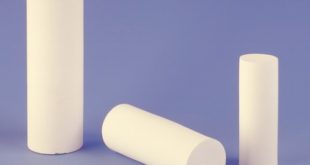
Sintering is a manufacturing process that has been known and widely used for a very long time. The production of ceramics – such as firing kaolin or shaping clay into …
Read more »
Plastics have become indispensable in modern everyday life. As versatile materials, their properties can be tailored to meet a wide range of requirements. The discovery of the structure and architecture …
Read more »
The Food and Drug Administration, or FDA, is the United States’ federal authority responsible for overseeing the safety of all goods sold within the USA. This oversight includes not just …
Read more »