 Reichelt Chemietechnik Magazine
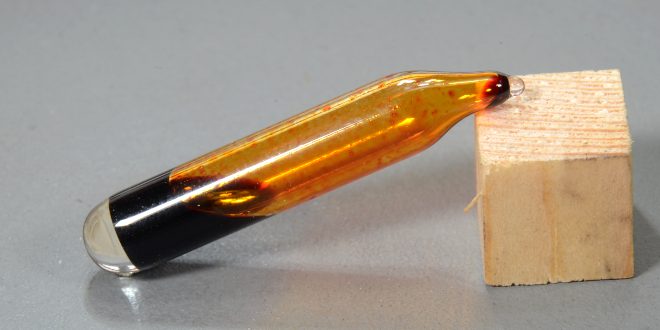
When hearing the term “halogen,” many people first think of lamps or headlights. However, halogens are found in numerous products we use every day. This article explains what halogens are and where they are applied.
What Are Halogens?
The name “halogen” is derived from the Greek words “hals” (salt) and “gennan” (to produce), reflecting their ability to form salts when reacting with metals.
History and Discovery of the Halogens
The halogens were discovered in the order chlorine, iodine, bromine, and fluorine. When the German chemist and pharmacist Carl Wilhelm Scheele (1742–1786) first produced chlorine, it was initially believed to be an oxygen compound. In 1808, the English chemist Sir Humphry Davy (1778–1829) recognized it as a new element. Due to its yellow-green color, he named it after the Greek word “chloros”, meaning yellow-green.
Iodine was discovered in 1812 in the ash of seaweed and was named after the Greek word “ioeides”, meaning violet-colored, referring to the purple color of its vapor.
In 1826, the French chemist Antoine-Jérôme Balard (1802–1876) extracted bromine from seaweed and was the first to recognize it as a new element. Two years earlier, Justus von Liebig (1803–1873) had found bromine while analyzing salt brines but mistakenly assumed it to be a chlorine-iodine compound. Balard is therefore regarded as the discoverer of bromine. The element was named after the Greek word “bromos” (stench) due to its pungent odor.
The mineral fluorspar, calcium fluoride (CaF2), had been known since the 16th century and was added during ore smelting because it made slag more fluid. Due to its high reactivity and toxicity, elemental fluorine was not successfully isolated until 1886 by the French chemist Ferdinand Frédéric Henri Moissan (1852–1907), who received the Nobel Prize in Chemistry in 1906 for this achievement. The element’s name is derived from the Latin word “fluor”, meaning flow.
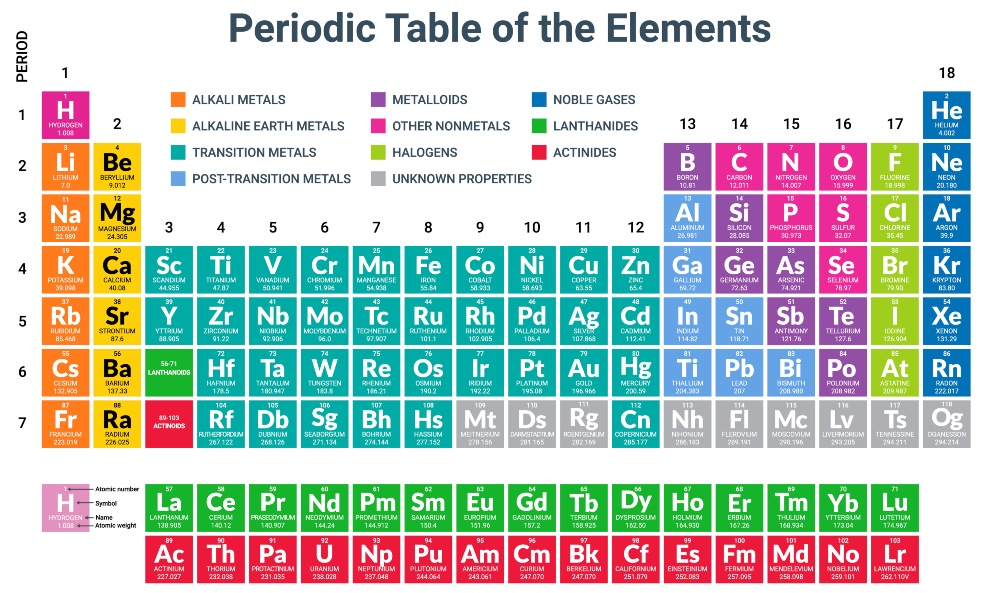
Radioactive astatine is the rarest naturally occurring chemical element. In 1940, it was artificially produced by the Americans Dale Corson, Kenneth MacKenzie, and Emilio Gino Segrè at the University of California using a particle accelerator. Three years later, the element with atomic number 85 was named astatine, derived from the Greek “astatos”, meaning unstable.
Production of Halogens
Elemental fluorine (F2) can only be produced by electrolysis of hydrogen fluoride. Since hydrogen fluoride has low electrical conductivity, a mixture of hydrogen fluoride and potassium fluoride is used to increase conductivity. The process must be completely water-free; otherwise, oxygen would form at the anode instead of fluorine.
Chlorine is primarily produced from an aqueous sodium chloride solution by the chlor-alkali electrolysis process. The reaction products are chlorine (Cl2), hydrogen (H2), and sodium hydroxide (NaOH). Bromine is obtained by reacting bromides—extracted from salt deposits or seawater—with chlorine. Iodine is produced from iodate (IO3–) formed in the mother liquor during nitrate production. The iodate solution is treated with sulfurous acid (H2SO3), forming hydrogen iodide, which then reacts with iodic acid (HIO3) present in the solution to yield elemental iodine.
Properties of the Halogens
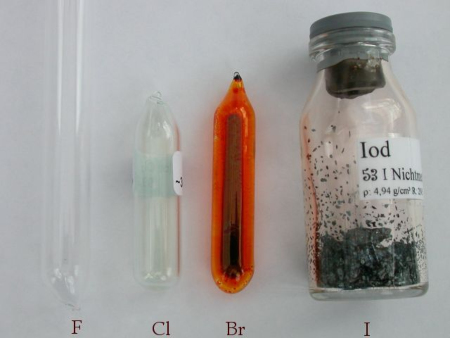
Fluorine has the highest electronegativity and reactivity. As the atomic number increases from fluorine to iodine, physical properties change: density, melting point, boiling point, and color intensity increase. Under standard conditions (0 °C, 1 bar), fluorine and chlorine are gases, bromine is liquid, and iodine is solid. Astatine is radioactive and decays; its longest-lived isotope, 210At, has a half-life of 8.3 hours. Fluorine is pale yellow-green, chlorine greenish, bromine brown, iodine gray-black, and iodine vapor violet. Water solubility and reactivity decrease with increasing atomic number.
Important Halogen Compounds
When reacting with metals, halogens form salts known as halides. These salts—fluorides, chlorides, bromides, and iodides—consist of metal cations and halide anions. They have high melting and boiling points and are electrical insulators in solid form. In aqueous solution or when molten, they conduct electricity.
Halogens react with hydrogen to form hydrogen halides. Hydrogen chloride, hydrogen bromide, and hydrogen iodide are gaseous under standard conditions, with boiling points decreasing as atomic number increases. Hydrogen fluoride forms strong hydrogen bonds and is therefore liquid under standard conditions. The aqueous solutions of hydrogen halides are called hydrohalic acids. Common names include hydrofluoric acid and hydrochloric acid. Hydriodic acid is considered the strongest oxygen-free acid.
Applications of Halogens
Elemental fluorine is used to produce fluorinated compounds that cannot be manufactured by other methods. One example is polytetrafluoroethylene (PTFE), which is processed into breathable textiles and non-stick coatings. In chemical engineering, PTFE is valued as a chemically inert and temperature-resistant material and is processed into PTFE hoses, seals, hose connectors, and other components.

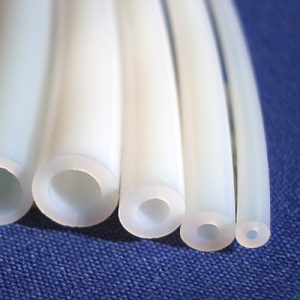
The majority of produced fluorine is used in nuclear technology. Natural uranium contains three isotopes (234U, 235U, and 238U), of which only 235U is suitable for nuclear fission. Uranium reacts with fluorine to form gaseous uranium hexafluoride (UF6), allowing isotope separation by gas centrifuges due to slight mass differences.
Chlorine is an essential raw material in the chemical industry. In inorganic chemistry, hydrochloric acid, chlorides, hypochlorites, and chlorates are produced from chlorine. In organic chemistry, it is used to synthesize compounds such as vinyl chloride—the precursor for PVC hoses—or epichlorohydrin. Chlorine is also used in the synthesis of chlorine-free compounds produced via chlorine-containing intermediates. Additionally, chlorine serves as an oxidizing, bleaching, and disinfecting agent and is present in many pharmaceuticals. In the past, chloroform (CHCl3) was used as an anesthetic.
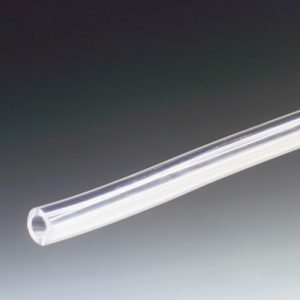
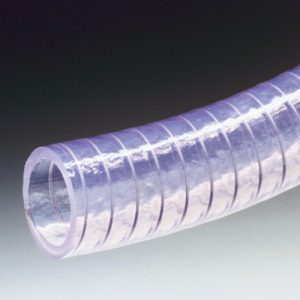
Bromine is used in the production of disinfectants, insecticides and pesticides, and flame retardants. Silver bromide is an important component in black-and-white photography emulsions.
Iodine is used in tinctures, pharmaceuticals, and disinfectants. The radioactive isotope 131I is applied in nuclear medicine as a tracer for diagnosing thyroid disorders.
Halogens in Everyday Life
Halogen compounds are encountered in many aspects of daily life. Most people season their food with sodium chloride, also known as table salt. This may contain sodium or potassium iodate to prevent iodine deficiency. For dental health, sodium or potassium fluoride may be added.
Chlorine-based cleaning agents used for disinfecting kitchens and sanitary facilities contain chlorides and hypochlorites.
Fluorinated compounds are found in non-stick coatings for pans and in outdoor textile finishes. They are also present in waterproofing sprays. For many DIY enthusiasts, PTFE sealing tape is an essential sealing material when replacing water pipes or taps. However, some per- and polyfluoroalkyl substances (PFAS) have come under scrutiny due to health and environmental concerns.

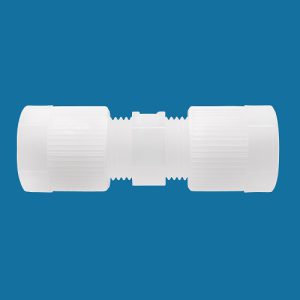
Iodine and bromine are present in small quantities in halogen lamps and headlights. Iodine compounds, important sources of iodine for the thyroid gland, are found in foods such as fish, milk, and eggs. Even if often unnoticed, halogens are indispensable elements for our health and everyday life.
Image Sources:
Header image | © Kim - stock.adobe.com
Periodic table: © kolonko stock.adobe.com
Coloration of the four stable halogens: © Tomihahndorf, CC BY-SA 3.0 <http://creativecommons.org/licenses/by-sa/3.0/>, via Wikimedia Commons