 Reichelt Chemietechnik Magazine
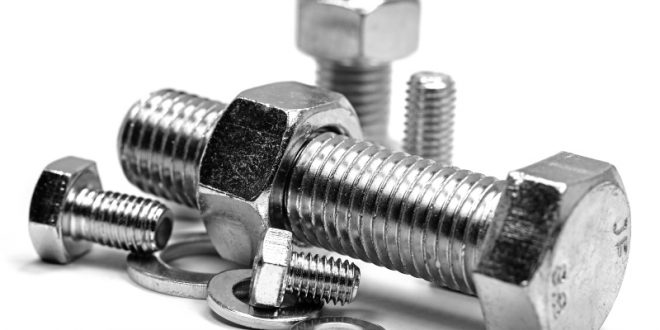
Screws, Nuts, and Threads – a Brief Overview
What do a toothpaste tube, a jar of jam, a water bottle, and a light bulb have in common? A screw connection. The basic principle behind such a connection is interlocking threads. In this article, you will learn what this feature is, how it is manufactured, which types exist, and how they are distinguished.
When thinking of screws and their counterparts, nuts, most people imagine hardware stores and assembling furniture or other objects. However, screw connections and their threads are not always made of metal and can also be found in many everyday items.
But What Is a Thread and How Does It Work?
To manufacture a thread, spiral-shaped grooves are cut into the circumference of a cylindrical workpiece. The resulting grooves form the characteristic profile. They can be incorporated on the outside of a bolt or on the inside of a nut.
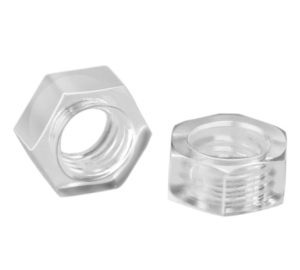
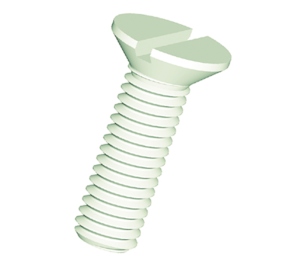
When an external thread that matches in size and shape engages with an internal thread, a screw connection is created. It allows parts to be joined securely yet remain detachable. To ensure proper function and interchangeability of internal and external counterparts, their geometry and dimensions are specified in standards.
Thread Manufacturing
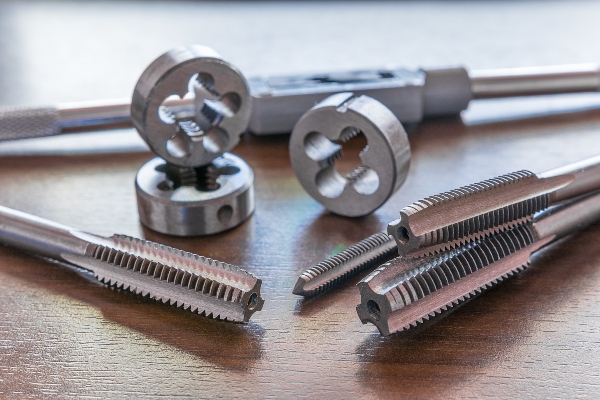
Typically, the helical grooves of this profile are cut using a chip-removing process, regardless of thread type. For cost reasons, larger quantities are produced by machine. For this purpose, machine taps and thread-cutting heads have been developed. In mechanical engineering, techniques such as turning, milling, grinding, and thread whirling are also used to produce higher volumes.
Are All Threads the Same?
As the earlier everyday examples suggest, threads have countless applications. However, a jar of jam must meet different requirements than a water or gas pipe. Accordingly, various thread types exist, depending on their specific requirements and uses. They can be distinguished by the following key characteristics:
- Use: fastening and motion threads
- Position: external and internal threads
- Direction of rotation: right-hand and left-hand threads
- Number of starts: single-start and multi-start threads
- Thread profiles: flank angles
The most common thread types are presented below.
Metric ISO Thread (M)
The metric ISO thread has a flank angle of 60°. The flank angle describes the inclination of the thread flanks and determines the shape of the thread profile. This metric ISO variant comes in two versions: coarse and fine. The coarse version is the most frequently used and is found in all types of screw connections.
The fine version differs from the coarse type by having a smaller pitch. The pitch is the distance a threaded bolt moves during one full rotation.
Due to the smaller pitch, the fine thread has a larger core diameter. The core diameter is the undamaged part of the thread, measured perpendicular to the axis between the lowest points of the thread grooves. With its larger undamaged cross-section, the fine thread is more stable, safer in fastening applications, and allows finer adjustments in motion applications. It is used for standard screw connections and additionally in micrometer screws and interchangeable photographic lenses.
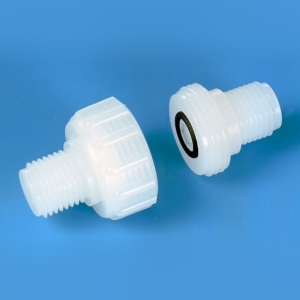
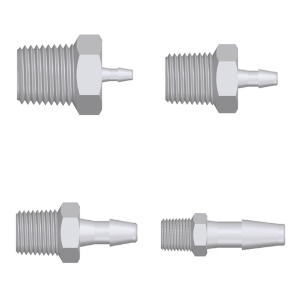
Metric ISO Trapezoidal Thread (Tr)
As the name suggests, the metric ISO trapezoidal thread has a trapezoidal profile with a flank angle of 30°. It is used for motion spindles subject to high loads in two axial directions, such as in bevel-gear valves.
Round Thread (Rd)
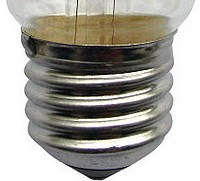
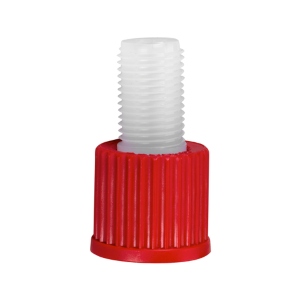
The round thread has a profile that resembles a wave because the crest and transitions are rounded. Like the metric ISO trapezoidal design, it has a flank angle of 30°. Round threads are more resistant to dirt, heat, and shock loads. They are therefore used in load hooks, rail vehicle couplings, and as screw bases for light bulbs.
Round threads are also used for glass threads, designated as GL. However, the flank angle of the bolt thread differs from the standard round profile and is 60° instead of 30°.
Whitworth Pipe Thread (W)
The pipe thread, invented by British engineer Sir Joseph Whitworth (1803–1887) and named after him, was introduced in 1841, making it the first standardized fastener design in the world. In the Whitworth pipe thread, the nut and bolt threads have different shapes, but the flank angle of both is 55°. The bolt thread has a conical shape, while the nut thread is cylindrical. This geometry allows for pressure-tight connections of water and gas pipes and related fittings. Due to its origin, the Whitworth form is specified in inches rather than millimeters and is therefore also called inch thread.

Together with the metric ISO variant, the Whitworth pipe thread is classified as a “sharp thread.” Both have triangular thread profiles with flattened or rounded transitions.
Saw Thread (S)
As the name indicates, both nut and bolt threads resemble the shape of saw teeth in profile view. With a flank angle of 30°, this motion profile can absorb larger forces in one axial direction. Saw threads are used in lifting and pressure spindles in presses.
Right-Hand and Left-Hand Threads
Threads that tighten clockwise (to the right) are called right-hand threads. Left-hand versions tighten counterclockwise. The direction of rotation is important in fastening applications when rotational loads could loosen a screw connection. A common everyday example is the pedals on a bicycle.
Here, different thread directions are used; otherwise, the pedals would loosen while riding. Additionally, different thread directions in gas welding equipment ensure that gas and oxygen connections cannot be mixed up. The gas connection always has a left-hand version, and the oxygen connection always has a right-hand version.
Is Everything Spinning Now? – Standards Provide Clarity!
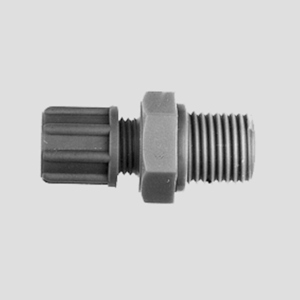
To distinguish threads from one another, not only size and shape but also thread designation are defined in Europe by the European Committee for Standardization (CEN). The designations contain at least one abbreviation for the profile and one for the thread size. Thread size refers to the external diameter of the fastener, also called the nominal diameter. For example, M12 is a metric ISO thread with a nominal diameter of 12 mm. If necessary, additional properties such as pitch may be included in the short designation. Thus, Tr50 x 24 is a metric ISO trapezoidal thread with a nominal diameter of 50 mm and a pitch of 24 mm.
Fine-thread designations are an exception, as specifying the pitch is mandatory.
Different Countries, Different Threads
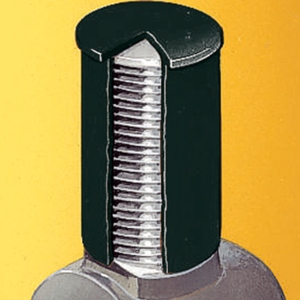
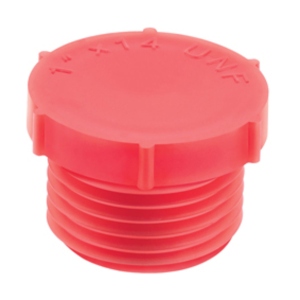
Things become more complex when thread designations from other countries are considered. In the United States, for example, such connections are designated in a different order. First comes the nominal diameter in inches, followed by the pitch in threads per inch, and finally the thread type. Thus, NPT 1/16" – 27 refers to a pipe thread for self-sealing connections with an external diameter of 1/16 inch, equivalent to 7.895 mm, and a pitch of 27 threads per inch. In addition to NPT (National Pipe Taper), UNF (Unified National Fine Thread Series) is another major American thread type. It is a fine series and, like the NPT thread, has a flank angle of 60°.
Like the European metric ISO form, the UNF series is used for standard screw connections.
The Thread Types at a Glance
| Short designation | Flank angle | Description |
| G | 55° | Cylindrical pipe thread for non-sealing connections in the thread |
| GL | 30° | Cylindrical round thread for glass threads |
| M | 60° | Metric ISO thread (single- and multi-start) |
| NPT | 60° | American: National Pipe Taper – pipe thread for self-sealing connections |
| Pg | 80° | Steel conduit thread |
| R | 55° | Tapered pipe thread for sealing connections in the thread |
| Rd | 30° | Cylindrical round thread (single- and multi-start) |
| S | 30° | Metric saw thread (single- and multi-start) |
| SQ | 0° | Square thread |
| Tr | 30° | Metric ISO trapezoidal thread (single- and multi-start) |
| UNF | 60° | American: Unified National Fine Thread Series |
| W | 55° | Tapered and cylindrical Whitworth thread |
Image sources:
Header image | © M. Schuppich – stock.adobe.com
Tool for cutting internal and external threads | © Arthur Palmer – stock.adobe.com
Thread of a light bulb | © Radiojon – de.wiktionary.org