 Reichelt Chemietechnik Magazine
The group known as “rare earth elements” has always seemed somewhat enigmatic. This is certainly due to its name, but also to the fact that these elements occupy a special position in the periodic table of chemical elements. Most chemists are highly familiar with the periodic table, yet rare earth elements can still cause a moment of hesitation. This impression, however, is misleading. These elements are neither rare nor mysterious. They play an important role in many technical applications and are also present in everyday products, from indispensable alloying constituents in turbine blades for aircraft engines to tiny magnets in headphones.
The Not-So-Rare Rare Earth Elements
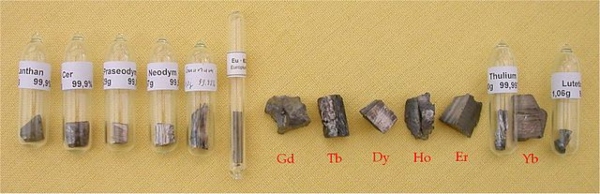
Rare earth elements are the 17 elements of group 3 of the periodic table:
- scandium (Sc)
- yttrium (Y)
- lanthanum (La)
- Cerium (Ce)
- Praseodymium (Pr)
- Neodymium (Nd)
- Promethium (Pm)
- Samarium (Sm)
- Europium (Eu)
- Gadolinium (Gd)
- Terbium (Tb)
- Dysprosium (Dy)
- Holmium (Ho)
- Erbium (Er)
- Thulium (Tm),
- Ytterbium (Yb)
- Lutetium (Lu).
These metals are therefore also referred to as “lanthanides”; the IUPAC-preferred term is “lanthanoids”.
Rare earth elements are all metals and can be divided into light and heavy rare earth elements. However, this commonly used classification is disputed because it has no scientific basis. In many cases, only lanthanum and the lanthanoids are listed as rare earth elements.
The different terms are partly historical in origin. The term “rare earths” is a shortened form of “metals of the rare earths”. The latter, however, is now obsolete. When these elements were discovered, they could initially be found only in rare minerals and isolated only as oxides, which were called “earths” at the time. Today, they can be obtained in high purity and occur in many parts of the Earth’s crust. The name, however, has remained.
Elements That Are Actually Rare
Promethium (Pm) is the only rare earth element that is actually rare. It has atomic number 61 in the periodic table of chemical elements. The naturally occurring isotope is radioactive and has a half-life of only 2.6 years. It is formed during the radioactive α-decay of the isotope europium-151, which accounts for roughly half of the natural europium isotope mixture but has an extraordinarily long half-life of 1.7 quintillion years.

Accordingly, the promethium concentration present in natural equilibrium is extremely low. Due to its exceptionally long half-life of 1.7 · 1018 years – by comparison, the age of the Earth is “only” 4.5 · 109 years – europium-151 is usually described in the literature as “stable”.
The existence of an element with atomic number 61 had already been predicted by the Russian chemist Dmitri I. Mendeleev (1834–1907), who worked in St. Petersburg, and its discovery was reported by several authors in the 1920s. These publications, however, proved inconclusive. Promethium was not scientifically confirmed until 1945, at that time not in natural occurrences, but in uranium fission products from nuclear reactors. Its natural occurrence was not proven until the late 1950s, when radiation measurement technology had advanced sufficiently to identify the element in uranium minerals such as pitchblende.
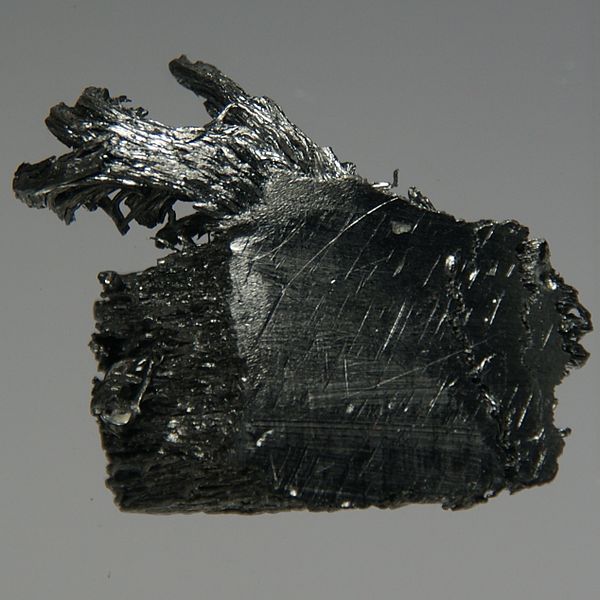
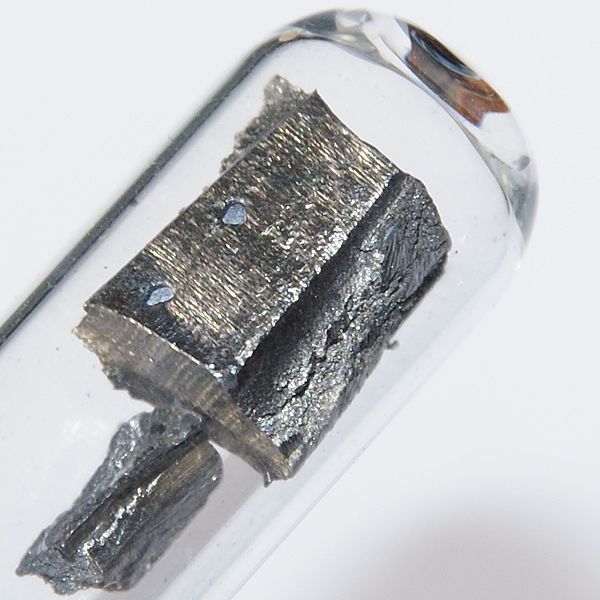
The other rare earth elements, however, are far less scarce than the name suggests: cerium, yttrium and neodymium occur more frequently in the Earth’s crust than lead or molybdenum, and thulium, the rarest of these elements, is more common than gold or platinum. The fact that the 19th century saw a gold rush in America rather than a thulium rush is due to the fact that larger rare earth element deposits are indeed difficult to find.
The elements are almost always present only in very low concentrations. They also cannot be found in pure form like gold, but only as admixtures in other minerals. This makes their extraction extremely difficult.
Few Deposits and Significant Environmental Impacts
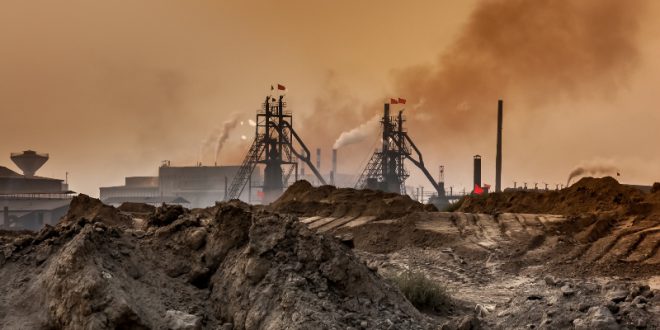
There are only very few deposits from which rare earth metals can be mined. China plays an important role here, as the world’s largest deposits are located there. The most important of these is the Bayan Obo mine. The rare earth metals occur there primarily in fluoride-bearing minerals such as bastnasite. The deposits are so extensive that the mine is also the world’s largest fluorspar (fluorite) source.
Inner Mongolia contains the largest deposits of rare earth elements, at 2.9 million tonnes. Outside China, the largest deposits are found in Australia, in the Mount Weld mine. At 1.4 million tonnes, however, they are only half the size of the Chinese deposits. Greenland offers an interesting prospect for mining. Deposits of 2.6 million tonnes have been identified there, although potential extraction is still being investigated.
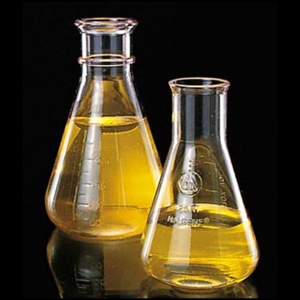

To obtain pure metals, they must be separated from the ores in a complex process and isolated from other elements. Different methods are used for rare earth element extraction, with fractional crystallization and the use of ion exchangers among the most important.
The most effective process, however, is liquid-liquid extraction. In this process, ores digested in acids and the metals dissolved in them are transferred into an organic phase with the aid of organic complexing agents. They are then precipitated as carbonates, hydroxides or oxalates and converted into oxides by calcination. Here too, with few exceptions, most production facilities are located in China. Since the separation and purification of rare earth elements are extremely complex and costly, mischmetal is also used. This is possible because these elements have similar properties.

The extraction of rare earth elements places a considerable burden on the environment. For every tonne mined, between 10,000 and 12,000 cubic meters of toxic and corrosive exhaust gases are produced. These gases include hydrogen fluoride and sulfur dioxide, among others. In addition, up to 75 cubic meters of acidic wastewater are generated.
From Lighters to Nuclear Reactors
Although rare earth metals are so difficult to obtain, they can nevertheless be found almost everywhere. In plasma screens, europium provides the red component, while lanthanum is also used in display technology. Neodymium, praseodymium and samarium are preferred for permanent magnets and are found in dictation devices or headphones. Neodymium, terbium and dysprosium are used in laser applications.
Rare earth elements play a major role in electric motors and batteries and are therefore essential for electric mobility. Praseodymium and neodymium are used in electric motors, while lanthanum is already used in nickel-metal hydride batteries for electric or hybrid cars. Rare earth element applications also extend to everyday products: lighter flints, for example, contain cerium as their main component. Cerium oxide is also used in self-cleaning ovens.
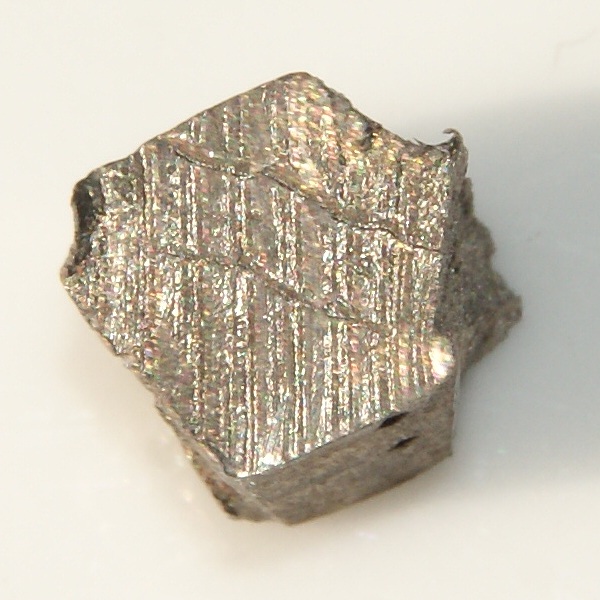
Because rare earth elements are used in such a wide range of applications, demand for them continues to increase. Since deposits are highly limited, these elements also play an important economic role. Rare earth recycling from electronic waste is one way to use these metals in an economically and ecologically viable manner.