 Reichelt Chemietechnik Magazine
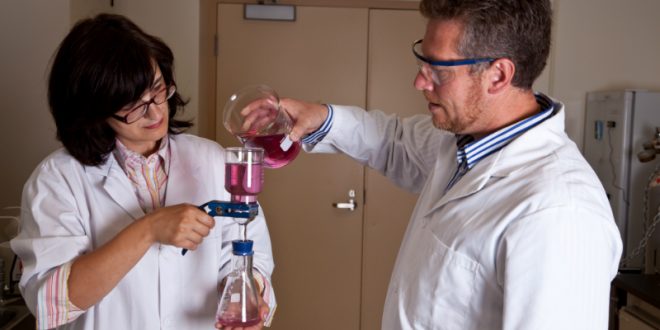
Any substance that is not a pure substance is a mixture of substances. Since very few of the things that surround us are pure substances, the separation of mixtures is a routine task in chemical laboratories as well as on a large scale in the chemical industry.
One of the most common mixtures is the suspension. It represents a heterogeneous mixture of a liquid and undissolved, finely dispersed solid particles. In this article, we provide an overview of the different methods available for separating solids from liquids.
How Can Mixtures of Substances Be Classified?
Mixtures are classified as heterogeneous or multiphase and homogeneous or single-phase mixtures. Heterogeneous mixtures are also referred to as dispersions. We have compiled an overview of the most important types of mixtures in the table below.
Orange = heterogeneous, Blue = homogeneous
| solid | liquid | gaseous | |
| in solid | mixture / solid mixture
alloy |
||
| in liquid | suspension
solution |
emulsion
solution |
foam
solution |
| in gaseous | aerosol – smoke | aerosol – mist | gas mixture |
Heterogeneous mixtures can be separated using mechanical methods, whereas this is not possible for homogeneous mixtures. Of course, a mixture may consist of more than two pure substances. For differentiation, these are referred to as binary (two substances), ternary, and so on. As a rule, for reasons of practical feasibility, heterogeneous components are separated first, followed by the homogeneous ones.
Sedimentation – Using Gravity
The simplest method for separating a suspension is sedimentation. By allowing the solid to settle, two phases are obtained, after which the liquid can be removed, for example, by decantation.
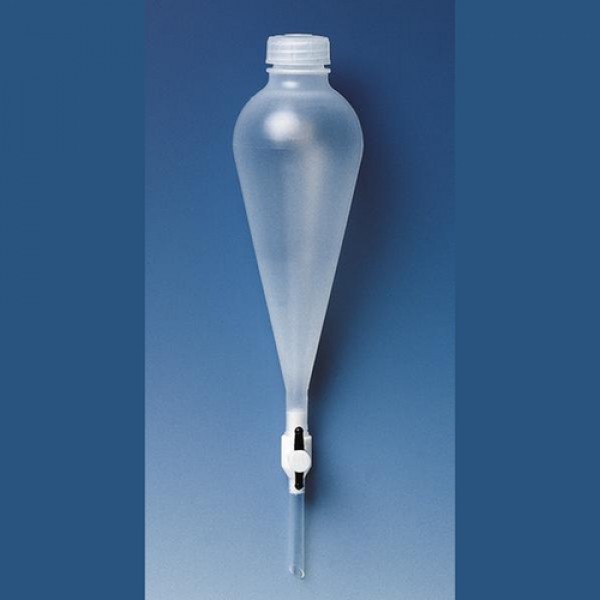
The sedimentation rate depends on the viscosity of the liquid, the size of the solid particles and the density of the particles, which is why this separation method can be very time-consuming. In industrial applications, large systems or basins are used for sedimentation. Depending on whether the liquid or the solid is to be recovered, these are referred to as clarifiers or thickeners.
Centrifugation – Using Density Differences and Centrifugal Force
To accelerate phase separation, centrifugation is particularly suitable. By rotating around a fixed axis, centrifugal force is used to separate the contained pure substances according to their density, with the substance of highest density accumulating furthest from the axis of rotation. Centrifugation can be used not only to separate suspensions, but also emulsions and gas mixtures. Laboratory centrifuges are found in many chemical engineering and medical laboratories. Suitable centrifuge tubes are available as sample vessels. As they must withstand high forces, these laboratory containers are made either of reinforced glass or of disposable plastics such as polypropylene (PP).
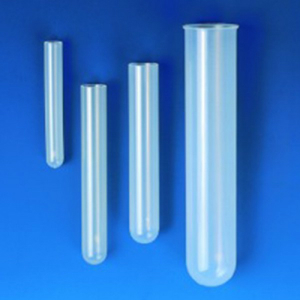
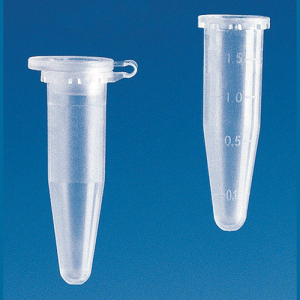
When operating a centrifuge, it is particularly important at high rotational speeds to balance the sample to be centrifuged with a counterweight of very similar mass in order to avoid imbalance. So-called ultracentrifuges reach speeds of up to 500,000 rpm (revolutions per minute). At such high speeds, the centrifuge chamber is evacuated to minimise air friction. After separation, the supernatant liquid can, for example, be removed by decantation. On an industrial scale, separators are used that operate on the same principle as a centrifuge. They do not use inserted vessels, but work like a washing machine with a drum without holes. Analogous to centrifugation, the suspension is separated according to density.
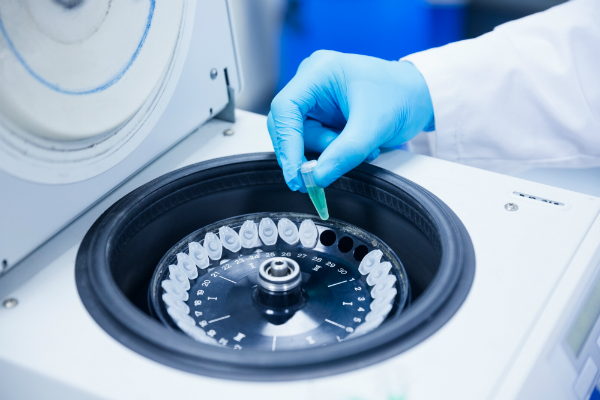
There are separators that operate continuously, meaning that suspension is continuously fed in via an inlet and the separated solid and liquid are discharged via outlets. A special continuous separator is the hydrocyclone, a centrifugal separator for emulsions and suspensions in which no drum is rotated; instead, vortices are generated within the suspension.
Filtration
One of the most important separation processes for suspensions is filtration, as it is very simple and efficient. By utilising the fact that solids above a certain size cannot pass through the pores of the filter, they are mechanically separated from a suspension. A basic distinction is made between surface filters and depth filters. In depth filtration, the solid to be separated is retained within the interior of a porous filter medium. In surface filtration, on the other hand, the sieving effect is used, so that filtrate and solid are separated at a surface. In the most commonly used laboratory separation method, cake filtration, a residue known as the filter cake forms on the filter.
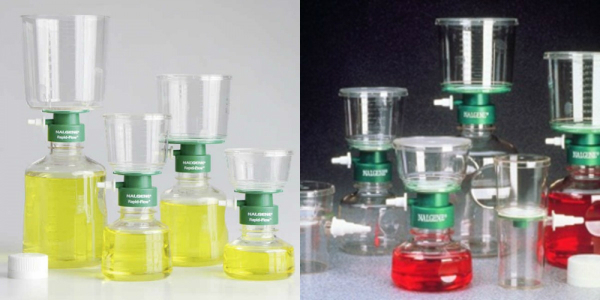
There is a wide range of filter media, of which membrane filters are the most commonly used in chemical engineering laboratories. Filter membranes may consist of paper, plastic films or textile fabrics. The simplest filtration setup is a paper filter holder with a funnel, in which filter cake and filtrate are separated by gravity. By applying overpressure on the feed side or a vacuum on the outlet side, the separation rate can be significantly increased.
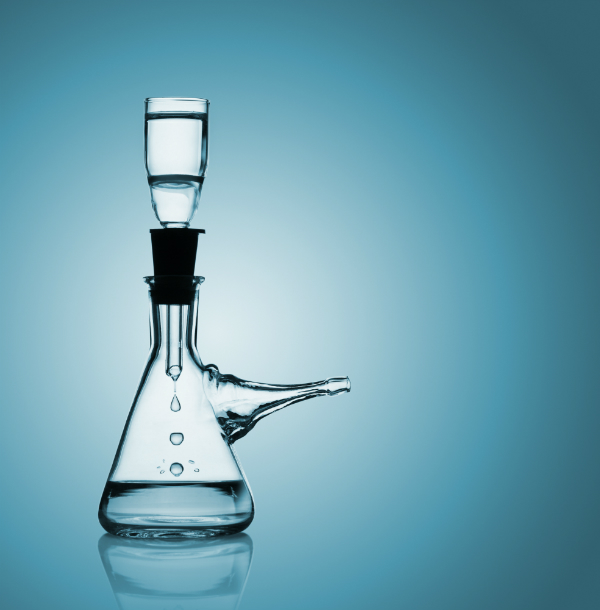
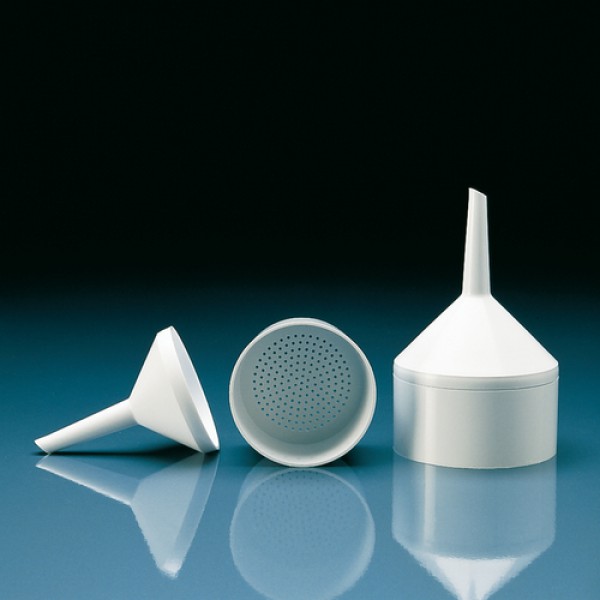
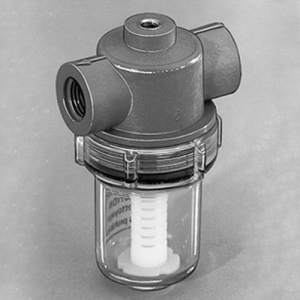
Simple laboratory examples include syringe filters (overpressure) or Büchner funnels in combination with a suction flask (vacuum). Of course, this separation process can be applied not only in batch operation but, at low solid concentrations, also continuously, for example when using flow-through filters.
Another form of surface filtration is cross-flow filtration. In this process, the medium to be filtered is pumped parallel to the filter, which prevents the formation of a filter cake. The solid is therefore not completely separated from the liquid, but only thickened. In industrial applications, for example, filter presses are used, which consist of a series of filter plates covered with filter cloths. By pressing them together, the liquid is forced out while the solid remains and can subsequently be discharged.
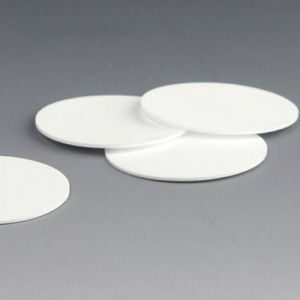
A combination of centrifugation and filtration is the filter centrifuge, where the density difference is not decisive for the separation. The centrifugal force generates overpressure, which forces the liquid through the filter. Special filter inserts are available for laboratory centrifuges, making filter centrifugation possible even on a small scale. If particles are difficult to filter because they are too small or colloidally dispersed, flocculating agents can be added. These promote the agglomeration of particles and thus prevent solids from remaining in the filtrate. For difficult-to-filter solids such as sludges, filter aids are often used to loosen the filter cake, for example. Typical filter aids include diatomaceous earth, cellulose or perlite.
Other Separation Processes
Distillation: A non-mechanical method that is suitable not only for solutions but also for suspensions is distillation. As a rule, however, distillation is not the method of choice, as it requires greater effort and is energy-intensive.
Flotation: Gas bubbles adhere particularly well to hydrophobic particles, giving them buoyancy so that they float on the liquid surface as foam, from which the solid can be removed. This process is used industrially in ore processing and in paper recycling.
Magnetic separation: Finely dispersed ferromagnetic particles can be separated by applying a magnetic field. Magnetic separators are used, for example, in geochemistry and in municipal waste processing.
Which Separation Process Is Best Suited for Which Application?
Which separation process is most suitable in a given case depends on various factors. One of the fundamental questions is whether the solid, the liquid or both are to be recovered as end products. It is not uncommon for several separation methods to be used, either in direct combination or sequentially.
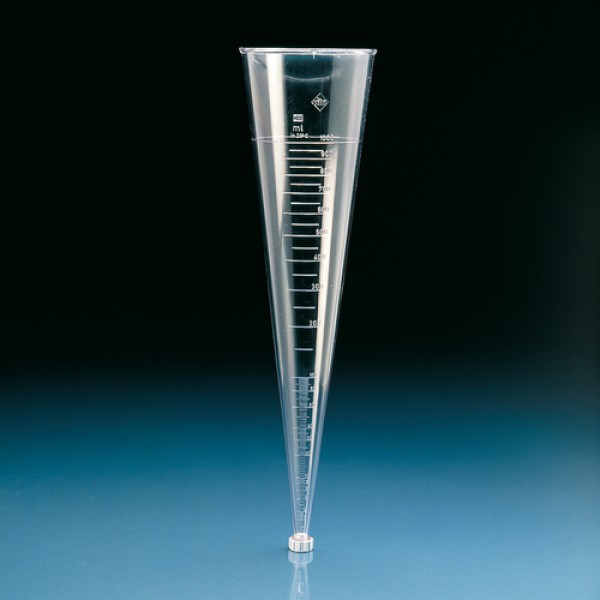
For example, in process engineering involving large volumes of liquid, simple sedimentation is often carried out prior to filtration, either to pre-clean the liquid or to concentrate the mixture to be filtered. Since there is a wide range of options and various filtration devices available on the market for both laboratory and industrial-scale applications, selecting the appropriate separation process and suitable equipment, such as the correct filter type, for a specific separation task is often a demanding challenge.