 Reichelt Chemietechnik Magazine
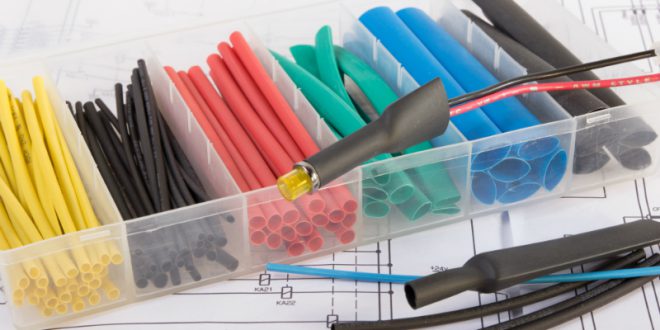
If you need to insulate a damaged cable or install new wiring, it’s always a good idea to have a few heat shrink tubes on hand. Thanks to their adaptable properties, they are highly versatile and easy to use. Not only do they provide reliable insulation, but they also protect cables against moisture, corrosion, and dirt.
These and many other use cases are made possible by the flexible properties of the materials used, ensuring that there is a suitable product for almost any application.
What Is Heat Shrink Tubing?
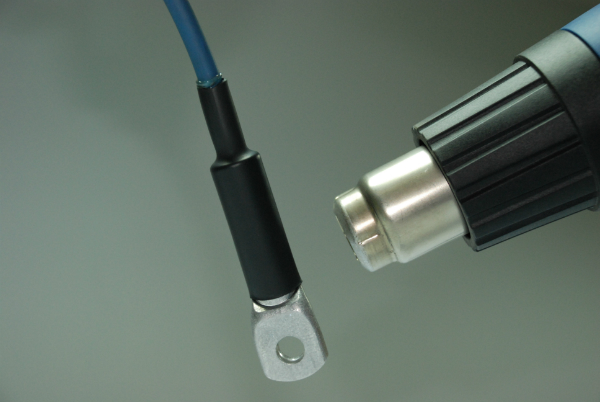
Heat shrink tubing was first developed in 1962 by the California-based Raychem Corporation. For over 50 years now, it has been used to provide a protective and insulating sleeve for all types of cables. The working principle is simple: The tubing – usually made from heat-resistant materials like PTFE or PVDF – is slipped over the component to be protected and then heated using a hot air gun. As it heats up, the tubing contracts tightly around the object, forming a snug and durable protective layer. This process is what gives the product its name.
There are also so-called “cold shrink tubes” that perform the same function but require no heat source. For protecting individual components, shrink films are available. These work in much the same way as the tubes, but come in a different format.
The Red or the Blue Cable?
Heat shrink tubing is available in many forms and with a wide range of properties. In addition to classic tubing, there are also shrink caps (closed at one end), split caps (with multiple openings), and shrink films.
The most important factor when selecting the right tubing is the technical specification. These can be customized in many ways, making a wide variety of applications possible. This tubing is available in diameters ranging from 1 mm to 1,100 mm – suitable for everything from microelectronics to underground power installations. Depending on the application, thin-, medium-, and thick-walled versions are available to provide different levels of protection.
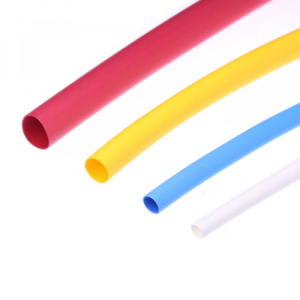
A key parameter is the shrink ratio, also referred to as the range or rate. Common ratios are 2:1 and 4:1, which describe how much the tubing will contract when heated. For example, tubing with a 40 mm diameter and a 2:1 ratio will shrink down to 20 mm. For optimal, gap-free insulation, both the initial diameter and the shrink ratio must be selected carefully.
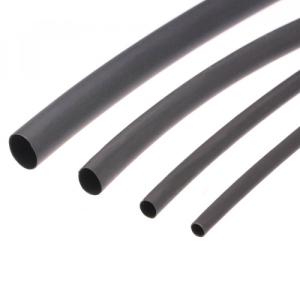
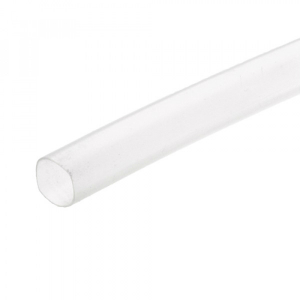
Maximum protection is achieved when the tubing includes an inner adhesive lining. During heating, the tubing contracts and simultaneously bonds to the surface of the cable. PTFE and PVDF-based tubing is typically insulating, but conductive variants are also available, depending on the application.
Color coding helps distinguish between cables and organize wiring. A wide range of colors is available to help prevent messy cable clusters from the outset.
Durable Materials for Optimal Protection
These products are made from thermoplastic polymers – materials that can be reshaped within a certain temperature range without damage.
Common polymers include fluorocarbon-based types like polyvinylidene fluoride (PVDF) and polytetrafluoroethylene (PTFE), as well as Viton®, polyolefins like polyethylene (PE) and polypropylene (PP), and polyvinyl chloride (PVC).
To be suitable for shrink applications, these polymers are cross-linked after production. Cross-linking creates molecular bonds between the polymer chains, which can be achieved using silanes or electron beam radiation.
The plastic is extruded while still warm and then expanded to the desired diameter, creating internal tension in the molecular structure. Upon cooling, the diameter and tension are “frozen” in place. When reheated, the material releases this tension and returns to its original, smaller diameter.
With shrink films, the direction of shrinkage can also be controlled. Films can shrink unidirectionally (lengthwise) or bidirectionally (length and width). The use of materials like PTFE and PVDF ensures high resistance to external influences such as moisture, heat, or aggressive chemicals.
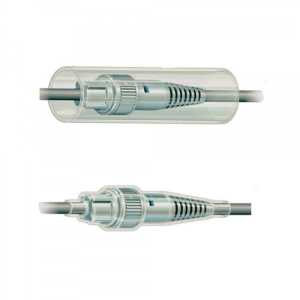
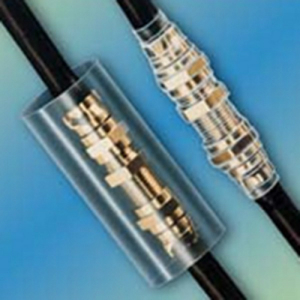
Cold shrink tubing is based on a different mechanism. It is made from elastomeric materials such as silicone rubber and is pre-stretched onto removable cores or expanded using special tools. During installation, the cores are removed, causing the tubing to contract tightly around the target object. A major advantage: Cold shrink tubing can also be used underwater, making it ideal for challenging environments.
From Cable Repair to Wine Bottles
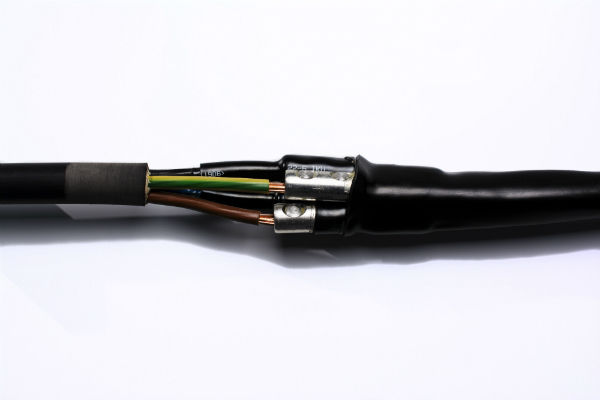
Shrink tubing is typically used for repairing or laying cables. Because the material does not conduct electricity, it is ideal for cable insulation and helps prevent short circuits.
At the same time, it protects against mechanical damage and moisture. With diameters available in larger sizes, heat shrink tubing is also suitable for underground installations. Conductive variants are used in applications like joints that need to maintain electrical continuity while remaining shielded from the environment.
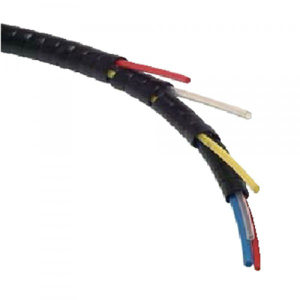
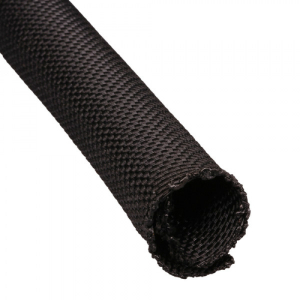
Shrink films are also widely used in everyday life – most commonly in transport packaging, such as the plastic wrap securing six-packs of bottled water. Like tubing, these films provide a protective barrier against external factors.
Wine lovers will also be familiar with shrink capsules: those plastic sleeves that must be removed before uncorking the bottle. Here, the film serves to protect the cork – and the precious contents within the bottle.
Always a Smart Choice
Whether you’re installing an underground cable or sealing a fine bottle of wine, these tubes offer a practical and reliable solution. Thanks to the wide variety of available types – from small, conductive tubes for delicate electronics to large-diameter sleeves for damaged lawn mower cables – you’ll always find the right one for the job.